
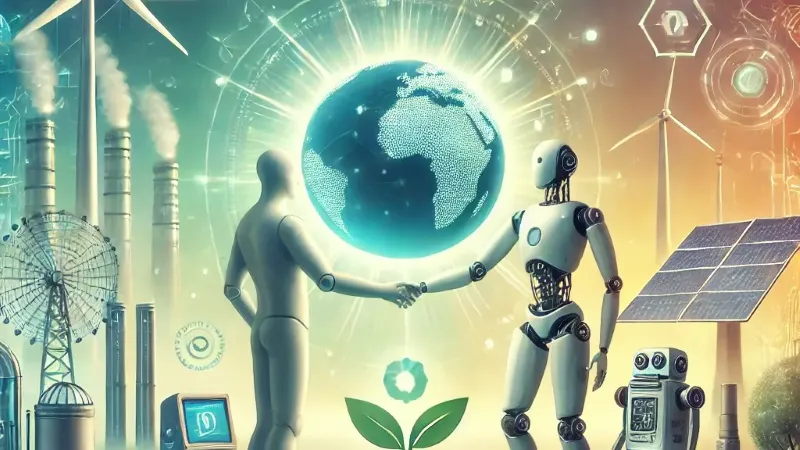
Greetings, fellow travelers on the digital frontier! Robert Mathews here, and today we're delving deep into a topic that isn't just trending, but is fundamentally reshaping our world: Artificial Intelligence. It’s no longer confined to the realm of science fiction; AI is here, it’s evolving at an astonishing pace, and it demands our attention, understanding, and proactive engagement. The question isn't whether AI will impact your life or business, but how profoundly, and how prepared you are to navigate its intricate currents.
From the subtle nudges of recommendation algorithms to the groundbreaking advancements in medical diagnostics, AI has quietly, and sometimes not so quietly, woven itself into the fabric of our daily existence. But beyond the headlines and the occasional fear-mongering, what does this revolution truly mean for us, for our careers, our industries, and even our very definition of creativity and intelligence? Let's peel back the layers and explore a human-centric roadmap for the intelligent future that's already upon us.
The AI Landscape Today: More Than Just Chatbots
When most people think of AI, their minds often jump to large language models like ChatGPT, image generators, or perhaps the ominous visions from Hollywood. While these are certainly prominent examples, the true breadth of AI’s current application is far more expansive and, frankly, more integrated than many realize. We interact with AI dozens of times a day without even a second thought.
Consider your smartphone. Facial recognition to unlock it, predictive text as you type, personalized news feeds, and voice assistants like Siri or Google Assistant – all powered by sophisticated AI algorithms. Streaming services curate your next binge-watch, e-commerce sites suggest products you might love, and even your email inbox uses AI to filter spam. These are the unsung heroes of convenience, making our digital lives smoother, faster, and more tailored.
But the real power of AI extends far beyond personal convenience. In industries across the board, AI is driving unprecedented efficiency and innovation. Machine learning models analyze vast datasets to uncover patterns, automate repetitive tasks, and predict future trends with remarkable accuracy. This analytical prowess is fundamentally changing how businesses operate and how individuals interact with technology.
The Transformative Power of AI in Business and Beyond
The impact of AI on the business world is nothing short of revolutionary. Industries are being reimagined from the ground up, not just incrementally improved. Let's look at a few examples:
Healthcare: Precision, Prediction, and Personalization
In healthcare, AI is a game-changer. It’s assisting in drug discovery, accelerating the identification of new compounds and optimizing clinical trials. Diagnostic tools, powered by AI, can analyze medical images with greater speed and accuracy than the human eye, detecting anomalies like tumors or diseases in their earliest stages. Imagine AI-driven systems sifting through millions of patient records to identify risk factors for chronic conditions, enabling truly personalized preventative care. Of course, the question of how accurate is Google's AI health guidance remains a critical discussion point, highlighting the need for robust validation and ethical oversight in these sensitive applications.
Finance: Fraud Detection and Algorithmic Trading
Financial institutions leverage AI for everything from sophisticated fraud detection systems that flag suspicious transactions in real-time to algorithmic trading platforms that execute trades in milliseconds, capitalizing on market fluctuations. AI-powered chatbots handle customer service inquiries, freeing up human agents for more complex issues, and predictive analytics help banks assess credit risks with greater precision.
Marketing and Content Creation: Hyper-Personalization and Efficiency
For those of us in the content and marketing space, AI is a double-edged sword of immense potential. It enables hyper-personalized marketing campaigns, targeting consumers with messages tailored to their exact preferences and behaviors. AI can generate drafts of articles, social media posts, and even video scripts, significantly streamlining the content creation process. However, it also brings challenges, particularly around authenticity and the need for human oversight. The rise of AI-generated content also raises questions about its labeling and transparency, a topic explored by platforms like YouTube as they boost visibility of labels on AI-generated videos.
AI and the Evolving Nature of Work
Perhaps one of the most pressing questions surrounding AI is its impact on jobs. The narrative often swings between two extremes: mass job displacement or the creation of entirely new roles. The truth, as always, lies somewhere in the middle, leaning heavily towards augmentation and transformation rather than outright elimination.
Yes, AI will automate many repetitive, data-intensive tasks that humans currently perform. This isn't necessarily a bad thing. It frees up human workers to focus on tasks that require uniquely human skills: creativity, critical thinking, emotional intelligence, complex problem-solving, and strategic decision-making. The jobs of the future will increasingly involve working *with* AI, rather than competing against it.
This shift necessitates a proactive approach to upskilling and reskilling. Lifelong learning will no longer be a buzzword but a fundamental requirement for career longevity. Educators, policymakers, and employers must collaborate to prepare the workforce for this AI-augmented future, focusing on skills that complement, rather than duplicate, artificial intelligence.
Navigating the Ethical Minefield and Societal Implications
The rapid advancement of AI also brings a host of ethical considerations and societal challenges that we cannot afford to ignore. These are not merely academic debates; they have real-world implications for fairness, privacy, security, and human autonomy.
Bias and Fairness
AI systems learn from the data they are fed. If that data contains historical biases – reflecting societal inequalities in race, gender, or socio-economic status – the AI will not only replicate but often amplify those biases in its decisions. This can lead to discriminatory outcomes in areas like hiring, loan approvals, criminal justice, and even healthcare. Ensuring fairness requires diverse training data, rigorous testing, and transparent algorithms.
Privacy and Data Security
AI thrives on data, and the more data it has, the "smarter" it becomes. This raises significant concerns about individual privacy and the security of vast datasets. How is our personal information being collected, stored, and used by AI systems? Robust data governance frameworks, strong encryption, and ethical data handling practices are paramount to building trust and protecting individuals.
Accountability and Control
When an AI system makes a mistake – or worse, causes harm – who is accountable? The programmer, the deployer, the data provider? As AI becomes more autonomous, establishing clear lines of responsibility becomes increasingly complex. Furthermore, the question of control over powerful AI systems, particularly in critical infrastructure or military applications, requires careful global deliberation to prevent unintended consequences.
Embracing AI Responsibly: A Roadmap for Individuals and Organizations
The AI revolution isn't something to fear, but something to understand and shape. Here's how we can move forward responsibly:
For Individuals: Adapt, Learn, and Collaborate
- Develop AI Literacy: Understand the basics of how AI works, its capabilities, and its limitations. Demystify the technology.
- Focus on Human-Centric Skills: Cultivate creativity, critical thinking, emotional intelligence, and complex problem-solving – skills that are inherently human and difficult for AI to replicate.
- Embrace Lifelong Learning: Stay curious and continuously acquire new skills. Look for opportunities to learn how to work *with* AI tools, making yourself more productive and valuable.
- Be a Responsible User: Question information generated by AI, understand its potential biases, and be mindful of your digital footprint.
For Organizations: Innovate Ethically and Strategically
- Develop an AI Strategy: Don't just implement AI for the sake of it. Identify clear business problems AI can solve and integrate it strategically.
- Prioritize Ethical AI: Implement frameworks for ethical AI development and deployment. This includes addressing bias, ensuring transparency, and protecting data privacy from the outset.
- Invest in Your Workforce: Provide training and development opportunities for employees to adapt to AI-augmented roles. Foster a culture of learning and collaboration between humans and AI.
- Foster Human Oversight: Ensure that critical decisions are always made with human oversight and intervention, especially in sensitive applications.
- Stay Informed on Regulations: The regulatory landscape for AI is evolving rapidly. Stay abreast of new laws and guidelines to ensure compliance and responsible innovation. In the broader digital world, understanding how AI integrates with other vital areas, such as SEO, is crucial. For instance, knowing how to navigate the new era of SEO, core updates, AI, and E-E-A-T will be paramount for online visibility and success.
The Path Ahead
We are at a pivotal moment in human history, standing at the cusp of an era defined by intelligent machines. The "AI Tsunami" as some have dubbed it, isn't something to run from, but a powerful force we must learn to harness. It presents both profound challenges and unparalleled opportunities. Our success in this new intelligent future will depend not just on the brilliance of the technology itself, but on our collective wisdom, foresight, and commitment to building AI that serves humanity.
As Robert Mathews, I believe our role is to guide this revolution with purpose and integrity. The future of AI is not predetermined; it is a future we are actively creating, one decision, one algorithm, one ethical consideration at a time. Let’s build it thoughtfully, inclusively, and with a steadfast focus on human flourishing.

Robert Mathews is a professional content marketer and freelancer for many SEO agencies. In his spare time he likes to play video games, get outdoors and enjoy time with his family and friends . Read more about Robert Mathews here:
Related Posts

OpenAI Made a Special ChatGPT for Your Doctor
OpenAI is transforming the medical landscape by introducing specialized AI tools designed to help do... Read More

AI in 2024: Riding the Wave of Authentic, Sustainable Innovation
Ryan Stuart dives into AI’s 2024 impact, blending authenticity, sustainability, and actionable tip... Read More
Grok Faces Scrutiny Over Nonconsensual AI-Altered Undressed Images
The recent controversy surrounding the generation of nonconsensual AI imagery has sparked a global d... Read More
Top Posts

Best Places to Eat in Toronto, Canada - A Foodies Paradise
Discover the vibrant flavors of Toronto, a true foodie paradise in Ontario. From historic markets to Michelin-starred restaurants, explore the diverse culinary ...Read More

5 Apps to Create an Office in Your Pocket
The digital age has revolutionized the way we work, allowing us to stay connected and productive from anywhere in the world. With the rise of mobile technology,...Read More

Why Mobile Apps Need a Neurodiversity‑First Design Philosophy
Designing mobile apps with neurodiverse users in mind isn’t a niche add‑on—it’s a growth engine. Learn practical steps, tools, and metrics to make your ...Read More

Balcony Micro‑Ecosystems: Crafting a Sensory Garden in Small Spaces
Turn your balcony into a living sanctuary. Learn modular tools, smart soil tricks, and sensory planting to create a thriving micro‑ecosystem that feeds both b...Read More
0 Comments
Post Comment
You will need to Login or Register to comment on this post!