

Why Micro‑Storytelling Is the Secret Weapon Your B2B Content Strategy Needs
When I first stepped into the chaotic world of B2B SaaS marketing, I quickly learned that executives have the attention span of a goldfish on caffeine. Long‑form whitepapers, endless case studies, and exhaustive feature lists often get skimmed, bookmarked, or—worst of all—ignored. The solution isn’t more content; it’s smarter content.
Enter micro‑storytelling: a disciplined approach that distills the essence of a brand narrative into bite‑sized, emotionally resonant moments. Think of it as the difference between a novel and a series of compelling Instagram captions—each one stands alone, yet together they paint a vivid picture of who you are and why you matter.
The Science Behind the Bite‑Size Narrative
Our brains are wired to process information in chunks. Cognitive psychologist George Miller famously argued that the average person can hold about seven (plus or minus two) discrete items in working memory. When a piece of content respects that limit, it slides into the mind’s “short‑term storage” and has a much higher chance of being transferred to long‑term memory.
Micro‑storytelling leverages three neuroscientific principles:
- Chunking: Breaking complex ideas into digestible pieces.
- Emotional tagging: Pairing facts with feelings to create memorable “anchors.”
- Repetition with variation: Reinforcing core messages while keeping the audience curious.
When you combine these principles, you get content that not only sticks but also nudges prospects along the buyer’s journey with surgical precision.
How Micro‑Stories Fit Into the B2B Funnel
Every stage of the funnel benefits from a different flavor of micro‑story:
- Awareness: Quick, attention‑grabbing anecdotes that highlight a universal pain point.
- Consideration: Mini‑case studies that showcase a specific result, framed as a relatable problem‑solution narrative.
- Decision: Concise testimonials that focus on ROI, delivered as a single, powerful sentence.
- Retention: Short “how‑to” moments that reinforce product value and encourage advocacy.
Because each micro‑story is self‑contained, you can repurpose it across channels—email, LinkedIn, product tours, even in‑app tooltips—without the risk of content fatigue.
Building Your Micro‑Story Arsenal: A Step‑by‑Step Playbook
Below is the framework I use when crafting micro‑stories for SaaS products. Feel free to adapt it to your industry, but the core steps remain the same.
- Identify the Core Insight: What is the single truth you want your audience to walk away with? It could be “Our AI reduces churn by 30%” or “Onboarding takes minutes, not days.”
- Find the Human Angle: Translate the insight into a relatable human experience. For instance, “Imagine losing a key customer because you couldn’t spot early warning signs.”
- Choose the Narrative Shape: Decide whether you’re telling a problem‑solution story, a before‑after transformation, or a hero’s journey snippet.
- Craft the Hook: The first 6–8 words must arrest attention. Use a question, bold claim, or surprising statistic.
- Wrap with a Call‑to‑Action (CTA) Micro‑Prompt: Even in a 50‑word story, include a tiny CTA like “See the data in 30 seconds” or “Download the cheat sheet.”
- Test, Tweak, Iterate: Deploy the micro‑story in A/B tests across two channels. Measure click‑through, dwell time, and downstream conversions. Refine based on real‑world feedback.
When you follow this process, you’ll generate a library of micro‑stories that can be shuffled, combined, and scaled without the overhead of creating fresh long‑form pieces each quarter.
Real‑World Example: Turning a Feature List Into a Mini‑Narrative
Let’s take a fictional SaaS that offers “Predictive Customer Health Scores.” The traditional approach would be a dense whitepaper describing algorithms, data sources, and statistical models. Here’s how you could compress that into three micro‑stories:
- Hook: “What if you could see churn before it happens?”
- Story: “Acme Corp’s sales lead, Maya, got a red alert on a key account. She reached out, offered a custom plan, and saved $120K in revenue.”
- CTA: “Get your health score in 2 minutes—no data science required.”
This triad delivers the same value proposition—predictive insight, tangible ROI, and easy adoption—but in a format that an executive can digest while sipping coffee.
Distribution Tactics That Amplify Micro‑Stories
Creating great micro‑stories is only half the battle. You need a distribution engine that respects the brevity and punch of each piece. Here are the channels that work best:
- LinkedIn Status Updates: The platform’s algorithm favors short, engaging content. Pair your micro‑story with a striking visual and a LinkedIn social selling index boost.
- Email Drip Sequences: Instead of long newsletters, send a series of micro‑stories over a week. Each email ends with a single, low‑friction CTA.
- Product Tours & In‑App Messaging: Embed micro‑stories at critical onboarding moments to reinforce value without interrupting workflow.
- Micro‑Videos (15‑30 seconds): Turn the story into a quick video overlay with subtitles. Platforms like TikTok and Instagram Reels are surprisingly effective for B2B when targeted correctly.
- SEO Snippets: Optimize your micro‑story headlines for featured snippets. When done right, they can dominate the zero‑click SERP landscape.
Measuring Success: Metrics That Matter for Micro‑Storytelling
Traditional content metrics (page views, time on page) don’t fully capture the impact of micro‑stories. Focus on these KPIs instead:
- Engagement Ratio: Likes, shares, and comments per impression—especially on LinkedIn and social platforms.
- Micro‑CTA Conversion Rate: The percentage of users who click the tiny CTA embedded in each story.
- Funnel Velocity: How quickly prospects move from awareness to consideration after encountering a micro‑story.
- Retention Touchpoints: Number of micro‑stories viewed by existing customers post‑purchase.
By aligning these metrics with revenue targets, you’ll demonstrate the concrete ROI of a micro‑storytelling program to C‑level stakeholders.
Common Pitfalls (And How to Avoid Them)
Even seasoned marketers stumble when first experimenting with micro‑storytelling. Here’s a quick cheat sheet of mistakes to sidestep:
- Over‑selling: A micro‑story isn’t a sales pitch. Lead with empathy, not a hard sell.
- Vague Hooks: If the opening line doesn’t spark curiosity, the story dies instantly.
- Inconsistent Voice: Keep the brand tone uniform across all micro‑stories to reinforce identity.
- Neglecting Visuals: Pair each story with a relevant image or icon; the brain processes visuals 60,000 times faster than text.
- One‑size‑fits‑all Distribution: Tailor the format to each platform’s best practices. A LinkedIn post isn’t a Slack message.
Integrating Micro‑Storytelling With Your Existing Marketing Toolbox
If you already have a robust digital marketing toolbox, micro‑storytelling slots right in as a lightweight, high‑impact layer. Use your analytics platform to tag each micro‑story, track its performance, and feed insights back into content planning cycles.
Think of micro‑stories as the “micro‑content” version of your existing macro assets. They don’t replace whitepapers or webinars; they complement them, providing entry points that guide prospects toward those deeper resources.
Future‑Proofing Your Content Strategy With Micro‑Stories
As AI‑generated content becomes more prevalent, the human touch—especially in storytelling—will be the differentiator. Micro‑stories are inherently human because they hinge on emotion, context, and brevity—qualities that are difficult for AI to replicate authentically at scale.
Investing in a micro‑storytelling framework now positions your brand to stay ahead of the content saturation curve. It also creates a reservoir of adaptable assets that can be quickly re‑purposed for emerging channels, such as voice assistants or AR overlays.
Take the First Step Today
Ready to give your B2B content a dose of micro‑magic? Start by auditing your existing assets: find three long‑form pieces that could be broken into micro‑stories. Draft the hooks, test them on LinkedIn, and measure the lift in engagement. In a week, you’ll have a living library of bite‑sized narratives that drive real business outcomes.
Remember, the goal isn’t to shrink your brand’s story—it’s to reshape it so that busy decision‑makers can experience it in moments that matter.

Brad Hays is a freelance writer known for his versatile skill set and ability to craft compelling content across a wide range of industries.
Related Posts

Treating Content Marketing Like an Experiment Lab: A Playbook for SaaS Brands
Learn to reframe your content strategy as an experiment lab, using hypothesis‑driven creation, mod... Read More

Turning Customer Success Data into Compelling Content Stories
Discover a step‑by‑step approach to turn SaaS success data into vivid stories, leveraging real c... Read More

10 Best Small Business Website Builders in 2021
As a small business owner, having an online presence is crucial in today's digital world. A well-des... Read More
Top Posts

Smart Green: Merging Biophilic Design with Home Automation
A deep dive into biophilic tech reveals how smart plant ecosystems, adaptive lighting, and automated irrigation can transform homes and workspaces into responsi...Read More

Turn Your SaaS Documentation into a Traffic Engine with Google SEO
Optimizing your SaaS knowledge base for Google SEO can unlock a powerful, low‑cost acquisition channel. This guide shows how to audit, restructure, and enrich...Read More
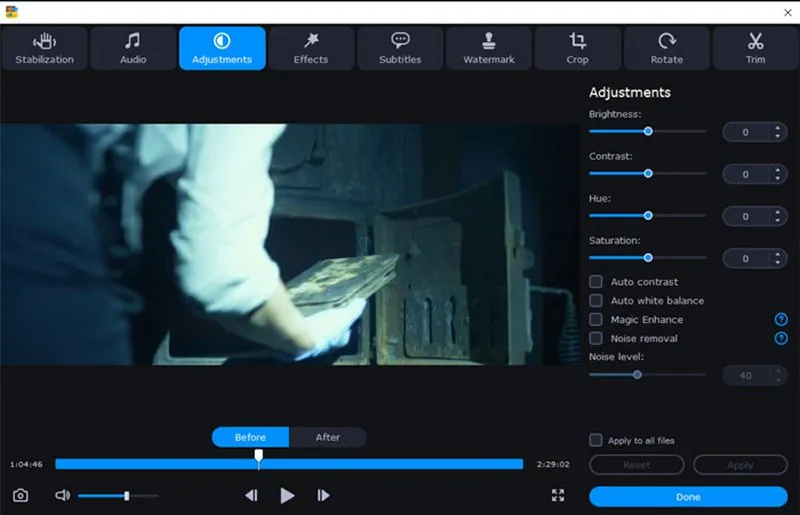
Movavi's video stabilizer a must have
In an age where nearly everyone carries a high-definition camera in their pocket, the sheer volume of video content being created daily is staggering. From capt...Read More

The Future of Education: How Sustainable Living is Revolutionizing the Classroom
Sustainable living is revolutionizing education. Learn how eco-friendly practices are transforming the classroom and promoting social responsibility....Read More
0 Comments
Post Comment
You will need to Login or Register to comment on this post!