
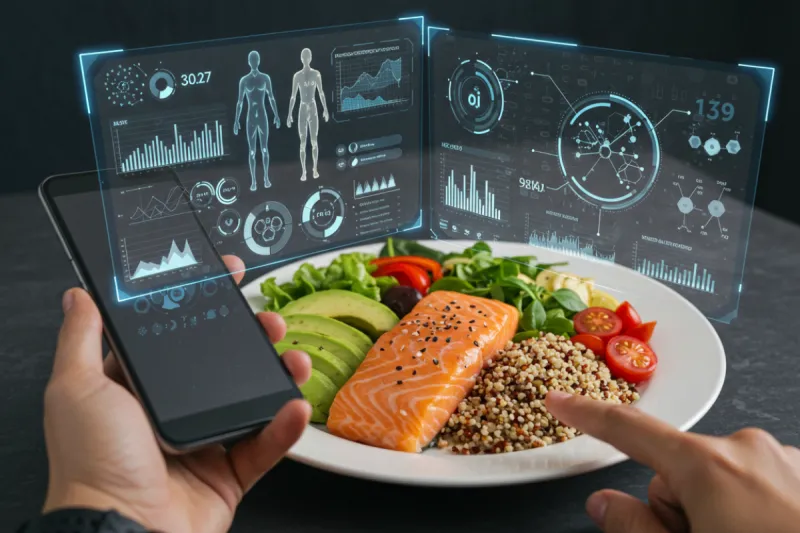
For decades, the standard grocery shopping experience has been a sensory, albeit somewhat disorganized, endeavor. We navigate aisles under fluorescent lights, squinting at labyrinthine ingredient labels printed in minuscule font, trying to decipher complex medical terminology while our ice cream melts in the cart. We rely on half-baked heuristics: "low fat," "all-natural," or "hearty grains." Yet, despite our best intentions, the gap between what we intend to eat and what ends up in our pantries remains vast.
Today, we stand on the cusp of a significant paradigm shift. The integration of Artificial Intelligence (AI) into the retail food sector is moving beyond mere checkout efficiency. It is evolving into a sophisticated nutritional concierge service—a digital companion capable of curating our diets with a precision previously reserved for athletes and clinical patients. By leveraging AI to navigate the modern supermarket, consumers are finally gaining the agency to align their grocery hauls with their biological needs and long-term health goals.
The Problem of Information Asymmetry
The fundamental challenge in grocery shopping is information asymmetry. Manufacturers have mastered the art of "health washing," using strategic marketing language to obscure caloric density, sodium levels, and ultra-processed additives. Even for the most health-literate consumer, the sheer volume of choices is overwhelming. According to industry data, the average supermarket stocks over 30,000 items. Analyzing the health profile of these items in real-time is a cognitive impossibility for the human brain.
AI bridges this gap by acting as a high-speed filter. Instead of scanning labels, a shopper can scan a barcode or rely on a pre-configured profile within a grocery app. AI algorithms can instantly cross-reference a product’s composition against the user’s unique data—their blood glucose levels, known allergens, dietary restrictions (such as low FODMAP or ketogenic), and long-term health metrics. The result is an personalized advisory system that highlights not just what is edible, but what is optimal.
Hyper-Personalization: The End of One-Size-Fits-All Nutrition
General nutritional guidelines—such as "eat a balanced diet"—have long been the default, but they often fail to account for individual variability. One person’s "superfood" might trigger an inflammatory response in another. AI-driven systems are changing this by moving from mass-market advice to hyper-personalization.
Through integration with wearable tech, such as continuous glucose monitors (CGMs) or fitness trackers, AI can synthesize a shopper’s physiological response to various foods. If an individual consistently experiences a sharp glucose spike after consuming a specific brand of "healthy" oat milk, their AI assistant can flag this during the next grocery visit and suggest a low-glycemic alternative.
This level of granular guidance transforms the grocery store from a place of temptation into a laboratory of wellness. By predicting how specific ingredients match an individual’s metabolism, AI turns the shopping list into a precision-engineered plan for vitality.
Streamlining the Mental Load: Efficiency and Cost-Effectiveness
Beyond the nutritional component, AI addresses the logistical "friction" of grocery shopping. The mental load of meal planning—calculating recipes, cross-referencing ingredient lists, and ensuring variety—is a significant barrier to healthy eating.
AI-powered grocery platforms now offer automated meal planning that synchronizes directly with the shopper’s pantry inventory (via smart refrigerators or manual input) and their health goals. If a user needs to increase their protein intake this week while maintaining a specific budget, the AI can generate a list of affordable, nutrient-dense items, suggest recipes that use overlapping ingredients to reduce waste, and build a digital shopping cart ready for pickup or delivery.
This predictive capability also aids in budget management. AI can analyze price fluctuations and suggest store-brand versions of name-brand products that offer identical nutritional profiles. By optimizing for both health and cost, AI ensures that "eating healthy" does not become synonymous with "breaking the bank." This makes high-quality nutrition more accessible to a broader demographic, potentially reducing the prevalence of diet-related chronic conditions.
Navigating Intent vs. Reality
Perhaps the most compelling use case for AI in grocery shopping is its ability to combat "in-store impulse bias." Humans are evolutionarily hardwired to seek out calorie-dense foods, and supermarket layouts are specifically designed to capitalize on this through cross-merchandising and eye-level product placement.
AI helps neutralize these environmental cues. Integrated augmented reality (AR) glasses or mobile apps can "filter" the supermarket aisles, highlighting products that align with the user’s specific health goals while graying out or hiding items that trigger a user’s dietary restrictions. When a shopper approaches an aisle, their device can suggest: "Based on your goal to reduce sodium, consider these three alternatives to the pretzels you usually buy." This real-time nudging acts as a protective layer, helping the shopper adhere to their intentions even when they are tired, hungry, or stressed.
The Ethical Imperative and Data Privacy
As with any technology that relies on personal health data, there are valid concerns regarding privacy and the ethics of influence. If a supermarket knows exactly what a consumer is missing in their diet, they have the power to suggest more expensive alternatives or prioritize products from brands that pay for placement.
To maintain professional and consumer trust, it is essential that AI nutrition platforms operate with transparent algorithms. Users must maintain full ownership of their health data, and recommendations should be based on clinical nutritional standards rather than commercial partnerships. The goal of AI in this space must remain the empowerment of the consumer, not the manipulation of the shopper.
A Future of Informed Consumption
The integration of AI into our food procurement process represents more than just a technological upgrade; it is a fundamental shift in our relationship with nourishment. We are moving away from a reactive model of dieting—where we try to fix health issues after they manifest—to a proactive model of "precision grocery shopping."
By automating the heavy lifting of nutritional analysis, meal planning, and budget management, AI allows us to reclaim our time and our health. The fluorescent aisles of the grocery store are no longer a place of confusion and impulse. Instead, they are becoming a data-rich environment where every choice is an informed step toward improved longevity and well-being.
As we look to the future, the combination of real-time clinical data, machine learning, and intuitive user interfaces promises to make "eating well" not just a goal for the disciplined few, but an achievable reality for the many. The digital pantry is not just a concept; it is the inevitable evolution of the modern human diet, offering us the clarity we need to nourish our bodies, one carefully selected item at a time.

Lauren Miller is a true outdoors enthusiast who has found her passion in the trades. When she's not working hard on the job, you can find her writing, camping, fishing, and exploring all that nature has to offer. A dedicated partner to her wife Beth, Lauren loves nothing more than spending quality time together and experiencing the great outdoors side by side.
Related Posts
How AI Coding Agents Are Revolutionizing E-Commerce Storefront Development
The e-commerce landscape is characterized by unrelenting pressure for speed, scalability, and hyper-... Read More

Building a Second Brain: How Generative AI Transforms Personal Knowledge Management
Learn to turn generative AI into a living personal knowledge base, streamlining capture, connection,... Read More

The AI Renaissance: Reshaping Content, Creativity, and the Human Connection
AI is revolutionizing content, creativity, and human connection. Robert Mathews explores how blogger... Read More
Top Posts

Women's Gift Ideas That Are Sure to Impress: A Curated Guide to Elegant Giving
The quest to find the perfect gift for a woman in your life — be it a wife, mother, sister, friend, or colleague — is a noble endeavor that speaks volumes o...Read More

The Intersection of Fashion and Technology: How Online Shopping is Revolutionizing the Industry
The world of fashion is undergoing a significant transformation, driven by advances in technology. Online shopping has revolutionized the way we buy and interac...Read More

Future‑Proofing SEO for an AI‑First Search World
SEO has shifted from keyword stuffing to an AI‑first, semantic approach. This guide shows how to build topic clusters, optimize for passage indexing, boost Co...Read More

Choosing a VPS That Grows With Your Side‑Project: A Practical Playbook
A hands‑on guide to selecting, securing, and scaling a VPS for side projects, highlighting hidden costs, performance tweaks, and automation strategies that ke...Read More
0 Comments
Post Comment
You will need to Login or Register to comment on this post!