
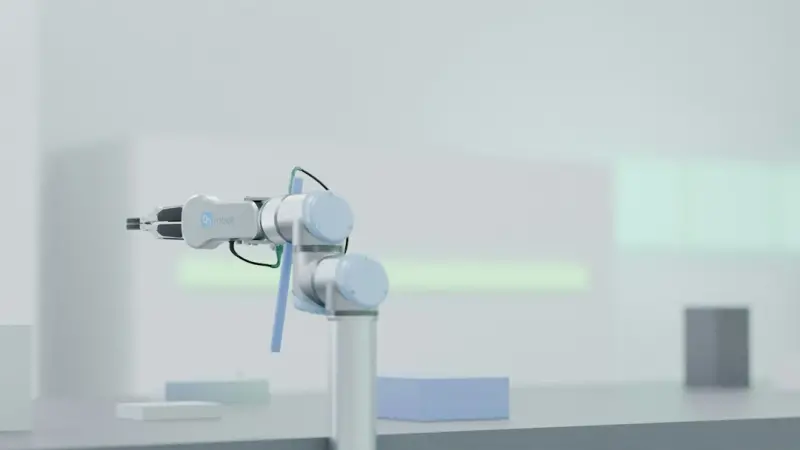
The Edge Revolution in Factories
When I first stepped onto a bustling production floor in the early 2000s, the roar of massive machines was accompanied by a chorus of analog gauges and handwritten logs. Fast forward to today, and that same floor hums with a quieter, more precise rhythm—one dictated by smart edge sensors that sit on the very heart of equipment, whispering data back to operators in real time. This shift isn’t just a technological upgrade; it’s a cultural transformation that forces us to rethink how we design, monitor, and maintain industrial assets.
From Data Deluge to Actionable Insight
Industrial environments generate an overwhelming torrent of data: temperature spikes, vibration signatures, power draw, and more. In the past, most of that information vanished into on‑premise databases, never seeing the light of day. Modern edge sensors, however, perform local analytics—they filter, aggregate, and flag anomalies at the source. By processing data at the edge, we reduce latency, cut bandwidth costs, and, crucially, deliver insights when they matter most, such as the moment a motor’s vibration pattern deviates from the norm.
Adopting an observability mindset in the industrial realm means treating every sensor as a living telemetry endpoint, not a passive data collector. This shift aligns with the broader SaaS trend of turning raw logs into product‑level intelligence, but with the added twist of safety and uptime at stake.
Safety Gains That Matter
Safety has always been a non‑negotiable pillar of manufacturing, yet traditional safety programs rely heavily on scheduled inspections and manual checklists. Edge sensors flip this model on its head by delivering continuous, predictive safety monitoring. Imagine a robotic arm equipped with a torque sensor that instantly alerts supervisors when a load exceeds safe thresholds, or a confined‑space ventilation system that auto‑adjusts airflow the moment oxygen levels dip.
- Real‑time alerts reduce response time from minutes to seconds.
- Automated shutdown protocols prevent catastrophic failures before they happen.
- Compliance reporting becomes effortless, as sensor logs automatically populate audit trails.
These safety improvements translate directly into lower insurance premiums and a stronger reputation for reliability—a competitive edge in any market.
Sustainability Meets Precision
Environmental stewardship is no longer a buzzword; it’s a binding regulation and a market differentiator. Smart edge sensors enable factories to measure what was once only estimated. Energy consumption per unit, waste heat recovery efficiency, and even the carbon footprint of each production run become quantifiable metrics.
With this granularity, plant managers can implement targeted energy‑saving initiatives. For instance, a sensor on a furnace might reveal a pattern of unnecessary idle heating during shift changes, prompting an automated cooldown cycle that saves megawatts annually. Over time, these micro‑optimizations add up, helping companies meet ESG goals without sacrificing output.
Implementation Roadmap: From Pilot to Full‑Scale Deployment
Transitioning to a sensor‑centric architecture can feel daunting, especially for legacy facilities. Here’s a pragmatic, three‑phase roadmap that has worked for many of my clients:
- Discovery & Baseline Mapping: Conduct a thorough audit of critical equipment, documenting current failure modes and maintenance schedules.
- Pilot Deployment: Select a high‑impact line—often a bottleneck machine—and outfit it with a suite of edge sensors. Use this pilot to refine data pipelines, alert thresholds, and integration points with existing SCADA or ERP systems.
- Scale‑Out & Optimize: Leverage insights from the pilot to roll out sensors across the plant, standardizing firmware, security policies, and data models. Continuously iterate on analytics models as more data becomes available.
When scaling, consider the edge server strategies that keep compute close to the machines while maintaining centralized oversight. Hybrid architectures—combining on‑premise edge gateways with cloud analytics—strike the right balance between performance and scalability.
Integrating Edge Sensors with Existing Systems
Most factories already run a mix of legacy PLCs, SCADA dashboards, and ERP platforms. The key to a smooth integration lies in adopting open communication standards like MQTT, OPC UA, and RESTful APIs. These protocols act as universal translators, allowing edge devices to speak fluently with both on‑premise controllers and cloud‑based analytics engines.
Don’t underestimate the importance of data governance. Establish clear ownership of sensor data, define retention policies, and enforce role‑based access controls. A well‑governed data lake not only fuels machine learning models but also satisfies compliance mandates.
Future Horizons: AI‑Driven Edge and Autonomous Factories
While we’ve focused on the tangible benefits of edge sensors today, the horizon holds even more radical possibilities. When edge devices couple with lightweight AI models, they can make local decisions without ever pinging a central server. Picture a conveyor belt that autonomously adjusts speed based on real‑time load balancing, or a 3D printer that self‑optimizes material flow to reduce defects.
These autonomous capabilities will usher in the next generation of “lights‑out” factories—environments where human intervention is reserved for high‑value tasks like strategic planning and creative problem‑solving. The groundwork we lay now, by embedding intelligence at the edge, will define how quickly and safely we reach that future.
Closing Thoughts: Embrace the Edge, Empower the Workforce
The industrial sector stands at a crossroads where technology and tradition intersect. Smart edge sensors are the bridge that allows us to honor decades of craftsmanship while propelling us into a data‑driven era of safety, efficiency, and sustainability. As someone who’s watched the factory floor evolve from analog dials to digital twins, I can attest that the journey is as rewarding as the destination.
Don’t view edge sensors as a fleeting gadget; see them as the nervous system of modern industry—always listening, always learning, and always ready to keep the heartbeat of production strong.

When it comes to the world of blogging and writing, Rose DesRochers is a name that stands out. Her passion for creating quality content and connecting with her audience has made her a trusted voice in the industry. Aside from her skills as a writer and blogger, Rose is also known for her compassionate nature.
Related Posts

Smart Sensors, Modular Pods, and Circular Design: The New Blueprint for Industrial Products
A deep dive into three transformative trends—edge‑enabled smart sensors, modular automation plat... Read More

The Future of Industrial Products: How Sustainable Living is Revolutionizing the Industry
The industrial products sector is undergoing a significant transformation as companies prioritize su... Read More
The Future of Industrial Products: Smart, Sustainable, and Scalable Trends in 2026
A deep dive into 2026’s industrial product landscape, highlighting smart technology, sustainabilit... Read More
Top Posts

The Intersection of Web Design and Sustainable Living: A New Era of Digital Aesthetics
The intersection of web design and sustainable living is an exciting and rapidly evolving field. Learn how to create eco-friendly websites that are beautiful, a...Read More

Beyond the Dashboard: Adaptive Marketing Toolsets for B2B Growth
Learn how to design a flexible, problem‑first digital marketing stack that integrates AI experimentation, unified data lakes, and usage‑based pricing to dri...Read More

SEM Secrets: Redefining Search Engine Marketing in 2024
Jimmy Anand shares his rebellious SEM playbook for 2024, revealing AI‑powered keyword tactics, privacy‑first strategies, and cross‑channel tricks that tur...Read More

Remote Courtrooms: The New Frontier of Justice
A deep dive into the rise of remote courtrooms, their benefits, challenges, and what they mean for lawyers, judges, and the public....Read More
0 Comments
Post Comment
You will need to Login or Register to comment on this post!