

Why “Smart” Is the New Standard in Industrial Products
Walking the factory floor in 2026 feels like stepping onto a stage set for a sci‑fi blockbuster, yet every robot arm and sensor is grounded in real‑world economics. The surge of smart industrial products isn’t just about flashy displays; it’s a response to tighter margins, stricter sustainability mandates, and a workforce hungry for ergonomic tools that talk back. Companies that once relied on legacy equipment now find themselves retrofitting legacy lines with edge‑computing modules that predict wear before a bearing even squeaks. This shift is less about chasing the latest gadget and more about embedding intelligence into the very DNA of production, turning downtime into a statistic of the past. As I’ve seen in countless plant tours, the real ROI comes when data flows seamlessly from sensor to dashboard, allowing engineers to make split‑second decisions that keep the line humming.
Scaling Sustainability: From Green Claims to Measurable Impact
In my years covering industrial tech, the phrase “sustainable manufacturing” has evolved from a marketing buzzword to a measurable KPI that sits beside yield and OEE. The 2026 playbook demands that every component—from the alloy in a gear to the packaging of a finished product—be evaluated for its carbon footprint. Manufacturers are now leveraging closed‑loop water systems, recyclable composite materials, and AI‑driven energy management platforms that cut utility bills by double digits. The real breakthrough, however, lies in integrating life‑cycle assessment tools directly into product design software, ensuring that sustainability isn’t an afterthought but a design parameter. When you see a line that reuses waste heat to power adjacent processes, you realize the industry is finally turning green promises into tangible, auditable outcomes.
Connectivity That Doesn’t Compromise Security
Industrial IoT networks have become the nervous system of modern plants, but with great connectivity comes an ever‑growing threat surface. The paradox of 2026 is that while we crave hyper‑connected devices, we can’t afford a single breach that halts production for weeks. That’s why Future‑Ready Networking strategies now emphasize zero‑trust architectures, edge‑based encryption, and AI‑driven anomaly detection that can quarantine a rogue sensor in milliseconds. I’ve spoken with plant managers who now run “digital twins” not only to simulate throughput but also to stress‑test security configurations before they ever touch the shop floor. The balance of speed and safety is delicate, but the industry’s willingness to invest in robust cyber‑defense is finally catching up with its appetite for speed.
Modular Design: The Answer to Rapid Market Shifts
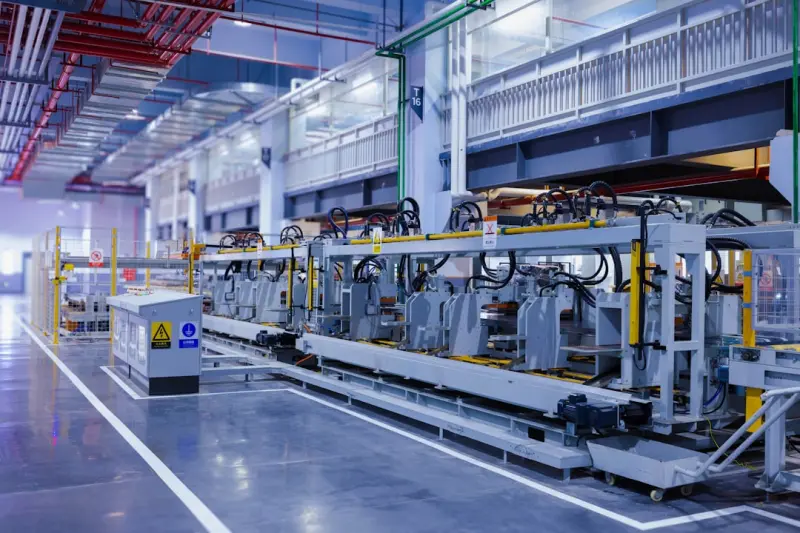
One of the most exciting trends I’ve observed is the move toward truly modular industrial equipment that can be reconfigured on the fly. Rather than ordering a whole new line when a product pivot occurs, manufacturers can swap out interchangeable modules—be it a cutting head, a conveyor segment, or a control unit—within hours. This flexibility dramatically reduces capital expenditure and shortens time‑to‑market, a critical advantage in an era where consumer preferences can change overnight. The underlying technology relies on standardized communication protocols and plug‑and‑play hardware, which also simplifies maintenance and upgrades. In practice, a modular line can adapt from producing automotive parts one week to medical device components the next, all while maintaining compliance and quality standards.
Data‑Driven Maintenance: From Reactive to Predictive
Maintenance has traditionally been a reactive discipline—fix something when it breaks. In 2026, we’ve entered the era of predictive maintenance powered by machine learning models that analyze vibration, temperature, and acoustic signatures in real time. By feeding this data into cloud‑based analytics platforms, plants can forecast component failures weeks in advance, schedule interventions during planned downtime, and dramatically extend asset lifespans. The financial impact is palpable: reduced unplanned outages translate into higher throughput and lower overtime costs. Moreover, predictive insights empower technicians with prescriptive actions, turning a once‑guesswork process into a science‑backed operation that aligns perfectly with lean manufacturing principles.
Human‑Centric Automation: Augmenting, Not Replacing
Automation is no longer a zero‑sum game pitting machines against workers; it’s an opportunity to create collaborative environments where humans and robots share tasks intelligently. Cobots—collaborative robots—are now equipped with force‑feedback sensors and adaptive learning algorithms that allow them to adjust grip strength on the fly, ensuring safety while handling delicate components. From my conversations on the shop floor, I’ve learned that operators appreciate when automation takes over repetitive, ergonomically taxing jobs, freeing them to focus on quality inspection and process optimization. This synergy not only boosts morale but also drives productivity, as human intuition combined with robotic precision yields outcomes neither could achieve alone.
Supply Chain Resilience Through Digital Twins
The shockwaves of recent global disruptions have taught us that a resilient supply chain is as vital as a resilient production line. Digital twins now extend beyond individual machines to model entire supply networks, simulating everything from raw material shortages to transportation bottlenecks. By running “what‑if” scenarios in a virtual environment, planners can identify choke points, evaluate alternative sourcing strategies, and pre‑emptively adjust inventory buffers. The result is a supply chain that can pivot with the agility of a start‑up while maintaining the scale of a multinational. In my experience, companies that have adopted digital twin technology report a 20‑30% reduction in lead times and a significant drop in stock‑out incidents.
Integrating Smart Products Into the Broader Industrial Ecosystem
All these advancements converge in the concept of a fully integrated industrial ecosystem, where smart products communicate not just within a single plant but across the entire value chain. When a machine on a production line detects an anomaly, it can automatically notify suppliers, logistics partners, and even downstream customers, creating a transparent flow of information that minimizes waste. This vision is already materializing thanks to standards like OPC UA and emerging 5G edge networks, which provide the bandwidth and reliability needed for seamless data exchange. The end result is a supply‑demand loop that self‑optimizes, delivering products faster, greener, and at lower cost—all while keeping stakeholders in the loop.
What’s Next? The Horizon of Industrial Product Innovation
Looking ahead, the next frontier for industrial products lies at the intersection of quantum computing, advanced materials, and bio‑inspired design. While still nascent, these technologies promise to unlock efficiencies we can barely imagine today. Imagine a furnace that uses quantum‑optimized algorithms to minimize energy consumption, or biodegradable composites that maintain structural integrity while reducing landfill impact. As we stand on the cusp of these breakthroughs, the key takeaway for today’s manufacturers is simple: stay curious, stay adaptable, and keep the human element at the heart of every innovation. The journey from smart to truly intelligent industrial products is already underway, and those who embrace it now will shape the future of manufacturing for decades to come.

Miranda Murphy: Experienced freelance writer with a decade of storytelling expertise. Let's create something amazing together!
Related Posts

The Future of Industrial Products: How Sustainable Living is Revolutionizing the Industry
The industrial products sector is undergoing a significant transformation as companies prioritize su... Read More

How Smart Sensors Are Redefining the Future of Industrial Products
Smart sensors are turning traditional industrial equipment into data‑rich, predictive assets. By l... Read More
Modular Momentum: Redefining Industrial Equipment for Agility and Sustainability
A deep dive into modular industrial equipment reveals how breaking down monolithic machines into int... Read More
Top Posts

Rewilding Your Routine: Tiny Nature Rituals for Modern Well‑Being
Learn to weave brief nature rituals into your daily life, creating calm, focus, and resilience through tiny, repeatable habits that transform well‑being....Read More

Finding Balance in a Busy World: My Journey to Prioritizing Self-Care
Learn how to prioritize self-care in a busy world. Discover simple self-care practices to reduce stress and improve overall well-being....Read More

The Best Bottles for Breastfed Babies, Tested by Parents
The decision to introduce a bottle to a breastfed baby is often accompanied by anxiety. Parents fear "nipple confusion," the potential for the baby to develop a...Read More

Guarding the Code River: A Fresh Take on Open‑Source Supply Chain Security
Learn how to treat every third‑party library as a potential attack vector, apply zero‑trust principles, and build a culture of vigilance to safeguard your c...Read More
0 Comments
Post Comment
You will need to Login or Register to comment on this post!