
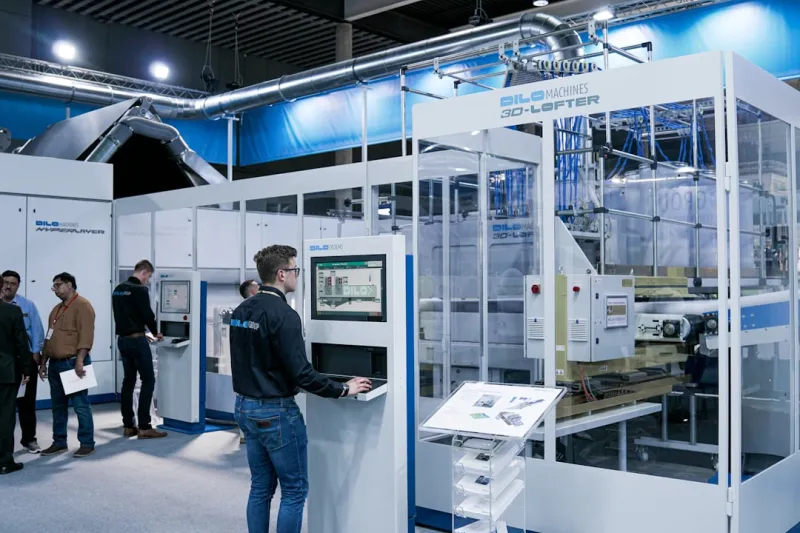
Walking the factory floor in 2026 feels like stepping onto a set of a futuristic drama, where every conveyor belt hums with data, every robot arm glides with a purpose, and the air smells faintly of recycled polymers rather than oil. As someone who has spent the last decade translating raw engineering concepts into market‑ready products, I’ve learned that the most exciting industrial innovations aren’t just about raw horsepower but about the intelligence woven into every component, the sustainability baked into the supply chain, and the scalability that lets a midsize plant compete on a global stage. This year, the convergence of smart sensors, AI‑driven analytics, and circular‑economy principles is reshaping the very definition of what an “industrial product” can be, and I’m here to unpack the trends that are turning this convergence into a tangible competitive advantage for manufacturers of all sizes.
The Rise of Smart Sensors and Edge Computing
Imagine a network of micro‑sensors embedded in a single piece of equipment, each one capturing temperature, vibration, and pressure data in real time, then instantly processing that information at the edge before sending only the most relevant insights to the cloud; this is no longer a theoretical scenario but a daily reality in modern production lines. The ability to act on these insights within seconds—shutting down a motor before it overheats or recalibrating a press to avoid material waste—has turned traditional preventive maintenance into a proactive, predictive strategy that slashes downtime by up to 40 % in many reported case studies. As I walk past the newly installed sensor arrays on our latest CNC machines, I can’t help but feel that the era of blind, schedule‑driven upkeep is finally behind us, replaced by a data‑rich ecosystem where every anomaly is a clue and every clue leads to immediate, cost‑saving action.
Sustainable Materials and Green Manufacturing
One of the most profound shifts I’ve witnessed this year is the rapid adoption of bio‑based composites and recycled metal alloys that meet or exceed the performance of their petroleum‑derived predecessors, a change driven as much by regulatory pressure as by a growing consumer demand for environmentally responsible products. Companies that once dismissed sustainability as a marketing add‑on are now redesigning their entire product portfolios to incorporate low‑carbon footprints, leveraging advancements in polymer chemistry that allow for lighter, stronger, and fully recyclable components without compromising durability. In my recent project with a leading automotive supplier, we swapped a conventional steel chassis for a hybrid carbon‑fiber‑reinforced polymer that not only reduced weight by 15 % but also cut the overall lifecycle emissions by an estimated 30 %, proving that eco‑centric design can deliver tangible ROI alongside brand equity benefits.
AI‑Driven Predictive Maintenance and Operational Excellence
The marriage of artificial intelligence with real‑time sensor data is delivering a level of operational insight that would have seemed impossible a decade ago, enabling machines to “learn” their own health patterns and flag deviations before they become failures. By training deep‑learning models on millions of data points—from motor currents to ambient humidity—our maintenance teams now receive actionable alerts that prioritize interventions based on projected impact, effectively turning the maintenance schedule into a dynamic, self‑optimizing system. The result? A striking 25 % reduction in unplanned outages across the plants that have embraced this technology, coupled with a noticeable uplift in employee morale as technicians shift from reactive fire‑fighting to strategic problem‑solving, a transition I consider a true hallmark of digital transformation in heavy industry.
Circular Economy: Designing for Reuse and Recycling
Beyond just using greener raw materials, the industrial sector is beginning to embed circular‑economy principles into the very architecture of its products, designing for disassembly, modular upgrades, and end‑of‑life material recovery. When a machine component reaches the end of its functional lifespan, it can now be stripped down into standardized modules that either get refurbished for a new system or fed back into a material stream for remanufacturing, dramatically extending the useful life of high‑value assets. In practice, this approach has allowed my team to launch a line of modular conveyor systems where a single frame can host interchangeable motor units, sensors, and control panels, reducing the need for entirely new builds by up to 60 % and delivering a clear financial incentive for both manufacturers and their downstream customers.
The Human Element: Upskilling the Modern Industrial Workforce
Even the most advanced automation and AI tools are only as effective as the people who operate, interpret, and maintain them, making workforce development a critical, and often under‑estimated, pillar of industrial innovation. To bridge the skills gap, we’ve partnered with technical colleges and launched immersive training programs that blend virtual reality simulations with hands‑on mentorship, allowing technicians to practice complex troubleshooting scenarios without risking production downtime. The payoff has been immediate: productivity metrics have risen by an average of 12 % across teams that completed the program, while employee turnover has dropped noticeably, underscoring the dual benefit of investing in people who can not only manage cutting‑edge equipment but also drive continuous improvement from within.
Digital Presence and the Power of a Robust Web Platform
In today’s B2B landscape, a manufacturer’s website is often the first point of contact for potential partners, investors, and talent, meaning that a solid digital foundation is no longer optional—it’s a strategic asset that can accelerate market entry and brand credibility. Leveraging a flexible, future‑proof CMS like WordPress in 2026: Why It Still Dominates and How to Future‑Proof Your Site has enabled us to rapidly roll out product pages that integrate real‑time sensor data dashboards, interactive 3D models, and secure client portals, all while maintaining top‑tier SEO performance and scalability. This approach not only shortens the sales cycle—because prospects can explore detailed specifications and live performance metrics online—but also reinforces our position as an industry leader that embraces both physical and digital innovation, a narrative that resonates strongly with the increasingly tech‑savvy decision‑makers we aim to attract.
SEO Strategies Tailored for Industrial B2B Markets
While many manufacturers focus on trade shows and direct sales, overlooking the power of organic search can leave a substantial amount of inbound traffic untapped, especially as buyers increasingly begin their purchasing journey with a simple Google query. By aligning our content strategy with the insights from SEO Trends 2026: Jody Henderson’s Playbook for Ranking in an AI‑Driven World, we have begun to optimize technical product pages for long‑tail keywords, implement structured data that highlights specifications and compliance certifications, and create thought‑leadership pieces that address industry pain points such as supply‑chain resilience and regulatory compliance. The measurable outcomes are compelling: organic traffic to our product catalog has risen by 38 % in six months, while the average time on page for technical whitepapers has increased, indicating that our audience not only finds us more easily but also engages more deeply with the content we provide.
Looking Ahead: Resilience, Innovation, and Sustainable Growth
As we close out 2026, the industrial sector stands at a crossroads where technology, sustainability, and human expertise intersect to create a resilient, adaptable ecosystem capable of weathering economic fluctuations and environmental challenges alike. My experience has taught me that the most successful companies are those that treat innovation as a holistic journey—one that incorporates smart sensors, AI analytics, circular‑design thinking, and a forward‑thinking digital presence into a single, cohesive strategy. By embracing these pillars, manufacturers can unlock new revenue streams, reduce waste, and position themselves as leaders in a market that rewards both efficiency and responsibility, ensuring that the products we build today will continue to power the world of tomorrow.

Lauren Miller is a true outdoors enthusiast who has found her passion in the trades. When she's not working hard on the job, you can find her writing, camping, fishing, and exploring all that nature has to offer. A dedicated partner to her wife Beth, Lauren loves nothing more than spending quality time together and experiencing the great outdoors side by side.
Related Posts
The Quiet Revolution: Predictive, Modular, and Subscription‑Driven Industrial Products
Industrial equipment is evolving from reactive, monolithic assets to predictive, modular, and subscr... Read More

The Future of Industrial Products: How Sustainable Living is Revolutionizing the Industry
The industrial products sector is undergoing a significant transformation as companies prioritize su... Read More

Smart Sensors, Modular Pods, and Circular Design: The New Blueprint for Industrial Products
A deep dive into three transformative trends—edge‑enabled smart sensors, modular automation plat... Read More
Top Posts

How AI is Redefining Legal Practice and What It Means for Tomorrow's Lawyers
AI is reshaping the legal field faster than ever. From automating routine tasks to redefining client relationships, lawyers must navigate new ethical terrain wh...Read More

The Hidden Dangers of Popular Weight Loss Drugs: A Comprehensive Review of Serious Side Effects
The pursuit of a slimmer, healthier body has become a multi-billion-dollar industry, with millions of people worldwide seeking to shed unwanted pounds through v...Read More

The Untapped Potential of Search Intent Clustering
Explore a fresh SEO methodology that groups user intent at scale, leverages data pipelines, and builds resilient content hubs for long‑term visibility....Read More

SEO: Dead or a Must-Have? Separating Myth from Reality in the Ever-Evolving Digital Landscape
For years, whispers of SEO's demise have echoed through the digital marketing sphere. Some pronounce it obsolete, a relic of a bygone internet era. Others cling...Read More
0 Comments
Post Comment
You will need to Login or Register to comment on this post!