

Industrial manufacturing has always been a dance between rugged durability and relentless innovation. Yet, in the last decade the rhythm has shifted dramatically—thanks to a convergence of sensor technology, data‑centric design, and a growing urgency for sustainability. As someone who’s spent the better part of my career watching factory floors evolve from clunky assembly lines to intelligent ecosystems, I’m convinced we’re on the brink of a new industrial renaissance. This post dives into three intertwined trends that are reshaping the industrial products landscape: edge‑enabled smart sensors, modular automation platforms, and circular‑economy‑first material strategies.
Edge‑Enabled Smart Sensors: The Nervous System of the Modern Factory
When I first heard the term “edge computing” in a coffee‑shop conversation, I imagined a tiny device perched on the edge of a cliff, shouting data into the abyss. The reality is far more grounded—and far more powerful. Edge‑enabled smart sensors sit directly on the equipment they monitor, processing data locally before sending only the most critical insights to the cloud. This architecture reduces latency, cuts bandwidth costs, and—perhaps most importantly—keeps proprietary process data close to home.
Here are the core advantages that make edge sensors a game‑changer for industrial products:
- Real‑time responsiveness: Traditional SCADA systems often operate with a few‑second lag. Edge sensors can detect a temperature spike or vibration anomaly in milliseconds, triggering immediate corrective actions.
- Bandwidth efficiency: By filtering raw data at the source, factories avoid flooding their networks with terabytes of unnecessary information.
- Enhanced security: Local processing limits exposure of sensitive operational data, echoing the principles highlighted in privacy‑first hosting strategies that prioritize data stewardship.
- Scalable deployment: Sensors are often plug‑and‑play, meaning you can start with a single critical machine and expand across the plant without massive re‑engineering.
Consider a typical scenario in a metal‑forming shop: a hydraulic press equipped with an edge sensor monitors pressure, temperature, and acoustic signatures. If the sensor detects a pattern that historically precedes a seal failure, it can automatically reduce load, alert maintenance, and schedule a service window—all before a catastrophic breakdown occurs. The result? Up to 30 % reduction in unplanned downtime, according to several case studies.
Modular Automation Platforms: Building Flexibility Into Heavy‑Duty Machinery
Historically, industrial equipment has been monolithic—designing a new line of conveyor belts or robotic arms often meant a multi‑year engineering effort and a hefty capital outlay. The new wave of modular automation flips that script. Manufacturers now purchase “automation pods”—self‑contained units that combine actuation, control, and connectivity. These pods can be snapped onto existing frames, re‑configured, or swapped out entirely as production needs shift.
Why does this matter? Three key reasons:
- Rapid retooling: When a factory pivots to a new product, modular pods can be reprogrammed in days rather than months, slashing time‑to‑market.
- Cost predictability: Instead of a massive upfront expense, companies can adopt a subscription‑like model—paying per pod and scaling as demand grows.
- Future‑proofing: As new standards (e.g., OPC UA, MQTT) become prevalent, manufacturers can upgrade pods without overhauling the entire line.
One compelling example comes from a mid‑size beverage producer that replaced its legacy bottling line with modular filling stations. Each station included a smart pump, vision‑based fill‑level verification, and edge analytics. Within six weeks, the plant added a new product variant without any major downtime, simply by swapping out the nozzle pod and updating the control logic.
Modular automation also dovetails nicely with the rise of digital twins—virtual replicas of physical equipment. By pairing a modular pod’s data feed with a twin, engineers can simulate changes before they happen on the shop floor, dramatically reducing risk.
Circular‑Economy‑First Materials: Redefining the Lifespan of Industrial Products
Beyond the buzzwords, circular economy in industrial manufacturing is about designing products for reuse, refurbishment, and recyclability from day one. Traditional heavy‑equipment manufacturers have long relied on steel, cast iron, and proprietary alloys—materials that are durable but often difficult to recycle efficiently. A new generation of designers is challenging that status quo.
Key strategies include:
- Design for disassembly: Using standardized fasteners and modular components so that individual parts can be separated without destructive processes.
- Material passports: Embedding digital tags that record the composition and lifecycle data of each component, enabling precise sorting at end‑of‑life.
- Re‑engineered composites: Leveraging bio‑based resins and reclaimed fibers to create parts that meet performance specs while reducing virgin material demand.
Take the case of a leading crane manufacturer that introduced a “take‑back” program. Every crane sold includes a material passport linked to a cloud‑based registry. When the crane reaches the end of its service life, the company orchestrates a reverse‑logistics flow, dismantles the unit, and routes steel components to a recycling partner while refurbishing electronic modules for resale. The program has cut raw‑material procurement costs by 12 % and reduced landfill waste dramatically.
Implementing circular principles isn’t merely an environmental checkbox—it directly influences the bottom line. Reduced material costs, lower waste disposal fees, and new revenue streams from refurbished components create a compelling business case.
Bringing It All Together: A Blueprint for the Next‑Gen Industrial Product Strategy
When I sit down with senior engineers and operations leaders, the conversation often revolves around three questions:
- How can we make our equipment smarter without compromising reliability?
- What steps can we take to stay agile in a market that demands rapid product pivots?
- In what ways can we embed sustainability into our core design philosophy?
The answers converge on the three trends explored above. Below is a practical roadmap that any industrial organization can adopt:
- Audit your current sensor ecosystem. Identify high‑risk assets and prioritize edge sensor retrofits that deliver immediate ROI.
- Start small with modular pods. Pilot a single production cell using modular automation; measure impact on changeover time and scalability.
- Introduce material passports. Even a basic QR‑code system can begin to capture essential composition data for future recycling.
- Integrate digital twins. Pair sensor data with virtual models to simulate maintenance scenarios and process optimizations.
- Build a cross‑functional sustainability team. Bring together product engineers, supply‑chain managers, and finance to align circular goals with corporate KPIs.
One real‑world illustration that ties all three pillars together is a European wind‑turbine manufacturer that recently overhauled its production line. They equipped each turbine blade with edge sensors that monitor stress and temperature during molding. The molds themselves are modular pods, allowing quick swaps between blade sizes. Finally, each blade carries a material passport documenting the composite fibers used, facilitating end‑of‑life recycling. The result? A 20 % boost in production throughput, a 15 % drop in warranty claims, and a clear path to meeting upcoming EU circular‑economy regulations.
Looking Ahead: The Human Element in a Hyper‑Connected Factory
Technology alone won’t carry the industrial revolution forward. The workforce—engineers, technicians, and line operators—must be equipped with the right skills and mindset. Upskilling programs focused on data interpretation, modular system integration, and sustainable design are essential. Companies that invest in continuous learning see not only higher employee retention but also faster adoption of new technologies.
In my experience, the most successful factories treat technology as an enabler rather than a replacement. When a maintenance crew receives real‑time alerts from edge sensors, they can intervene proactively, reducing stress and increasing job satisfaction. When modular pods arrive, operators view them as new tools to experiment with, fostering a culture of innovation on the floor.
Finally, consider the broader ecosystem: suppliers, customers, and even regulators are all part of the circular conversation. Transparent data sharing—securely, of course—can unlock collaborative opportunities, such as joint product redesigns that use recycled content or shared logistics for module swaps.
Conclusion: From Reactive to Proactive, From Linear to Circular
The industrial products sector stands at a pivotal crossroads. Edge‑enabled smart sensors are giving machines the ability to feel and react in real time. Modular automation platforms are turning rigidity into adaptability. And circular‑economy‑first material strategies are redefining what durability means in a world that can’t afford waste.
For manufacturers willing to embrace these trends, the payoff is clear: higher uptime, faster time‑to‑market, and a resilient, future‑proof business model. For those who cling to legacy mindsets, the risk is not just lost profit—it’s becoming obsolete in a market that moves at the speed of data.
If you’re curious about how ultra‑quiet design principles can further enhance the ergonomics of industrial environments, take a look at ultra‑quiet industrial machinery. And for a deeper dive into securing edge‑generated data, the personal data guardianship model offers valuable parallels.
In the end, the next wave of industrial innovation isn’t about building bigger machines; it’s about building smarter, greener, and more adaptable ones. The tools are here, the knowledge is emerging, and the opportunity is waiting for those bold enough to seize it.

Dale Peterson is a freelance writer with a passion for technology, travel, law and personal finance. With 10 years of experience crafting compelling and informative content, he's dedicated to delivering high-quality writing for Blogging Fusion that engages audiences and achieves specific goals.
Related Posts
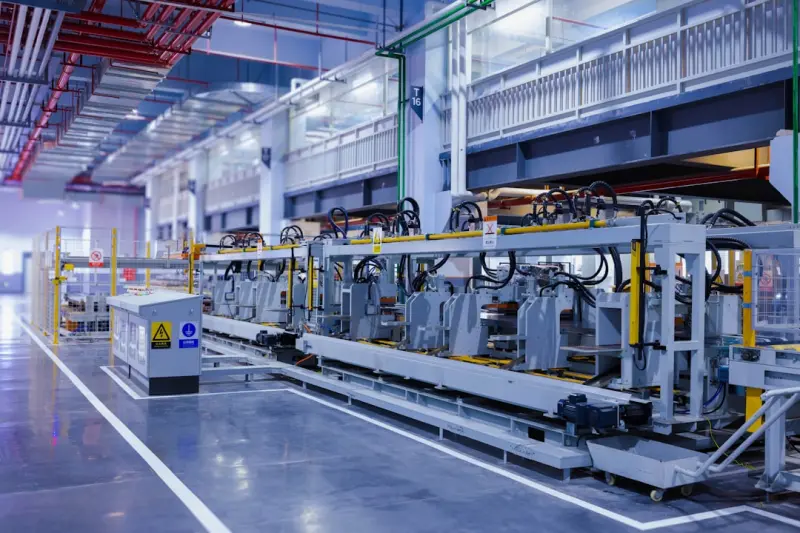
Smart Industrial Products: Turning Data Into Real‑World Advantage
Industrial products are evolving from static hardware to intelligent, data‑driven systems. Learn h... Read More
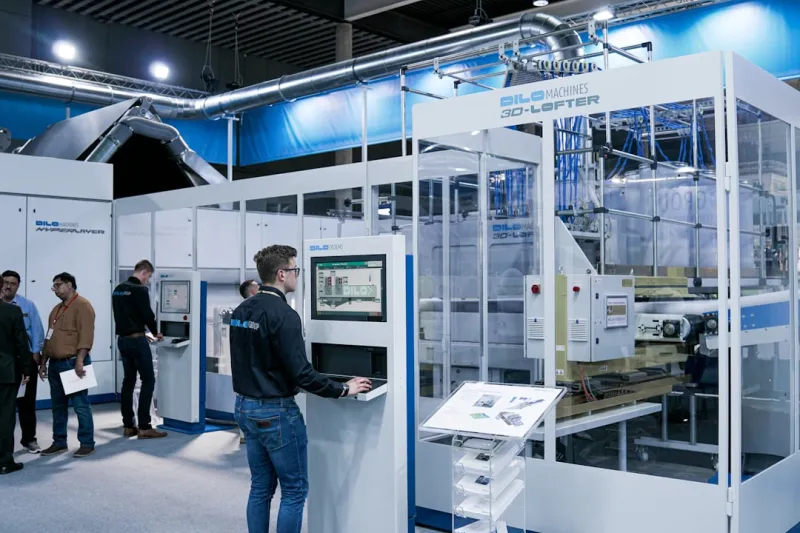
Industrial Innovation in 2026: Smart, Sustainable, and Scalable Solutions
Discover the 2026 industrial trends—smart sensors, AI maintenance, sustainable materials, and digi... Read More
Edge AI: Turning Industrial Products Into Intelligent Partners
Edge AI is reshaping the industrial landscape by embedding intelligence directly into machinery, ena... Read More
Top Posts

The Evolution of Eco-Friendly Fashion: How Sustainable Living is Revolutionizing the Industry
The fashion industry is undergoing a significant transformation, driven by the growing demand for sustainable and eco-friendly fashion. Learn how sustainable li...Read More

Unlocking On‑Page SEO for Voice Search: A Practical Guide
Discover a step‑by‑step on‑page SEO strategy designed for voice search. From conversational content to schema and speed, boost your rankings and capture h...Read More

The Evolution of Sports: How Technology and Sustainability Are Changing the Game
The sports industry is undergoing a significant transformation, driven by advances in technology and a growing awareness of environmental issues, leading to a m...Read More

When AI Becomes Your Co‑Creator: Rethinking B2B Storytelling
Artificial intelligence is no longer a lone genius but a collaborative partner. This post explores how B2B SaaS teams can co‑create compelling stories with AI...Read More
0 Comments
Post Comment
You will need to Login or Register to comment on this post!