
From Factory Floor to Cloud: The Quiet Evolution of Smart Industrial Products
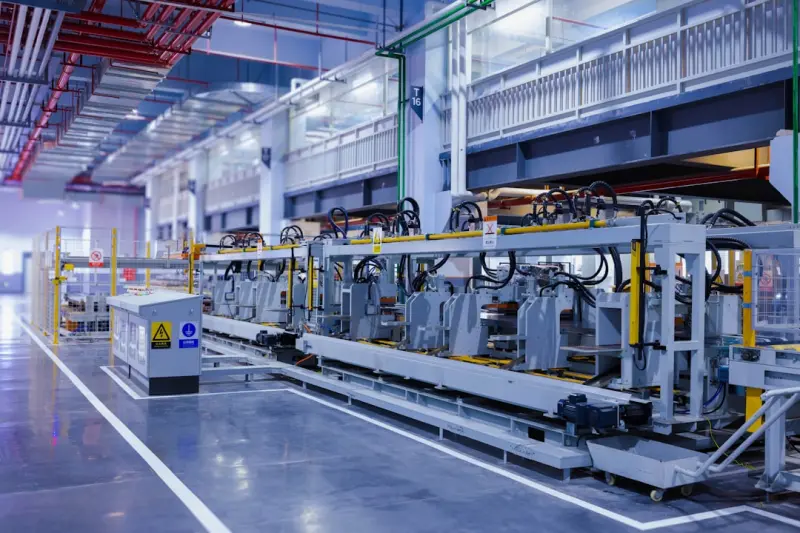
When I first stepped onto a sprawling manufacturing site twenty years ago, the roar of conveyor belts and the smell of hot metal were the soundtrack of progress. Fast forward to today, and the same floor hums with a different kind of energy—a subtle, data‑driven conversation between machines, sensors, and the cloud. The industrial products we once knew as static, monolithic hardware are now dynamic, adaptable platforms that learn, predict, and even self‑heal. This transformation isn’t a flashy headline; it’s a quiet evolution that’s reshaping how we design, operate, and maintain the very backbone of modern economies.
Why “Smart” Isn’t Just a Buzzword Anymore
“Smart” used to be a marketing suffix—smart thermostats, smart watches, smart homes. In the industrial realm, it was an after‑thought, a luxury layer slapped onto existing equipment. Today, intelligence is baked in from the outset. Embedded sensors, edge computing, and AI analytics are no longer optional add‑ons; they are essential components that dictate a product’s viability.
The shift is driven by three converging forces:
- Data abundance: High‑resolution sensors now capture vibration, temperature, acoustic signatures, and energy draw in real time.
- Processing at the edge: Modern micro‑controllers can preprocess data locally, reducing latency and bandwidth costs.
- Scalable cloud platforms: The cloud provides the computational muscle to run sophisticated predictive models across fleets of equipment.
When these elements work in harmony, you get a product that doesn’t just perform a function—it continuously optimizes that function.
Predictive Maintenance: Turning Downtime into Data
Perhaps the most tangible benefit of smart industrial products is predictive maintenance. In the past, maintenance schedules were either reactive (fix it when it breaks) or preventive (service every X hours). Both approaches waste resources: the former leads to costly unplanned outages, the latter can result in unnecessary part replacements.
Today, a single piece of equipment can stream vibration spectra, oil temperature, and motor current to a cloud‑based analytics engine. By applying machine‑learning algorithms, the system identifies subtle anomalies—like a 0.2 Hz shift in bearing frequency—that precede failure by weeks or even months. Maintenance teams receive a concise alert: “Replace bearing on Unit 7 before Friday to avoid projected downtime.” The result is a measurable reduction in mean time between failures (MTBF) and a healthier bottom line.
Digital Twins: The Virtual Counterpart That Never Sleeps
Imagine having a perfect digital replica of every pump, robot arm, or conveyor belt you own. That’s the promise of the digital twin—a real‑time, physics‑based model that mirrors its physical counterpart. By feeding live sensor data into the twin, engineers can simulate “what‑if” scenarios without ever stopping the line.
For instance, before you increase the load on a CNC machine, you can run a stress test in the twin to see how the spindle temperature will respond. If the simulation predicts overheating, you adjust the parameters in the virtual environment first, then apply the safe settings on the shop floor. This iterative loop shortens product development cycles and mitigates risk, especially in high‑precision industries like aerospace and medical devices.
Modular Design Meets Software Flexibility
Industrial hardware has traditionally been monolithic—once built, it was difficult to upgrade. Modern designers are embracing modularity, treating hardware like a chassis and the software as interchangeable “apps.” A modular motor, for example, can accept plug‑in firmware updates that unlock new speed profiles or energy‑saving modes without any physical alteration.
This approach mirrors the SaaS model that has revolutionized enterprise software. Just as a CRM can roll out new features via the cloud, a modular pump can receive a firmware patch that adds remote throttling capability. The benefit? Extended product lifespans, reduced capital expenditures, and a path to continuous revenue through subscription‑based feature tiers.
Supply Chain Resilience Powered by Real‑Time Visibility
The recent disruptions in global logistics taught us that a lack of visibility can cripple even the most robust manufacturing operations. Smart industrial products now serve as data beacons throughout the supply chain. RFID‑enabled components report their location, condition, and estimated arrival times back to a centralized dashboard.
When a shipment of critical bearings is delayed, the system automatically triggers alternative sourcing workflows, re‑optimizes production schedules, and notifies downstream stakeholders. The result is a supply chain that can adapt on the fly, rather than one that scrambles in the wake of an unexpected bottleneck.
Integrating with the Broader Digital Ecosystem
Industrial products don’t operate in isolation. They must communicate with enterprise resource planning (ERP) systems, manufacturing execution systems (MES), and sometimes even customer‑facing portals. Achieving seamless integration requires robust, standards‑based APIs and, increasingly, AI‑driven multi‑cloud orchestration to manage data flows across heterogeneous environments.
Imagine a scenario where a sudden spike in energy consumption on a production line triggers an automated response: the MES throttles non‑essential processes, the ERP adjusts inventory forecasts, and a dashboard alert is pushed to the facilities manager—all within seconds. This level of orchestration was once the domain of speculative tech demos; now it’s a practical necessity for maintaining competitive advantage.
Connectivity at Scale: The Role of Mesh Networks
One of the biggest challenges in retrofitting legacy factories with IoT capabilities is reliable connectivity. Traditional Wi‑Fi or wired solutions often stumble in sprawling facilities with metallic interference. Enter mesh networks—a decentralized architecture where each node relays data for the others, creating a resilient, self‑healing web of communication.
By deploying low‑power mesh nodes alongside sensors, manufacturers can achieve pervasive coverage without expensive cabling. The network automatically re‑routes around failed nodes, ensuring that critical data never gets lost. For a deeper dive into how this technology reshapes connectivity, see our piece on mesh networks.
Environmental Impact: Greener Machines for a Greener Planet
Industrial products have historically been heavy consumers of energy and raw materials. Smart design is turning that narrative around. Sensors now monitor energy efficiency in real time, enabling dynamic adjustments that cut waste. Moreover, manufacturers are increasingly adopting recycled alloys and bio‑based polymers for enclosures and housings.
When a motor controller can dim its power draw by 15% during low‑load periods, those savings compound across an entire plant, translating into lower carbon footprints and reduced operating costs. This synergy of sustainability and profitability is no longer a niche; it’s fast becoming a baseline expectation from investors and customers alike.
The Human Element: Upskilling the Workforce
All the technology in the world won’t matter if the people operating the equipment can’t interpret the data. Training programs are evolving from “how to press a button” to “how to read a predictive analytics dashboard.” Companies are investing in digital literacy, data storytelling, and cross‑functional collaboration to ensure that engineers, operators, and managers speak the same language.
Mentorship models, gamified learning platforms, and virtual reality simulations are all part of this new educational ecosystem. When workers can visualize a digital twin in an immersive environment, they develop an intuitive understanding of cause‑and‑effect relationships that were previously abstract concepts.
Future Outlook: From Reactive to Autonomous
We stand at a crossroads where industrial products are transitioning from reactive tools to autonomous agents. The next wave will likely feature self‑optimizing robots that negotiate task assignments, self‑diagnosing pipelines that reroute flows around faults, and AI‑orchestrated production lines that adapt in real time to market demand fluctuations.
These advances will be underpinned by three pillars:
- Edge intelligence: Devices that not only collect data but also make split‑second decisions locally.
- Federated learning: Models that improve collectively across fleets without sharing raw data, preserving privacy and reducing bandwidth.
- Interoperable standards: Open protocols that allow disparate vendors’ equipment to speak the same language.
When these pillars align, we’ll see an industrial ecosystem that operates with the elegance of a living organism—responsive, resilient, and constantly evolving.
Takeaway: Embrace the Smart Shift, One Step at a Time
The journey toward truly smart industrial products doesn’t require a wholesale overhaul overnight. Start with a pilot—install a handful of vibration sensors on critical assets, connect them to a cloud analytics platform, and observe the first predictive insights. From there, expand to digital twins, modular firmware updates, and mesh network connectivity.
By treating each upgrade as a learning experiment, you’ll build a culture that values data, embraces change, and ultimately drives sustainable growth. The industrial landscape is shifting beneath our feet, and the most successful companies will be those that listen to the quiet, data‑driven conversations happening on their factory floors today.

Margaret Thomson is a seasoned freelance writer specializing in the dynamic worlds of marketing and advertising. With a career deeply rooted in the marketing field, Margaret brings a wealth of practical experience and insightful knowledge to her writing.
Related Posts

How Smart Sensors Are Redefining the Future of Industrial Products
Smart sensors are turning traditional industrial equipment into data‑rich, predictive assets. By l... Read More
Beyond the Factory Floor: How Digital Twins Are Redefining Industrial Product Innovation
Digital twins act as living virtual replicas of physical assets, enabling predictive maintenance, de... Read More

The Future of Industrial Products: Smart, Sustainable, and Scalable Trends in 2026
A deep dive into 2026’s industrial product landscape, highlighting smart technology, sustainabilit... Read More
Top Posts

Micro‑Frontends: Scaling UI Development for Enterprise SaaS
Micro‑frontends let teams build, test, and deploy UI pieces independently, reducing release cycles and risk while delivering a cohesive, high‑performance us...Read More

When Algorithms Feel: Harnessing AI‑Driven Empathy for B2B Success
Empathy is the missing link in enterprise AI. This post shows how to embed emotional intelligence into models, design empathetic interfaces, and measure impact,...Read More

Designing On‑Page SEO for Conversational Search
A deep dive into structuring content, schema, and technical foundations for voice‑first search, showing how conversational SEO can drive higher rankings, rich...Read More
Unlocking the Past: How AI Tools Are Revolutionizing Family History Research
Genealogy has long been regarded as a labor of love—often more accurately described as a labor of persistence. For generations, piecing together a family tree...Read More
0 Comments
Post Comment
You will need to Login or Register to comment on this post!