
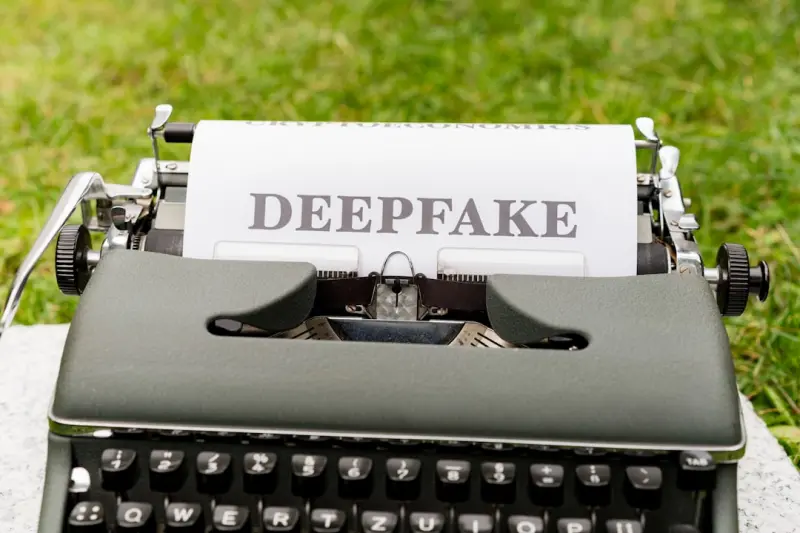
Why Deepfake Impersonation Is the Next Critical Threat to Business Communications
In a world where video calls have become the default meeting room and voice messages replace handwritten notes, the line between authentic and fabricated content is blurring faster than ever. While traditional phishing attacks still haunt inboxes, a newer, more convincing menace is emerging: deepfake impersonation. This technology can recreate the exact mannerisms, voice timbre, and facial expressions of a colleague or executive, making fraudulent requests appear startlingly legitimate.
Understanding the Mechanics Behind Deepfakes
At its core, deepfake generation relies on advanced neural networks—specifically generative adversarial networks (GANs). These systems learn from large datasets of a target’s visual and auditory recordings, then synthesize new footage that can be indistinguishable from genuine material. The resulting clips can be as short as a few seconds or span an entire presentation.
Because the underlying models are continuously improving, the barrier to producing convincing forgeries is dropping. What once required a specialized team of engineers can now be achieved with a few clicks on publicly available platforms. This democratization means that even small‑scale attackers can craft attacks that previously only nation‑state actors could attempt.
The Real‑World Impact on Enterprises
When a deepfake is used to mimic a senior leader requesting a funds transfer, the psychological weight of the request can override normal caution. Employees often rely on visual and auditory cues to assess credibility; a fabricated video can supply all the expected signals—body language, speech patterns, even the background office environment.
Consequences include:
- Financial loss: Fraudulent wire transfers executed under the guise of an executive’s approval.
- Reputational damage: Public exposure of a forged message can erode stakeholder confidence.
- Legal exposure: Regulatory bodies may hold organizations accountable for inadequate verification processes.
These outcomes highlight why organizations must treat deepfake impersonation as a core security concern, not a peripheral curiosity.
How to Build a Resilient Verification Framework
Addressing this threat requires a layered approach that blends technology, policy, and human awareness. Below are practical steps that can be woven into existing protection strategies.
1. Establish a Multi‑Factor Confirmation Protocol
Never rely on a single channel for high‑value actions. Pair visual or audio requests with an independent verification method—such as a secure messaging app that requires a one‑time passcode or a pre‑arranged code phrase known only to the parties involved.
2. Deploy Real‑Time Media Authentication Tools
Emerging solutions can analyze video streams for tell‑tale signs of manipulation, like inconsistencies in lighting, unnatural blinking patterns, or audio artifacts. Integrating these tools into meeting platforms provides an additional safety net without disrupting workflow.
3. Educate Teams on the Psychology of Deception
Awareness training should go beyond “do not click links.” It must illustrate how deepfakes exploit trust and authority. Role‑playing scenarios where a fabricated request is presented can sharpen employees’ instincts to question even the most convincing appearances.
4. Create an Incident Response Playbook Specific to Media Fraud
When a suspected deepfake is identified, rapid escalation is essential. The playbook should outline:
- The responsible security liaison.
- Steps for immediate verification (e.g., direct phone call to the purported sender).
- Preservation of the suspect media for forensic analysis.
- Communication protocols to inform affected stakeholders.
5. Leverage Cryptographic Signing of Official Communications
Adopt digital signatures for recorded messages. When a video or audio file is signed with a private key, recipients can verify authenticity using a public key repository. This method turns any manipulated content into a clear red flag.
Integrating Existing Controls for a Cohesive Defense
Many organizations already employ robust identity verification mechanisms for access management. Extending those principles to media verification can be seamless. For instance, a system that already supports dynamic trust system can be adapted to evaluate the authenticity of incoming video streams, assigning risk scores based on detected anomalies.
Similarly, the cultural influence cultivated through in‑house influence programs can reinforce a mindset where verification is a shared responsibility, not solely an IT concern.
Future‑Facing Practices: Staying Ahead of the Curve
Deepfake technology will continue to evolve, making detection harder. Organizations should adopt a forward‑looking posture by:
- Monitoring research communities for emerging detection algorithms.
- Participating in industry consortiums that share threat intelligence related to media fraud.
- Regularly updating verification policies to incorporate new verification factors, such as biometric cues or blockchain‑based provenance records.
Conclusion: Turning Vigilance Into an Organizational Habit
The rise of deepfake impersonation is not a distant hypothetical—it is happening now, and it exploits the very human reliance on visual and auditory trust cues. By embedding multi‑factor confirmation, leveraging real‑time authentication tools, fostering a culture of critical scrutiny, and aligning existing identity controls with media verification, businesses can transform a potential crisis into a manageable risk. The goal is simple: make every request—whether a spreadsheet link or a video directive—subject to the same rigorous validation that protects the core of the organization.

Karen Edwards is a seasoned freelance writer with a passion for all things furry, feathered, and scaled. With a dedicated focus on pets, she brings a wealth of knowledge and a keen eye for detail to her writing.
Related Posts

The Digital Footprint Minefield: Cybersecurity Dangers of Sharenting and How to Protect Your Child
In today's hyper-connected world, sharing our lives online has become second nature. For many parent... Read More

The Modern Playbook for Staying Safe Online
A comprehensive guide that blends personal habits, tech tools, and a sprint mindset to keep you and ... Read More

The Digital Deception: What Is Catfishing and Comprehensive Strategies for Staying Safe Online
In the modern era, the internet serves as our primary communal space, facilitating connections that ... Read More
Top Posts

Why Sustainable Pet Care is the Future of Animal Lovers
As a passionate animal lover and advocate for sustainable living, I'm excited to share with you the growing trend of eco-friendly pet care. Learn how to make a ...Read More

How Behavioral Nudges Can Transform Your Money Habits
Learn to harness behavioral nudges, automate savings, and use smart fintech tools to turn everyday habits into powerful wealth‑building actions....Read More

Quiet Confidence: Everyday Safety Strategies for the Modern Urbanite
A personal guide to subtle, daily safety habits—tech tricks, environment tweaks, and community rituals—that turn urban life into a confident, secure experie...Read More
Beyond Keywords: Building a Semantic Authority Engine for Modern Search
This post explains why traditional keyword tactics are obsolete and shows how B2B SaaS companies can dominate search by creating semantic clusters, implementing...Read More
0 Comments
Post Comment
You will need to Login or Register to comment on this post!