

Why Edge Computing Is the Next Frontier for Real‑Time AI
When I first heard the phrase “edge computing,” I pictured a literal border where data takes a breath before it’s sent to the cloud. In practice, the edge is the network’s sweet spot—right where devices, users, and sensors meet. It’s a place where latency drops, bandwidth costs shrink, and, most importantly for modern SaaS, intelligent workloads can happen in the moment.
For the past few years, I’ve watched enterprises wrestle with the trade‑off between powerful cloud‑native AI models and the need for instantaneous response. The answer is emerging from the periphery: running AI inference, preprocessing, and even lightweight training at the edge. This shift isn’t just a technical curiosity; it’s reshaping product roadmaps, security postures, and even the way we think about user experience.
From Cloud‑Centric to Edge‑Centric: A Paradigm Shift
Traditional SaaS architectures assume a “central brain” in the cloud. Data flows from the user device to a data center, gets processed, and the result travels back. That loop works fine for tasks that can tolerate a few hundred milliseconds of delay—think batch reporting or background analytics. But when you’re dealing with augmented reality, collaborative design tools, or live fraud detection, those milliseconds become a deal‑breaker.
The edge flips the script. By moving the inference engine closer to the user, you reduce round‑trip time dramatically. Imagine a real‑time translation app that can instantly render subtitles on a video call without waiting for a server across the ocean. Or a remote‑controlled robot on a factory floor that can adjust its path on the fly because the vision model lives on a local gateway.
What makes this transition possible now? Three converging trends:
- Hardware democratization: Small, power‑efficient GPUs and specialized AI accelerators (like the NVIDIA Jetson series or Google Coral) have become affordable enough for mass deployment.
- Container orchestration at the edge: Tools such as K3s, KubeEdge, and OpenYurt let you run Kubernetes clusters on devices the size of a router.
- Model optimization frameworks: Techniques like quantization, pruning, and distillation shrink models without sacrificing much accuracy, making them fit for on‑device execution.
Real‑World Use Cases That Prove Edge AI Is Not a Gimmick
Let’s walk through a few scenarios where edge‑enabled AI isn’t just “nice to have”—it’s a business imperative.
1. Collaborative Design Platforms
Design tools that let multiple users sketch together in real time rely on low latency to feel natural. By pushing vector rasterization and predictive stroke smoothing to the client’s GPU, the platform can deliver a buttery‑smooth experience even on modest bandwidth. The cloud still handles version history and heavy rendering, but the moment‑to‑moment interaction stays at the edge.
2. Industrial IoT and Predictive Maintenance
Factories are littered with sensors that generate terabytes of data daily. Shipping every raw sample to the cloud for analysis is impractical and risky. Edge nodes can run anomaly detection models on the fly, flagging a bearing that’s about to fail before it even warms up. The alert travels a short hop to the central dashboard, where a deeper diagnostic model takes over.
3. Remote Healthcare and Tele‑Diagnostics
Imagine a wearable that continuously monitors ECG signals. An on‑device AI model can identify arrhythmias instantly, prompting an emergency alert without waiting for cloud verification. This saves precious seconds and, potentially, lives.
4. Smart Retail Experiences
In‑store cameras equipped with edge‑based person‑counting and product‑recognition models can personalize digital signage in real time. A shopper pauses near a shelf, the edge node identifies the product, and the nearby display instantly shows a tailored promotion.
Architecting for Edge: Strategies That Keep You Agile
Transitioning to an edge‑first architecture isn’t as simple as swapping a VM for a Raspberry Pi. It requires thoughtful planning around deployment, observability, and, crucially, feature delivery. This is where a feature flag strategy becomes a lifeline.
Feature flags let you toggle AI capabilities on a per‑device or per‑region basis. Deploy a new model to a subset of edge nodes, monitor latency and accuracy, and roll back instantly if something goes sideways. This granular control mirrors the agility that SaaS teams have enjoyed in the cloud for years, now extended to the distributed edge.
Another hidden challenge is data privacy. Edge processing can actually enhance compliance because raw data never leaves the device. However, you still need to manage model updates, versioning, and secure communication channels. End‑to‑end encryption, signed model artifacts, and attestations become non‑negotiable.
Testing and Monitoring at Scale
Running AI on billions of devices demands a robust observability stack. Traditional logging doesn’t cut it; you need telemetry that captures inference latency, hardware utilization, and model drift. OpenTelemetry now supports edge extensions, allowing you to ship metrics to a centralized backend without overwhelming the network.
In addition, shadow inference—running a parallel, cloud‑based model alongside the edge model—helps you detect performance regressions in real time. By comparing outputs, you can spot when an edge model’s quantization starts to bite too hard, prompting a hot‑swap of the model package.
The Business Impact: From Cost Savings to New Revenue Streams
Edge AI isn’t just a technical win; it translates directly into bottom‑line benefits.
- Reduced bandwidth bills: By processing data locally, you cut the amount of information you need to send upstream.
- Improved user satisfaction: Sub‑100 ms response times feel instantaneous, driving higher engagement and lower churn.
- New product offerings: Edge‑only features—like on‑device personalization—can be packaged as premium tiers.
- Regulatory advantage: Local processing eases GDPR, HIPAA, and other data‑residency constraints.
Potential Pitfalls and How to Avoid Them
Every bright new frontier has shadows. Here are three common traps and quick mitigations.
1. Over‑Engineering the Edge Layer
It’s tempting to push every micro‑service to the edge. Resist the urge. Start with latency‑critical components, keep the rest in the cloud, and gradually expand as you validate ROI.
2. Ignoring Model Freshness
Edge devices can become stale if you don’t have a reliable update pipeline. Adopt a continuous delivery approach for models, using signed manifests and delta updates to keep the bandwidth footprint low.
3. Neglecting Security Hygiene
Edge nodes are often physically accessible. Implement secure boot, hardware‑rooted keys, and runtime attestation to prevent tampering.
Getting Started: A Practical Playbook
If you’re ready to dip your toes into the edge, follow this three‑step playbook.
- Identify latency‑sensitive workloads: Look for user‑facing features where every millisecond counts. Prioritize them for edge migration.
- Choose the right hardware platform: Evaluate based on compute capacity, power consumption, and ecosystem support (e.g., NVIDIA Jetson, Google Coral, Intel Movidius).
- Set up a CI/CD pipeline for models: Automate training, quantization, validation, and deployment. Use feature flags to roll out gradually and monitor impact.
Remember, the edge is not a destination but a continuum. As hardware improves and standards mature, the boundary between cloud and edge will blur even further. By embracing an edge‑first mindset today, you future‑proof your SaaS product against the inevitable shift toward hyper‑real‑time experiences.
Looking Ahead: The Edge‑AI Ecosystem in 2027 and Beyond
While we can’t predict every breakthrough, a few trends are unmistakable.
- Federated learning at scale: Edge devices will collaboratively train models without sharing raw data, further tightening privacy.
- Standardized edge runtimes: Expect open‑source runtimes that abstract hardware differences, making it easier to write once, run everywhere.
- AI‑powered networking: Future routers will include AI chips that can perform inference on traffic patterns, enabling smarter QoS decisions on the fly.
As these pieces fall into place, the line between “SaaS” and “device software” will dissolve. Your product will be a seamless, intelligent fabric that lives everywhere your customers do—cloud, office, factory floor, or pocket.

When it comes to the world of blogging and writing, Rose DesRochers is a name that stands out. Her passion for creating quality content and connecting with her audience has made her a trusted voice in the industry. Aside from her skills as a writer and blogger, Rose is also known for her compassionate nature.
Related Posts

Ambient Computing: The Silent Revolution Reshaping Enterprise Workflows
Ambient computing blends sensors, edge AI, and unified data to create context‑aware experiences th... Read More

Smart Glasses Are Inevitable, but They Still Have a Lot to Prove
The concept of smart glasses has been around for several years, with various tech companies experime... Read More
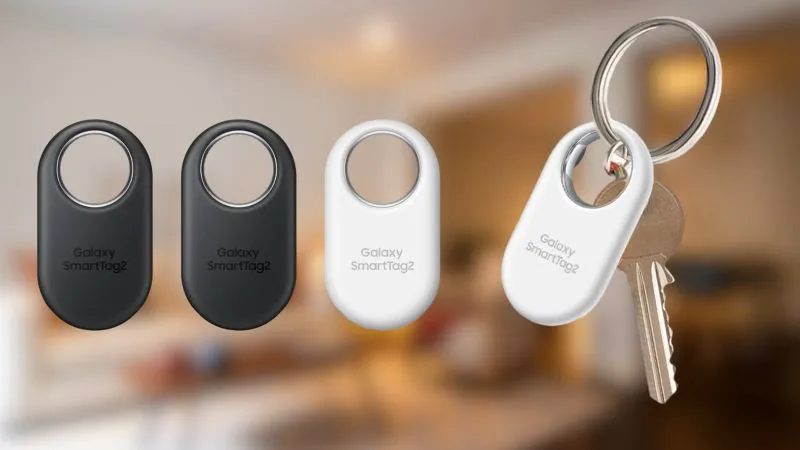
The Art of Locating the Lost Bag or Device: A Deep Dive into the Samsung Galaxy SmartTag 2
In an era defined by hyper-connectivity, the irony of misplacing our most essential physical items i... Read More
Top Posts

Embedding Safety Deep Into SaaS Product DNA
A practical guide that shows why safety must be a core DNA of SaaS products, offering frameworks, metrics, and leadership habits to protect users, data, and dis...Read More

Reclaiming Your Inbox: A Comprehensive Guide to Stopping SPAM Email in Gmail
The digital age has brought unprecedented convenience and connectivity, but it's also ushered in an unwelcome guest: SPAM email. For many, the daily deluge of u...Read More

Teaching Kids about Online Safety: A Comprehensive Guide for Parents
As a parent, ensuring your child's online safety is crucial. Learn how to protect your kids from online harm with our guide to online safety and sustainable liv...Read More

Mastering SERP Features: Turning Zero‑Click Searches into SaaS Growth Engines
Learn why modern SERP features are more valuable than traditional rankings and get a step‑by‑step checklist to dominate zero‑click searches for B2B SaaS g...Read More
0 Comments
Post Comment
You will need to Login or Register to comment on this post!