
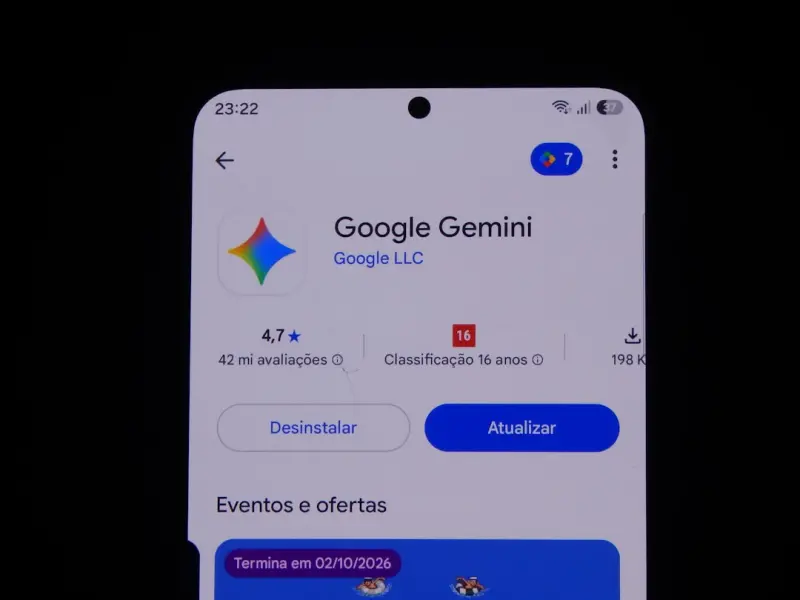
When I first heard the buzz around Google Gemini, my mind leapt straight to the whiteboards in our product office, littered with sticky notes about data pipelines, customer journeys, and the perpetual hunt for the “next insight” that can turn a feature idea into a revenue driver. Gemini isn’t just another AI model; it’s a multimodal platform that lets us blend text, images, and even code into a single, coherent intelligence layer. In practice, that means we can ask the system to analyze a churn report, surface the visual patterns in a heat‑map, and even draft a hypothesis for a A/B test—all without leaving the dashboard.
Why Multimodality Matters for SaaS Leaders
Most of us have become accustomed to feeding pure text into LLMs and getting text back. That’s powerful, but it’s only half the story. SaaS products live in a world of signals—usage logs, screenshot‑style UI captures, user‑recorded feedback videos, and code snippets that define integrations. Gemini’s ability to ingest and reason across these modalities breaks the silos that have traditionally forced us to build custom pipelines for each data type.
Consider a scenario where a product manager is trying to understand why a new onboarding flow has a 30 % drop‑off after the third step. With a conventional analytics stack, you’d pull a SQL query, overlay a funnel chart, and perhaps manually review a handful of session recordings. Gemini can ingest the raw event stream, the visual flow diagrams, and the support tickets that mention “stuck on step three.” It then synthesizes a concise narrative: “Users hesitate at the credit‑card entry screen because the field label is ambiguous, and they receive a generic error message when validation fails.” That single insight can save weeks of detective work.
Embedding Gemini in the Product Development Loop
To make Gemini a real competitive advantage, we need to think of it as a continuous partner rather than a one‑off tool. Here’s a playbook I’ve been testing with my team:
- Data ingestion as a service: Set up a nightly job that pushes raw logs, UI screenshots, and recent support tickets into Gemini’s multimodal endpoint.
- Insight triggers: Define low‑effort prompts that run automatically—e.g., “Summarize the top three reasons for feature X’s low adoption this week.”
- Human‑in‑the‑loop review: Route the generated summaries to a Slack channel where product leads can approve, comment, or request deeper analysis.
- Feedback loop: Capture the team’s reactions as training signals to fine‑tune Gemini’s future responses.
When you embed this cycle into sprint retrospectives, the model becomes a living knowledge base that evolves with your product, rather than a static report generator.
From Insight to Action: Closing the Loop with Automation
One of the most exciting aspects of Gemini is its ability to emit executable code. Ask it to draft a feature flag configuration, a SQL query, or even a Terraform snippet, and it will return a ready‑to‑run script (subject to your usual review process). This opens a direct path from insight to implementation:
- Gemini identifies a friction point in the onboarding flow.
- It suggests a UI change and produces the corresponding React component code.
- Our CI/CD pipeline picks up the code, runs automated tests, and stages it for a feature flag rollout.
This “insight‑to‑code” loop can shave days off the time it takes to iterate, especially for teams that have embraced edge‑first SaaS strategies and already have automated deployment pipelines at the edge of their infrastructure.
Balancing Trust and Transparency
Even as Gemini dazzles with its capabilities, we must remain vigilant about the trustworthiness of its output. Multimodal models can hallucinate visual patterns or misinterpret ambiguous screenshots. Here are three safeguards we’ve adopted:
- Human validation checkpoints: Every AI‑generated insight passes through a designated reviewer before it informs a product decision.
- Versioned prompts: Keep a log of the exact prompt strings used for each insight, allowing you to replay or audit the reasoning later.
- Metric‑driven confidence scores: Gemini returns a confidence metric; we set thresholds that dictate whether an insight can be auto‑actioned or must be escalated.
By treating the model as a collaborator rather than an oracle, we keep the decision‑making process transparent and accountable.
Integrating Gemini with Existing Outreach Tools
Our B2B outreach stack has always been a patchwork of CRMs, email sequencers, and data enrichment services. Gemini’s multimodal abilities give us a fresh way to enrich those touchpoints. For example, we can feed a prospect’s LinkedIn banner image and a snippet of their latest blog post into Gemini and ask it to craft a hyper‑personalized outreach email that references both visual branding and recent thought leadership.
That capability dovetails nicely with the under‑the‑radar tools highlighted in The Hidden Levers. By pairing Gemini’s content generation with a lightweight outreach platform, we can dramatically improve reply rates without hiring additional copywriters.
Reimagining Search Inside Your Product
One of the more subtle but powerful shifts Gemini enables is the evolution of internal search. Traditional keyword‑based search struggles with nuanced queries like “Why did users abandon the checkout after adding a discount code?” Gemini can index not just text, but the associated UI states and error logs, returning a concise, context‑rich answer.
Our early experiments show that when support agents use a Gemini‑powered search bar, they resolve tickets 40 % faster. The same principle applies to product managers hunting for patterns across multiple dashboards. If you’re interested in the broader impact of AI on search, the piece on AI‑Driven SERPs offers a deeper dive.
Future‑Proofing Your Roadmap with Gemini
Looking ahead, I see three strategic directions where Gemini can become a cornerstone of SaaS growth:
- Predictive product roadmapping: Feed historical release data, market signals, and competitor feature announcements into Gemini, and let it surface likely “next moves” that align with your customer base.
- Dynamic documentation: As code changes, Gemini can auto‑generate updated user guides, API references, and even tutorial videos that incorporate the latest UI screenshots.
- Cross‑modal customer health scores: Combine usage metrics, sentiment analysis from support tickets, and visual cues from UI heat‑maps to compute a holistic health index for each account.
Implementing these ideas will require a cultural shift—teams must learn to trust AI‑augmented recommendations while maintaining rigorous validation. But the payoff is a product organization that moves at the speed of insight, not the speed of spreadsheet reporting.
Getting Started: A Small‑Scale Pilot
If you’re intrigued but wary of a full‑scale rollout, start with a low‑risk pilot:
- Select a single product area (e.g., the billing dashboard).
- Define a narrow set of multimodal inputs—event logs, a few representative screenshots, and recent support tickets.
- Craft a handful of prompts that ask Gemini to surface friction points and suggest UI tweaks.
- Run the insights through your existing review process and track the time saved versus the baseline.
Document the results, iterate on prompt wording, and then expand the scope to other modules. The incremental approach minimizes risk while proving the model’s ROI.
In the end, Gemini isn’t a silver bullet, but it is a catalyst that can transform the way SaaS teams turn raw data into actionable product strategy. By embracing multimodality, automating the insight‑to‑action pipeline, and layering thoughtful governance, we can unlock a new era of agility and customer empathy—one that feels as natural as a conversation with a colleague who never sleeps.

Laura Wilson is a freelance writer specializing in the dynamic and ever-evolving field of health. With a passion for translating complex medical information into accessible and engaging content, Laura brings a wealth of knowledge and a fresh perspective to topics ranging from preventative care and nutrition to cutting-edge research and innovative treatments.
Related Posts

Google Gemini: The Multimodal Engine Redefining Enterprise AI Workflows
Google Gemini brings images, audio, and video together with text in a single AI engine, offering Saa... Read More

Beyond Search: How Google Gemini is Redefining B2B SaaS Innovation
Google Gemini’s multimodal capabilities let SaaS teams combine text, vision, and data in a single ... Read More

How Google Gemini is Redefining the Playbook for B2B SaaS Innovation
A deep dive into Google Gemini’s impact on B2B SaaS, covering architecture, security, data governa... Read More
Top Posts

Your Car’s Next Upgrade: Predictive Maintenance as a Personal Health Coach
Predictive maintenance uses real‑time sensor data and AI to alert drivers of potential issues before they happen, offering cost savings, safety, and convenien...Read More

Reclaiming Your Online Self with Decentralized Identity
Decentralized identity promises a new era where you control the keys to your digital life, sidestepping big‑tech gatekeepers and safeguarding personal data wi...Read More

From Clicks to Conversations: Rethinking Social Media as a Real-Time Innovation Hub
Treat social platforms as a real‑time innovation laboratory: use micro‑experiments, social listening, and ephemeral content to gather insights, validate ide...Read More

From Data to Plate: How Real‑Time Biometrics Are Redefining Personal Nutrition
A deep dive into how continuous glucose monitors, HRV trackers, and AI analytics turn everyday biometric data into tailored meal recommendations, enhancing phys...Read More
0 Comments
Post Comment
You will need to Login or Register to comment on this post!