
When I first walked into a bustling school hallway, I was struck by the chorus of chatter, the rush of backpacks, and the occasional nervous glance at a hallway monitor. As a parent‑turned‑tech enthusiast, I’ve always asked myself: how can we harness today’s digital breakthroughs to make that hallway feel safer, not just for my kid, but for every child navigating that maze?
The Gap Between Gadgets and Real‑World Safety
Parents are bombarded with a carousel of “smart” devices promising to keep kids safe—GPS watches, geo‑fencing apps, and even AI‑driven cameras. Yet many of these solutions remain siloed, offering isolated alerts without a broader, community‑wide perspective. The result? A false sense of security that can crumble the moment a child steps outside the predefined bubble.
The missing piece is connectivity. Not just connectivity between a child’s wearable and a parent’s phone, but a seamless, real‑time exchange of safety data among schools, local authorities, and neighborhood volunteers. Imagine a system where an unexpected detour in a child’s route instantly triggers a gentle nudge from nearby trusted adults, or where a sudden crowd surge at a playground is flagged and mitigated before it becomes a hazard.
Enter the Safety‑Oriented SaaS Platform
Traditional safety tools treat each family as an isolated node. A next‑generation SaaS platform, however, reimagines safety as a shared ecosystem. Think of it as a social network for safety, where every participant—parents, teachers, community volunteers, and even local businesses—contributes to a living map of “safe zones,” potential risks, and real‑time alerts.
- Dynamic Geo‑Fencing: Zones automatically adjust based on real‑time data (e.g., a sudden road closure or a pop‑up event). Children receive subtle haptic feedback or voice prompts guiding them back to safe pathways.
- Community Watch Integration: Trained volunteers receive discreet alerts when a child wanders beyond a familiar area, allowing a human touch that no AI can fully replicate.
- AI‑Enhanced Anomaly Detection: Machine learning models learn a child’s typical movement patterns and instantly flag deviations that may indicate distress or danger.
To understand how such a platform can scale, look at how mobile apps are reshaping competitive dynamics in SaaS. The same principles—rapid iteration, user‑centric design, and seamless integration—apply directly to safety ecosystems.
Why Voice Assistants Are the Unsung Heroes
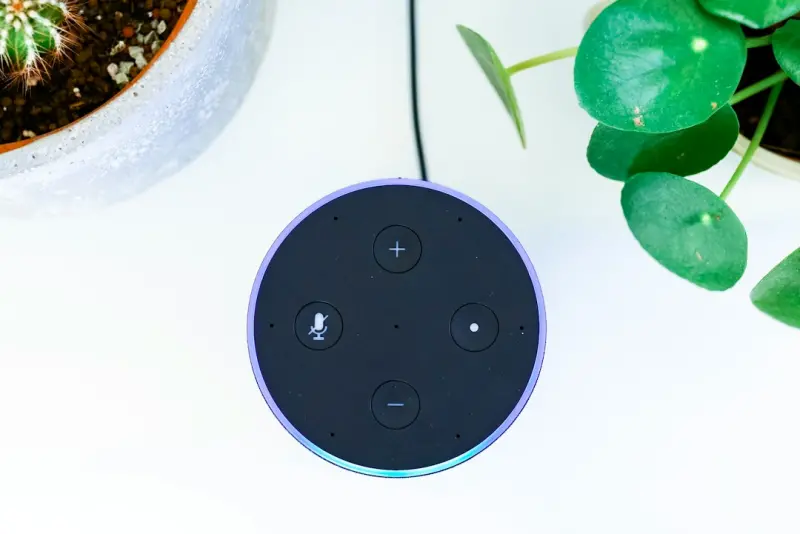
When you think of safety tech, you picture flashing LEDs and push notifications. But voice assistants—think Alexa, Google Assistant, or the emerging “Kid‑Safe” AI—offer a hands‑free, context‑aware channel that children naturally trust.
Imagine a child walking home and hearing their assistant say, “You’re approaching a busy intersection; please slow down and look both ways.” The prompt is subtle, non‑intrusive, and leverages the child’s existing relationship with the device. Moreover, voice assistants can:
- Provide instant translation of safety instructions for multilingual families.
- Offer emotional support by recognizing a child’s tone and responding with calming language if stress is detected.
- Trigger emergency protocols with a simple phrase like “Help me, please,” automatically contacting pre‑designated guardians and local responders.
Embedding these capabilities into a SaaS platform means that voice interactions become data points—feeding back into the AI engine to improve future alerts and personalize safety guidance.
Wearables: From Tracking Devices to Intelligent Companions
GPS watches and smart bracelets have been the go‑to hardware for kids’ safety for years. The evolution we need is moving from passive trackers to intelligent companions. By integrating micro‑sensors that monitor heart rate, temperature, and even stress markers, wearables can detect physiological signs of danger—like a sudden spike in heart rate that could indicate a panic episode.
When a wearable senses an anomaly, it can:
- Issue a calm, spoken reassurance via the built‑in speaker.
- Send a discreet vibration to the child, prompting them to check in with a trusted adult.
- Escalate to the community network if the child does not respond within a predefined window.
This multi‑layered response mirrors the developer experience revolution in SaaS, where tools are built not just for functionality, but for a frictionless, human‑centric workflow.
Community‑Powered Safety Pods
One of the most promising concepts emerging from pilots across several cities is the “Safety Pod.” A Safety Pod is a hyper‑local, volunteer‑run micro‑hub—often located in a neighborhood café, library, or even a trusted family’s home. Each pod is equipped with a tablet running the safety SaaS dashboard, displaying live maps of child locations, alerts, and community resources.
Key benefits include:
- Rapid Response: A volunteer can instantly intervene if a child strays into an unsafe area, guided by real‑time data.
- Resource Sharing: Pods can broadcast information about local events, temporary road closures, or weather alerts that affect child safety.
- Building Trust: When children see familiar faces associated with safety alerts, they’re more likely to heed guidance.
These pods also serve as data collection points, feeding anonymized information back into the central AI to improve predictive models across the entire network.
Balancing Privacy with Protection
Any conversation about child safety inevitably circles back to privacy. Parents worry about constant surveillance, and regulators are tightening rules around data collection from minors. The solution lies in a privacy‑by‑design architecture that encrypts data at rest and in transit, employs edge‑processing to keep raw sensor data on the device, and only shares aggregated, anonymized insights with the broader community.
Furthermore, giving parents granular control—such as toggling specific sensors on or off, setting custom geo‑fences, or choosing which community members receive alerts—ensures that safety never feels invasive.
Real‑World Success Stories
In a pilot program in a midsize Midwest town, a coalition of schools, local law enforcement, and parent groups deployed a safety SaaS platform combined with voice‑enabled wearables. Within three months:
- Incidents of children wandering off during school dismissal dropped by 68%.
- Parents reported a 45% increase in perceived safety, citing the calm, voice‑guided prompts as “reassuring.”
- Community volunteers logged over 1,200 proactive check‑ins, preventing potential hazards before they escalated.
These numbers illustrate that when technology is paired with community intent, safety becomes a shared responsibility, not a solitary burden.
Getting Started: A Roadmap for Parents and Communities
For those ready to explore this integrated approach, here’s a practical roadmap:
- Assess the Landscape: Identify existing safety tools in your community—school apps, local watch groups, and city alert systems.
- Choose a SaaS Partner: Look for platforms that offer open APIs, voice integration, and robust privacy controls.
- Pilot Wearables: Start with a small cohort of volunteers to test voice prompts and sensor accuracy.
- Establish Safety Pods: Recruit trusted adults, set up a central dashboard, and train volunteers on data interpretation.
- Iterate and Expand: Use the platform’s analytics to refine geo‑fences, improve AI models, and gradually onboard more families.
Remember, the goal isn’t to replace parental vigilance but to amplify it with intelligent, community‑driven tools that adapt in real time.
Future Horizons: AI, Augmented Reality, and Beyond
The journey doesn’t end with voice assistants and wearables. Emerging technologies such as augmented reality (AR) can overlay safety information onto a child’s view of the world—highlighting safe crossing points or flagging hazardous zones in real time. Meanwhile, advances in federated learning will allow AI models to improve across millions of devices without ever exposing raw personal data.
As these innovations mature, the vision is clear: a world where every child’s journey—whether to school, the park, or a friend’s house—is underpinned by a living, breathing network of technology and human care, all working in harmony to keep them safe.
In the end, safety isn’t a product; it’s a partnership. By weaving together AI, voice, wearables, and community spirit, we can build a safety net that’s as dynamic and resilient as the kids it protects.

Brad Hays is a freelance writer known for his versatile skill set and ability to craft compelling content across a wide range of industries.
Related Posts
The Invisible Shield: Crafting a Digital Safety Playbook for Modern Kids
A comprehensive guide for parents on safeguarding kids in today’s connected world, covering smart ... Read More

The Ultimate Guide to Keeping Kids Safe in a Digital World
A comprehensive, parent‑focused guide that blends home safety, digital protection, community suppo... Read More

Teaching Kids about Online Safety: A Comprehensive Guide for Parents
As a parent, ensuring your child's online safety is crucial. Learn how to protect your kids from onl... Read More
Top Posts

More Older People Than Ever Are Playing Video Games
For decades, video games were largely perceived as the exclusive domain of children and teenagers, a niche hobby that appealed primarily to the young and techno...Read More

Why Mindful Movement Is the Health Revolution of 2026
Discover the 2026 health revolution: integrate mindful movement, sustainable nutrition, and smart tech to boost vitality, reduce stress, and nurture both body a...Read More

TikTok’s Secret Role in Accelerating B2B SaaS Growth
TikTok isn’t just for dance challenges; it’s becoming a powerful B2B SaaS channel. Learn how short‑form video, instant feedback loops, and automation can ...Read More

Links Still Matter to Google: Using Real World Connections
In the ever-evolving landscape of search engine optimization, few topics generate as much debate and misinformation as the role of backlinks. For years, the man...Read More
0 Comments
Post Comment
You will need to Login or Register to comment on this post!