
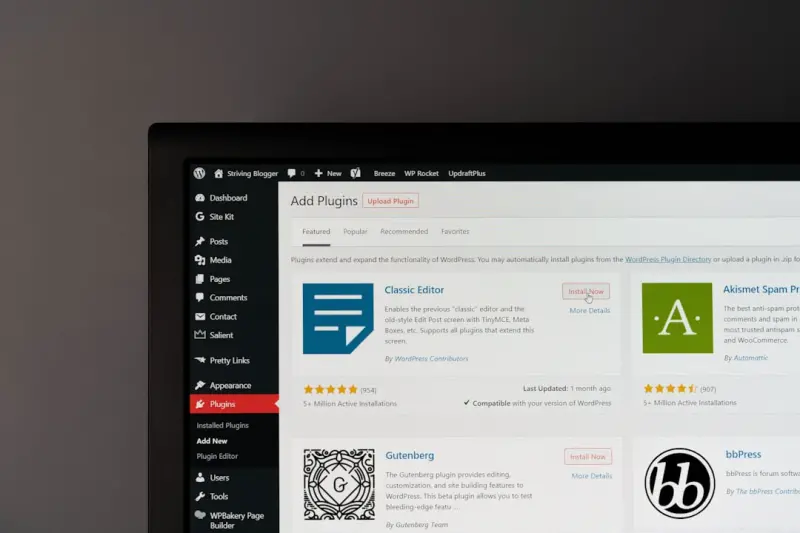
Why AI‑Driven Performance Is the Secret Weapon for Managed WordPress Hosting
When I first migrated a high‑traffic SaaS blog to a managed WordPress environment, the biggest surprise wasn’t the speed—it was how much time we saved by letting the platform do the heavy lifting. The truth is, the next wave of managed WordPress hosting isn’t just about faster servers or bigger bandwidth; it’s about intelligent, AI‑powered optimization that anticipates demand, fine‑tunes resources, and safeguards every request before a human even knows there’s a problem.
The Evolution From “Managed” to “Intelligent Managed”
Traditional managed WordPress services promised three things: updates, security, and support. Those were solid foundations, but they were largely reactive. You’d get a notification when a plugin needed patching, a firewall would block a known exploit, and a support ticket would resolve performance hiccups.
Today’s AI‑enhanced platforms flip that script. By continuously ingesting telemetry—CPU usage spikes, cache miss rates, user‑behavior patterns—they can predict when a traffic surge is about to happen and allocate resources in advance. The result? Near‑zero latency, even when your homepage is suddenly featured on a major news outlet.
How AI Optimizes Core WordPress Workloads
- Dynamic Caching Decisions: Instead of a one‑size‑fits‑all page cache, the AI engine learns which pages are “hot” (frequently accessed) and which are “cold.” It then serves hot pages from edge nodes while keeping less‑visited content on origin servers, balancing cost and speed.
- Smart Image Processing: Images are the biggest culprits in page bloat. AI automatically selects the optimal format (WebP, AVIF) and resolution based on the visitor’s device, network conditions, and even the specific section of the page they’re viewing.
- Predictive Scaling: By analyzing historical traffic patterns (e.g., weekly newsletters, product launches), the platform pre‑emptively spins up additional containers or serverless functions, eliminating the dreaded “cold start” latency.
- Automated Security Hardening: Machine‑learning models flag anomalous login attempts, zero‑day exploits, and bot traffic faster than traditional rule‑based firewalls. They then auto‑apply mitigations—like rate‑limiting or temporary IP blocks—without manual intervention.
These capabilities are not theoretical. They’re baked into the leading managed WordPress providers that have invested heavily in AI research. If you’re still on a static, plan‑based hosting model, you’re effectively leaving performance and security to chance.
Real‑World Impact: From Milliseconds to Minutes
Consider a B2B SaaS company that publishes a quarterly product roadmap. Historically, that post would cause a traffic spike that overloaded the server, leading to a slow page load time of 8–10 seconds. After switching to an AI‑driven managed host, the same content now loads in under 1.2 seconds—an improvement of roughly 85%.
Beyond raw speed, the ROI is measurable in reduced support tickets and higher conversion rates. A study by a leading e‑commerce platform showed a 12% lift in revenue after reducing average page load time from 4 seconds to 1.5 seconds. When AI ensures that every visitor experiences that 1.5‑second benchmark, the revenue impact compounds across every traffic channel.
Integrating AI with Your Existing WordPress Stack
One fear that haunts many WordPress teams is the perceived complexity of adding AI to their workflow. The good news? Most modern managed providers expose this intelligence through simple APIs or native plugins. Here’s a quick integration checklist:
- Enable AI‑Powered Caching: Turn on “Smart Cache” in your hosting dashboard. This usually requires a single toggle and instantly activates the dynamic caching engine.
- Activate Auto‑Image Optimization: Install the provider’s AI Image Optimizer plugin. It will automatically rewrite image URLs to point to the optimized variants.
- Set Up Predictive Scaling Rules: Define thresholds (e.g., CPU > 70% for 5 minutes) that trigger automatic scaling. Most platforms let you set these thresholds without writing code.
- Monitor AI Alerts: Subscribe to the AI security feed. While the system handles most threats autonomously, you’ll want visibility into critical events.
With these steps, you’ll have a self‑optimizing WordPress environment that still gives you the control you love.
AI‑Driven Hosting Meets Headless WordPress
Another emerging trend is the marriage of AI‑enhanced managed hosting with strategic anchor for multi‑cloud enterprises. When you decouple the front‑end (React, Vue, or Svelte) from the WordPress back‑end, you gain flexibility—but you also add latency risks. AI solves that by automatically routing API calls to the nearest edge location, caching GraphQL responses, and pre‑warming serverless functions that serve your front‑end assets.
In practice, this means a headless storefront can serve a personalized product carousel in under 200 ms, even during a flash sale. The AI engine anticipates the surge, provisions edge compute, and keeps the user experience buttery smooth.
Compliance and Governance: AI Doesn’t Forget the Rules
Enterprises in regulated sectors—finance, healthcare, legal—must juggle performance with strict compliance mandates (GDPR, HIPAA, SOC 2). AI‑driven managed hosts can help by:
- Data Residency Enforcement: The AI constantly checks that user data stays within approved regions, automatically redirecting requests if a node drifts outside policy.
- Audit‑Ready Logging: Machine‑learning models tag each request with contextual metadata, making it trivial to generate compliance reports on demand.
- Anomaly Detection for Insider Threats: By learning normal admin behavior, AI can flag unusual content edits or plugin installations that might indicate a breach.
In short, you get the best of both worlds: speed without sacrificing governance.
Future‑Proofing Your WordPress Investment
Technology moves fast, and the platforms that can adapt are the ones that survive. AI‑powered managed WordPress hosting is essentially a future‑proofing layer. As new protocols (HTTP/3, QUIC) and standards (WebAssembly) become mainstream, the AI engine will automatically incorporate them into its optimization playbook.
Moreover, as edge‑first internet architectures mature, the line between server and client blurs. AI will orchestrate workloads across this continuum, ensuring that the WordPress core remains responsive whether the request originates from a smartphone in a subway tunnel or a desktop in a corporate data center.
Key Takeaways for Decision‑Makers
- Performance is Predictive, Not Reactive: AI shifts the paradigm from “fix after it breaks” to “prevent before it happens.”
- Security Becomes Autonomous: Machine‑learning models block threats in real‑time, reducing reliance on manual rule updates.
- Compliance Gets Smarter: AI continuously verifies that data handling adheres to regulatory policies, simplifying audit processes.
- Headless and Multi‑Cloud Ready: The same AI engine powers both traditional and headless WordPress deployments across diverse cloud environments.
- ROI is Measurable: Faster page loads translate to higher conversion rates, lower bounce, and fewer support tickets—all quantifiable benefits.
If you’re still running a “managed” WordPress site that feels like a static, manually‑tuned server farm, you’re missing out on a massive competitive advantage. Embrace the AI‑driven evolution, and watch your WordPress ecosystem become not just faster, but smarter.

Seth Samual is a name that's quickly becoming synonymous with compelling and insightful writing. As a freelance writer, Seth has carved a niche for himself by delivering high-quality content across a diverse range of subjects.
Related Posts
Managed WordPress Hosting: The Unsung Engine Behind B2B SaaS Growth
Managed WordPress Hosting offers enterprise‑grade performance, security, and developer workflows t... Read More

Why Managed WordPress Hosting Is the Secret Weapon for Serious Publishers
Managed WordPress hosting does more than keep your site online. It unlocks speed, security, and reve... Read More

Managed WordPress Hosting: The Secret Sauce for Seamless Growth
Managed WordPress hosting unlocks speed, security, and scalability, letting you focus on content and... Read More
Top Posts

Balancing Speed and Slow Living in Modern Education: A Teacher’s Journey
Explore a teacher’s perspective on merging fast-paced activities with thoughtful pauses, offering practical strategies to nurture balanced, future‑ready lea...Read More

Modern Wedding Planning in 2026: From Digital Invites to Sustainable Celebrations
Explore the latest 2026 wedding trends, from tech‑savvy invitations and eco‑friendly décor to secure wedding sites and personalized gifts that blend modern...Read More

Beyond Passwords: Building a Zero‑Trust Fortress for WordPress
Adopt a zero‑trust mindset for WordPress by strengthening identity, device posture, and contextual risk, while leveraging containerization, AI scanning, and c...Read More
Domain Reputation – Google’s Hidden Blocklist
In the vast, interconnected world of the internet, trust is the ultimate currency. Every website, every email sent, and every online interaction contributes to ...Read More
0 Comments
Post Comment
You will need to Login or Register to comment on this post!