

The multi‑cloud reality most enterprises face today
When I first stepped into the world of enterprise IT, the conversation was binary: public cloud or on‑premise. Fast‑forward a few years, and the landscape has morphed into a sprawling, intricate web of AWS, Azure, Google Cloud, niche regional providers, and a handful of legacy data centers. Companies are no longer asking “which cloud?” but “how do we orchestrate across all of them without losing control?”
This shift toward a multi‑cloud strategy isn’t just a buzzword; it’s a response to real business pressures—avoid vendor lock‑in, tap specialized services, meet regional data‑sovereignty rules, and optimize workloads for cost and performance. Yet, as the number of clouds grows, so does the complexity of networking, security, and performance monitoring.
Enter dedicated hosting. While many still think of it as the “old‑school” alternative to cloud, its role has evolved. It’s no longer a fallback; it’s the strategic anchor that gives enterprises the predictability and control needed to weave together disparate cloud environments.
Why dedicated hosting still matters in a cloud‑first world
Dedicated servers give you an entire physical machine—and the entire set of resources that come with it—for your exclusive use. That might sound simple, but the implications are profound when you’re trying to balance dozens of cloud contracts:
- Resource isolation: No noisy neighbors. Your CPU, RAM, and storage are yours alone, guaranteeing consistent performance for latency‑sensitive workloads.
- Predictable cost structure: Fixed monthly or annual fees replace the variable, sometimes opaque, consumption‑based pricing models of the public cloud.
- Granular control: Full root access, custom kernel tweaks, and the ability to run any operating system or hypervisor you need.
- Compliance confidence: When regulations demand data to reside in a specific jurisdiction or under strict audit trails, a dedicated rack in a certified data center can be the easiest path to compliance.
These advantages make dedicated hosting a natural partner for any multi‑cloud architecture, acting as a stable “home base” for workloads that can’t tolerate the variability of shared resources.
Performance and predictability: the edge you can’t ignore
Imagine you’re running a real‑time analytics engine that ingests millions of events per second. In a public cloud, you might spin up larger instances during spikes, but you still face the risk of “noisy neighbor” interference, especially on shared tenancy nodes. With a dedicated server, you have a hard ceiling on latency and throughput because the hardware is yours.
Dedicated hosting also lets you fine‑tune the network stack. You can enable features like SR‑IOV, DPDK, or even attach specialized NICs for low‑latency trading applications. In contrast, many cloud providers restrict such low‑level network customizations.
For AI and machine‑learning workloads that rely on GPU clusters, having dedicated GPU servers ensures you aren’t competing for the same GPU pool with other tenants, a common pain point on public clouds. This predictability can translate directly into faster model training cycles and reduced time‑to‑market.
Security and compliance: the silent guardian
Security teams often cite “shared responsibility” as a double‑edged sword. While cloud providers secure the underlying infrastructure, you’re still responsible for configuring VMs, containers, and applications correctly. That’s a lot of moving parts.
Dedicated hosting reduces the attack surface. With a single tenant, you eliminate the risk of cross‑tenant exploits. You also have the freedom to implement custom security controls—hardware firewalls, dedicated intrusion detection systems, and even air‑gapped environments if required.
Compliance frameworks like PCI‑DSS, HIPAA, and GDPR have explicit requirements around data residency and isolation. Many enterprises find it easier to achieve certification by hosting critical workloads on dedicated hardware located in a data center that already holds the necessary attestations. This approach sidesteps the often‑complex compliance mappings required for public cloud services.
Cost predictability versus cloud’s variable pricing
One of the most compelling arguments for dedicated hosting in a multi‑cloud strategy is cost clarity. Cloud pricing can be a labyrinth of per‑GB storage fees, data‑egress charges, API request costs, and reserved instance commitments. While tools exist to monitor and predict these expenses, they’re never 100% accurate.
Dedicated servers, by contrast, operate on a straightforward subscription model. You pay a flat fee for the server, bandwidth, and any additional services (like managed backups). This predictability makes budgeting simpler and reduces surprise invoices at month‑end.
That doesn’t mean dedicated hosting is cheaper for every workload. The key is to strategically allocate workloads: keep high‑performance, latency‑critical, or compliance‑heavy services on dedicated hardware, while leveraging the elasticity of the public cloud for bursty, less sensitive tasks. The result is a hybrid cost model that maximizes ROI.
Migrating to a dedicated anchor: practical steps
Transitioning from a cloud‑only environment to a hybrid that includes dedicated servers can feel daunting. Here’s a roadmap that has worked for many of our clients:
- Audit workloads: Identify which applications demand low latency, have strict compliance mandates, or suffer from noisy‑neighbor issues.
- Map dependencies: Use tools like Unlocking Semantic SEO (yes, the concept of mapping applies beyond SEO) to visualize data flows between services.
- Choose a dedicated hosting partner: Look for providers with carrier‑grade network connectivity, regional data‑center certifications, and robust support SLAs.
- Implement a unified orchestration layer: Platforms like Kubernetes can run on both dedicated servers and cloud VMs, giving you a single pane of glass for deployment.
- Establish monitoring and alerting: Tools that aggregate metrics from on‑premise hardware and cloud services ensure you maintain visibility across the entire stack.
- Iterate and optimize: Start with a pilot—perhaps a single microservice—and expand as you validate performance gains and cost savings.
Real‑world use cases that illustrate the advantage
FinTech firms often need to meet strict latency requirements for high‑frequency trading. By placing their order‑matching engine on a dedicated server in a data center co‑located with exchange gateways, they shave milliseconds off execution time—an edge that can be worth millions.
Healthcare providers handling PHI must comply with HIPAA. Storing patient records on dedicated, audited hardware within a U.S. jurisdiction simplifies compliance audits and reduces the risk of accidental data leakage.
Media streaming platforms that deliver live events to global audiences use dedicated edge servers to cache and transcode video streams close to end users, ensuring smoother playback and lower CDN costs.
In each case, the dedicated component acts as a performance‑critical, compliance‑centric anchor, while ancillary services—like analytics or user authentication—run in the public cloud where elasticity shines.
Choosing the right dedicated hosting partner
Not all dedicated hosting providers are created equal. Here’s what I look for when recommending a partner to clients:
- Network redundancy: Multiple carrier connections, BGP peering, and low latency routes to major cloud regions.
- Physical security: Tier‑III or higher data‑center certifications, biometric access controls, and 24/7 monitoring.
- Support expertise: Teams that understand both traditional IT and cloud-native architectures, capable of assisting with hybrid integrations.
- Scalability options: Ability to quickly provision additional servers, GPU instances, or storage as demand grows.
- Managed services: If you lack in‑house sysadmin bandwidth, managed backups, patching, and security monitoring can be a game‑changer.
One partner we’ve collaborated with recently even offers a ChatGPT‑powered assistant to help clients design their hybrid architecture, surfacing best‑practice configurations based on workload patterns.
Future trends: dedicated hosting in a serverless world
Some skeptics argue that serverless computing will eventually render dedicated servers obsolete. I see it differently. Serverless abstracts away the underlying infrastructure, but it also introduces new constraints—cold starts, limited execution time, and less granular control over hardware.
As edge computing matures, we’ll likely see a resurgence of “micro‑dedicated” nodes—tiny, purpose‑built servers at the edge that combine the predictability of dedicated hardware with the programmability of serverless. In this hybrid future, the concept of a dedicated anchor will persist, just in a more distributed form.
For now, the strategic advantage of dedicated hosting lies in its ability to bring stability, security, and cost predictability to a chaotic multi‑cloud environment. It’s the quiet, reliable backbone that lets businesses innovate faster on the cloud without sacrificing control.

Tyler Johnson is a seasoned freelance writer with a keen eye for detail and a passion for crafting compelling narratives. His years of experience have honed his ability to adapt his style to suit diverse client needs and project requirements.
Related Posts

Dedicated Hosting: The Unsung Hero Behind Scalable SaaS Performance
Dedicated hosting offers unmatched performance, security, and compliance for SaaS businesses, turnin... Read More

Why Dedicated Hosting Is the Unsung Hero of High‑Performance Web Apps
Explore the hidden benefits of dedicated hosting, from unparalleled performance and security to cost... Read More
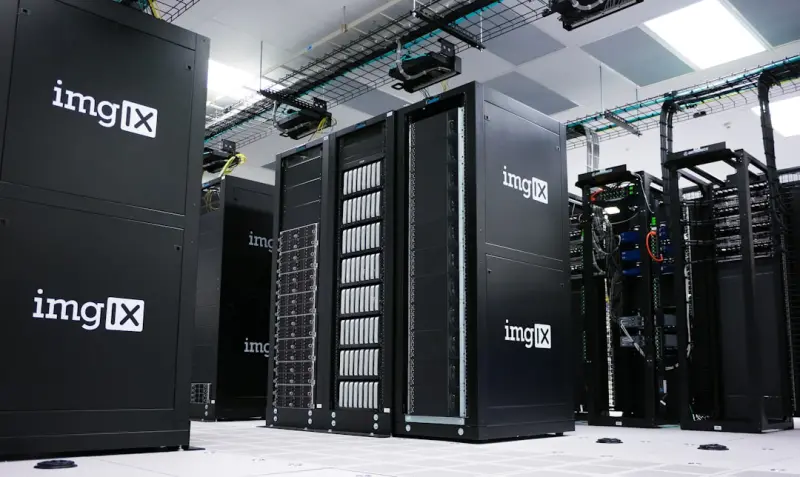
Dedicated Hosting: The Performance & Compliance Engine Your SaaS Needs
Dedicated hosting offers SaaS companies a private, high‑performance environment that solves latenc... Read More
Top Posts

Building a Second Brain: How Generative AI Transforms Personal Knowledge Management
Learn to turn generative AI into a living personal knowledge base, streamlining capture, connection, and retrieval for sharper creativity and smarter decisions....Read More

Appliance Subscriptions: The Smart Way to Upgrade Your Home
Explore the rise of appliance subscriptions, a flexible model that offers financial relief, AI‑driven maintenance, and eco‑friendly benefits, reshaping home...Read More

Raising Kids in a Digital World: Intentional Rituals for Real Connection
Learn how intentional daily rituals, collaborative screen contracts, and story‑time traditions can empower families to thrive amid constant digital distractio...Read More
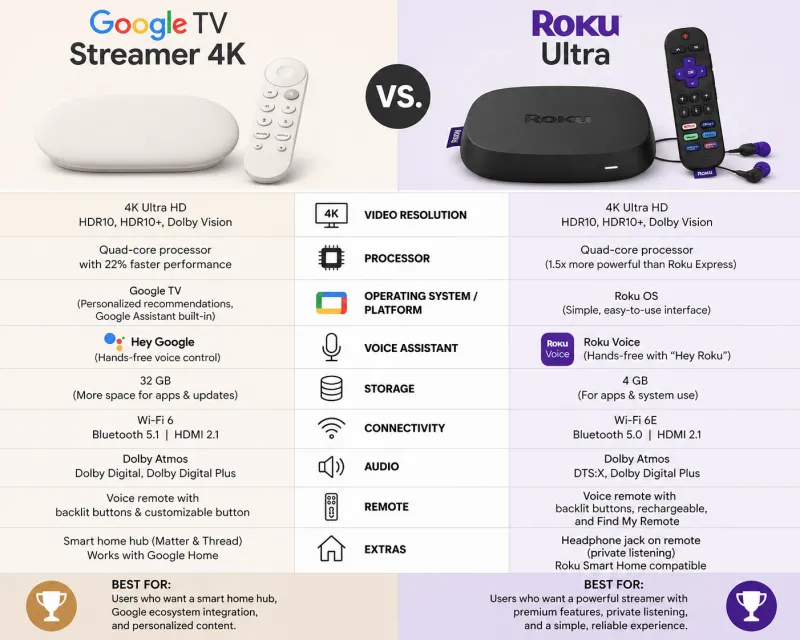
Navigating the Streaming Landscape: Google TV Streamer 4K vs. Roku Ultra
In the fast-evolving ecosystem of home entertainment, the streaming device has become the vital bridge between high-speed internet and the cinematic experience ...Read More
0 Comments
Post Comment
You will need to Login or Register to comment on this post!