
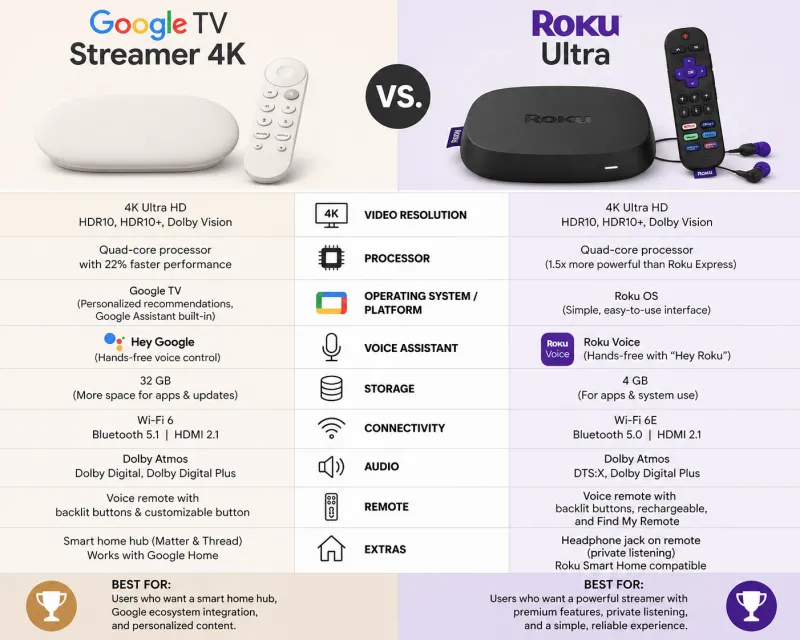
In the fast-evolving ecosystem of home entertainment, the streaming device has become the vital bridge between high-speed internet and the cinematic experience in your living room. For years, the market was dominated by a binary choice: the "walled garden" simplicity of Apple TV or the utilitarian affordability of Amazon’s Fire sticks. However, as the industry matures, the battle for the top spot has narrowed down to two behemoths: the newly minted Google TV Streamer 4K and the seasoned, reliable Roku Ultra.
Choosing between these two is not merely a question of price or specifications; it is a question of philosophy. Do you prefer an environment driven by artificial intelligence and deep content integration, or one characterized by neutrality, stability, and an uncompromising focus on ease of use? This analysis explores the nuances of the Google TV Streamer 4K and the Roku Ultra to help you decide which belongs under your television.
The Google TV Streamer 4K: The Intelligence-First Approach
With the launch of the Google TV Streamer 4K, Google has effectively moved beyond the "dongle" aesthetic. The device features a sleek, low-profile design meant to sit on a media console rather than hiding behind a television. This shift signals Google’s intent to make its device a centerpiece of the smart home.
The Interface and Experience The defining characteristic of Google TV is its "content-first" UI. Unlike traditional grid-based menus, Google TV uses the massive data sets of its parent company to aggregate shows and movies from all your subscriptions into a single, cohesive dashboard. If you are a user who spends too much time scrolling through Netflix, Disney+, and Hulu wondering what to watch, Google’s AI-powered recommendations are a game-changer. It learns your tastes and curates a personalized "For You" page that genuinely feels helpful.
Smart Home Integration The Google TV Streamer is built on the Matter standard and integrates a Thread border router. This is a significant differentiator. For those invested in Google Home, this device acts as a control hub, allowing you to manage smart lights, thermostats, and security cameras directly from your TV screen. The integration of Gemini (Google’s AI) allows for sophisticated voice commands that go beyond simply opening apps; you can ask for mood-based suggestions or summaries of movies, turning the streamer into a functional household assistant.
The Roku Ultra: The Master of Simplicity
Roku has maintained its market relevance by adhering to a singular principle: the viewer should never feel frustrated by the technology. The Roku Ultra remains the flagship of their lineup, providing a performance-oriented experience that prioritizes stability and speed.
The Interface and Experience The Roku OS is the antithesis of the "content-first" recommendation engine—it is an "app-first" grid. It is stark, utilitarian, and predictable. For many users, this is a distinct advantage. There are no surprise algorithm changes, no unexpected content suggestions, and no clutter. You click an app, it opens, and you watch your content. This simplicity makes Roku the most accessible device for multi-generational households, where ease of navigation is paramount.
The Hardware Advantage The Roku Ultra feels like a piece of premium hardware designed to last. It is incredibly snappy, with apps launching near-instantaneously. Furthermore, Roku has consistently prioritized the remote control experience. Its "Lost Remote Finder" feature is a classic example of a design choice centered on real-world utility. Additionally, the Roku Ultra supports private listening via the mobile app or the headphone jack on the remote, a feature that remains a favorite for late-night viewers who don't want to disturb others.
Head-to-Head: The Critical Comparison
To determine which device is superior, we must look at the specific metrics that define the daily streaming experience.
1. Performance and Hardware
The Google TV Streamer features an upgraded processor and increased RAM compared to its predecessors, making it significantly more responsive than the Chromecast dongles of the past. However, the Roku Ultra remains a performance stalwart. Roku’s operating system is notoriously lightweight, meaning it extracts more performance from its hardware. If your primary concern is the speed of menu navigation and app boot times, Roku maintains a marginal edge.
2. The Recommendation Engine vs. The Neutral Grid
This is the crux of the debate. Google’s AI is a double-edged sword. If you appreciate being spoon-fed suggestions based on your viewing history, Google TV is arguably the best interface on the market. Conversely, if you prefer to retain control over your viewing choices without constant algorithmic interference, Roku’s interface is superior. It is neutral, non-intrusive, and devoid of the bloat that can sometimes plague recommendation engines.
3. Smart Home Sophistication
If you are building a smart home, the Google TV Streamer is the clear winner. Its support for Matter and Thread makes it a functional bridge for smart devices. Roku, while it supports some smart home integrations, is a streaming device first and a smart home controller second. If you want to dim your lights or check your front door camera via your remote, Google is the obvious choice.
4. Ecosystem and Content
Both devices support every major streaming service, from the giants like Netflix and Prime Video to niche services like Criterion Channel or specialized regional apps. However, Google TV’s search functionality is far superior. Because it is tied to Google Search, you can search for a movie and see exactly which of your signed-in services offer it for free, or where it is available for rent. Roku’s search is functional, but it often lacks the granular intelligence of Google’s index.
The Verdict: Which One Should You Buy?
Choosing between the Google TV Streamer 4K and the Roku Ultra requires an honest assessment of your personal digital habits.
You should purchase the Google TV Streamer 4K if:
- You live within the Google/Android ecosystem.
- You value a "smart" experience that offers curated recommendations and AI-driven content sorting.
- You are building or expanding a smart home and want a device that acts as a hub for your connected devices.
- You enjoy the ability to use Google Assistant for complex, natural language queries.
You should purchase the Roku Ultra if:
- You prioritize simplicity and a "no-nonsense" user interface.
- You are a "set it and forget it" user who wants a device that never changes its layout or forces content on you.
- You value reliability and speed above AI-driven extras.
- You are looking for a device that works perfectly for every member of the family, regardless of their technological proficiency.
Final Thoughts
Neither device is inherently "better" than the other; they simply serve different archetypes of users. Google TV is a forward-looking, high-intelligence platform that seeks to minimize the distance between the user and their next favorite show. The Roku Ultra is a masterclass in refined, consistent software engineering that respects the user's intelligence and time.
In the modern living room, the streaming device is the conductor of our entertainment. Whether you want an AI-augmented curator (Google TV) or a reliable, lightning-fast digital companion (Roku), you are ultimately choosing between the evolution of the television experience toward a "smart hub" model or the perfection of the traditional "media player" model. Both paths lead to high-quality 4K streaming, ensuring that whichever you choose, the entertainment experience will be world-class.

Jim Pearse, a seasoned freelance writer, brings a wealth of knowledge and passion to the world of home and garden. From the intricacies of landscaping to the nuances of interior design, Jim delves into every aspect of creating comfortable, beautiful, and functional living spaces.
Related Posts
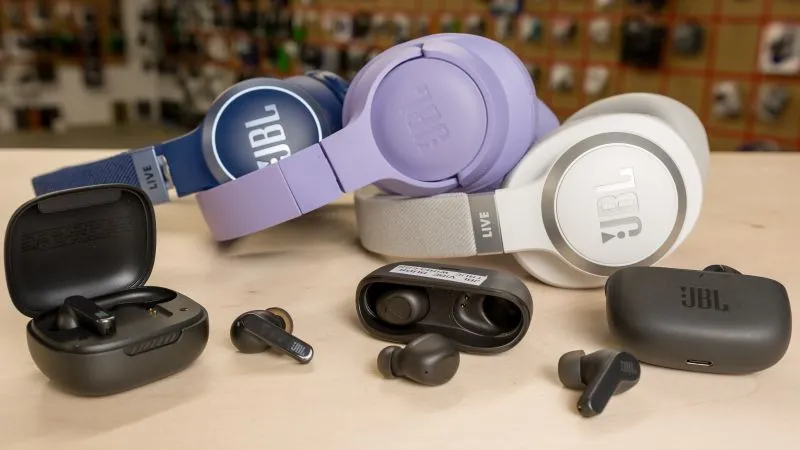
5 Wireless Headphones For all Music Enthusiasts
Discover the 5 best wireless headphones for music lovers, carefully selected for comfort, sound qual... Read More

The Impact of Artificial Intelligence on Our Daily Lives
Artificial intelligence is transforming the way we live, work, and interact with one another. Learn ... Read More

The Unexpected Jobs of Tomorrow: New Careers AI Could Create
Artificial Intelligence (AI) is rapidly transforming our world, and while there's a lot of discussio... Read More
Top Posts

The Hidden Cost of Speed: Why Security Must Keep Up
Speed drives growth, but when security lags, it becomes a hidden liability. Discover why safeguarding data must match the pace of innovation and how to achieve ...Read More

Decoding Your Cat’s Purr: A Guide to Understanding Feline Mood and Health
Understanding the subtle variations in a cat’s purr can reveal insights about their mood, stress level, and health. This guide shows how to listen, interpret,...Read More

Sustainable Parenting: A Guide to Eco-Friendly Practices for a Healthier Future
Sustainable parenting is a growing movement that encourages parents to make environmentally conscious decisions when raising their children. Learn how to incorp...Read More
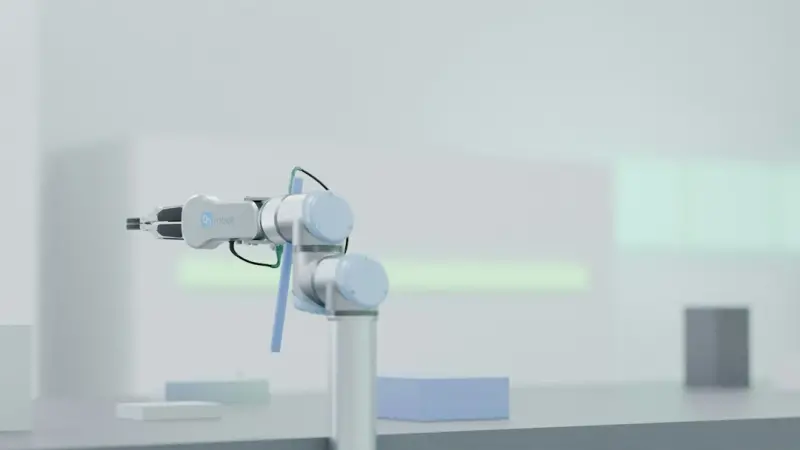
Why Smart Edge Sensors Are Redefining Heavy Industry
Smart edge sensors are turning factories into responsive, data‑driven ecosystems, delivering real‑time insights that improve safety, cut energy use, and pav...Read More
0 Comments
Post Comment
You will need to Login or Register to comment on this post!