
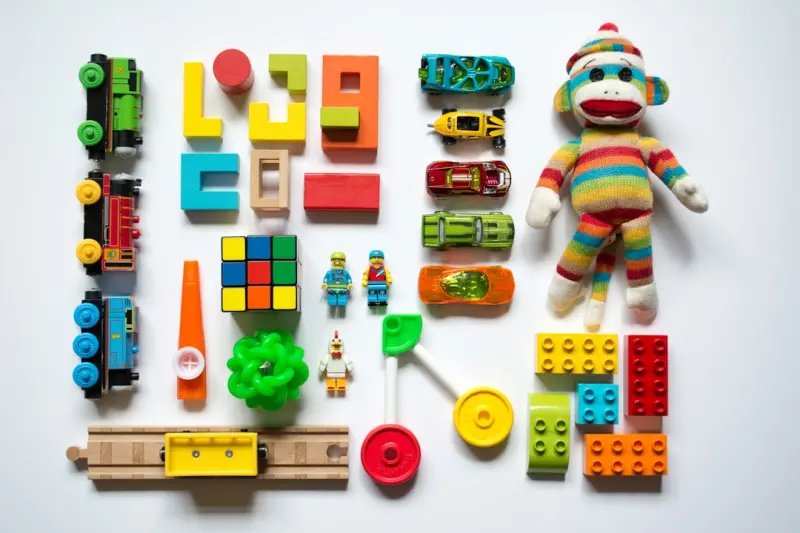
When I was a kid, my favorite toys were the ones that refused to stay static – the Lego set that could become a spaceship one day and a medieval castle the next, the action figure with interchangeable accessories, the board game that let us rewrite the rules as we learned. Fast forward to today, and that same restless curiosity is driving a seismic shift in how toys are conceived, manufactured, and experienced. I’m calling it the era of adaptive play systems: toys that aren’t just products, but evolving platforms that grow, learn, and respond to the child (and even the adult) holding them.
The Core Idea: Modularity Meets Intelligence
At its heart, an adaptive play system marries two timeless concepts: modularity and intelligence. Modularity is the old‑school idea of building blocks – pieces that can be recombined in endless configurations. Intelligence, however, adds a layer of responsiveness: sensors, tiny processors, and cloud‑connected services that can track usage patterns, suggest new builds, and even adjust difficulty on the fly. Imagine a building set that notices a child repeatedly struggles with certain connections and subtly nudges them toward a simpler assembly before escalating the challenge. Or a plush companion that learns a child’s favorite stories and updates its repertoire without a single battery change.
Why Parents (and Kids) Are Hungry for Evolutionary Play
Modern families are juggling more screens, tighter schedules, and a growing awareness of the environmental impact of disposable goods. Adaptive toys answer three pressing demands:
- Longevity – Instead of outgrowing a toy in a year, children can continuously expand its capabilities, stretching its lifespan across multiple developmental stages.
- Personalization – Algorithms can tailor challenges to a child’s skill level, fostering a sense of mastery without the frustration of “too hard” or “too easy.”
- Sustainability – By reusing core components and updating functionality via software, manufacturers can dramatically cut down on waste. This aligns perfectly with the principles of Digital Minimalism in Toy Design, where less physical turnover means a lighter carbon footprint.
Designing for Inclusivity: Play That Doesn’t Exclude
Adaptive systems also open a doorway to truly inclusive design. Traditional toys often assume a one‑size‑fits‑all approach, sidelining children with differing abilities. By integrating adjustable sensory feedback, tactile variations, and voice‑controlled interactions, toys can become accessible to kids on the autism spectrum, those with motor challenges, or even seniors looking to keep their minds sharp. The adaptability isn’t just a feature; it’s a philosophy that says every user deserves a play experience that respects their unique needs.
From Concept to Shelf: The New Development Pipeline
Creating an adaptive toy is no longer a linear process of sketch‑draw‑mold‑ship. It’s a collaborative dance between hardware engineers, software developers, child psychologists, and data scientists. Early prototypes often start as simple “smart” bricks equipped with Bluetooth Low Energy (BLE) modules. Once the hardware foundation is solid, teams layer on cloud services that handle analytics, content updates, and community‑driven challenges. In practice, this pipeline mirrors the agile loops I’ve seen in SaaS product development, where rapid iteration and user feedback are king. If you’re curious how the play‑centric mindset translates to business, check out Playful Prototyping for a deeper dive.
Data Ethics: The Invisible Glue Holding It All Together
With great data comes great responsibility. Adaptive toys collect a surprising amount of information: how long a child interacts with a piece, the sequences they favor, even biometric cues like heart rate if the toy includes wearables. Companies must be transparent about what’s gathered, how it’s stored, and who can access it. Building robust consent mechanisms and anonymizing data aren’t optional—they’re the backbone of trust. A misstep here could turn a beloved play companion into a privacy nightmare, eroding brand equity faster than any product recall.
Economic Implications: New Revenue Models for Toy Makers
Beyond the emotional payoff, adaptive toys unlock fresh business models. Subscription‑based content packs—think new story arcs, challenge modules, or seasonal skins—can provide a steady revenue stream. Micro‑transactions for virtual accessories let kids customize their experience without physical waste. Moreover, the data insights gathered (always anonymized) can inform future product lines, reducing R&D waste and aligning inventory more closely with real demand. This shift echoes the broader SaaS trend of moving from one‑off sales to recurring value delivery.
Supply Chain Sustainability: A Circular Vision
Traditional toy manufacturing relies on linear supply chains: produce, ship, discard. Adaptive systems champion a circular model. Core components—plastic frames, electronic hubs, magnetic connectors—are designed for durability and easy disassembly. When a new feature is released, users can swap out a module rather than discard the entire set. Manufacturers can then refurbish returned parts, re‑certify them, and feed them back into the market. This approach dovetails with the principles highlighted in Eco‑Friendly Solutions, where reducing waste is not a afterthought but a strategic advantage.
Community‑Driven Innovation: Crowdsourcing Play
One of the most exciting byproducts of adaptive toys is the emergence of vibrant user communities. Kids (and their parents) love sharing custom builds, challenge solutions, and storytelling scripts online. Brands can harness this organic content by offering official platforms where creators earn badges, unlock exclusive parts, or even co‑design future expansions. It’s a virtuous cycle: the community fuels product evolution, and the product fuels community growth. Think of it as an open‑source ethos applied to the playroom.
Challenges on the Horizon
Despite the promise, several hurdles remain. First, the cost of integrating sensors and connectivity can push price points higher, potentially alienating budget‑conscious families. Second, regulatory landscapes for children’s data are tightening worldwide, demanding rigorous compliance. Third, there’s a risk of over‑digitizing play, where the magic of tactile, unplugged interaction gets lost. Striking the right balance between smart features and timeless hands‑on fun will be the litmus test for every brand venturing into this space.
Looking Ahead: The Playful Future
We’re standing at a crossroads where technology, sustainability, and human‑centered design converge. Adaptive play systems embody that intersection, offering toys that are not just objects but evolving companions. They promise longer lifespans, richer learning experiences, and a more inclusive play ecosystem. For parents, educators, and entrepreneurs alike, the question isn’t “Will adaptive toys succeed?” but “How can we shape their journey to ensure they enrich the lives of the next generation while honoring our planet?”

Brad Hays is a freelance writer known for his versatile skill set and ability to craft compelling content across a wide range of industries.
Related Posts

Playful Innovation: How Immersive Tech Is Rewriting Childhood
A deep dive into the rise of augmented reality, programmable robotics, and maker kits shows how mode... Read More
Eco‑Play Revolution: The Shift to Biodegradable Toys
Biodegradable toys are transforming play by combining eco‑friendly materials, smart design, and pa... Read More
Beyond Plastic: How Smart, Sustainable Toys Are Redefining Play
A deep dive into the rise of sustainable, AI‑enhanced toys, exploring their environmental benefits... Read More
Top Posts

Pet‑Friendly Home Offices: Boosting Productivity and Happiness
A practical guide to designing a home office that welcomes your pets, featuring smart gadgets, ergonomic tips, and digital‑balance strategies to enhance produ...Read More

Voice‑First SEO: How to Make Your SaaS Brand Heard by Assistants
Explore a fresh SEO strategy that targets voice and AI assistants, focusing on conversational content, schema markup, multilingual readiness, and performance me...Read More

How to Capture and Repurpose Ephemeral Social Media Content for Lasting ROI
Discover a four‑step framework to capture, curate, transform, and distribute short‑lived social media content, turning fleeting moments into long‑lasting ...Read More

Beyond the List: Harnessing Visual SERP Elements to Capture User Attention
The search results page is now a multimedia canvas. Discover a step‑by‑step framework to audit, optimize, and track visual assets, turning screenshots and v...Read More
0 Comments
Post Comment
You will need to Login or Register to comment on this post!