
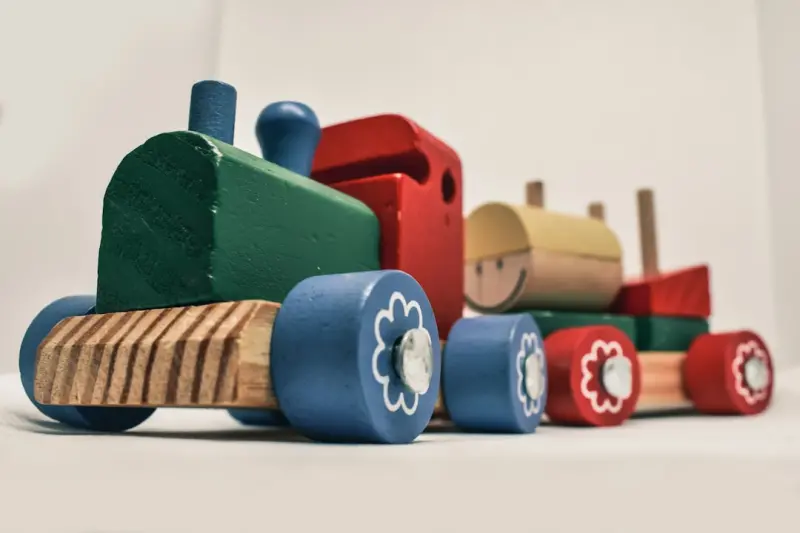
When I was a kid, the living room floor was a battlefield, a laboratory, and a launchpad—all at once. My army of plastic soldiers, wooden blocks, and rubbery dinosaurs didn’t just fill the silence; they sparked stories, solved puzzles, and, in hindsight, taught me the fundamentals of systems thinking. Fast‑forward to today, and those same principles are quietly reshaping boardrooms, design sprints, and startup garages. The idea that “toys are only for kids” has become a myth, and it’s time we embrace a more nuanced view: playful prototyping is a strategic advantage.
The Unlikely Power of Physical Play in a Digital World
We live in an era where data dashboards glow brighter than any neon sign, and cloud‑based collaboration tools promise “real‑time” magic. Yet, the most memorable breakthroughs often start with something tactile. A simple click‑and‑drag on a screen can’t replicate the kinetic feedback you get when you snap a brick together or swivel a gear into place. Those moments of friction—literal and figurative—force the brain to toggle between visualization and execution, a duality that pure digital mock‑ups rarely achieve.
Research from cognitive psychologists shows that hands‑on manipulation engages the motor cortex, which in turn strengthens memory pathways. In practice, this means that teams who physically build a prototype with construction toys often retain concepts longer and iterate faster than those who stay glued to a monitor. The tactile experience also surfaces constraints that a digital model might gloss over—weight distribution, balance, and ergonomics become palpable concerns the moment you try to stack a tower of bricks higher than your imagination.
From LEGO to Low‑Code: Bridging the Gap
Construction toys such as LEGO, K’NEX, and magnetic tiles have long been championed by educators for their ability to teach engineering fundamentals. In the corporate sphere, they’re emerging as low‑cost, low‑risk environments for rapid ideation. Imagine a product team gathered around a table, each member armed with a handful of bricks, tasked with visualizing a new feature set. As ideas bounce around, the team can physically rearrange components, instantly seeing how a change impacts the overall architecture.
This approach aligns surprisingly well with the tiny token strategy. Just as small, thoughtful gifts can catalyze big business wins, a modest handful of bricks can unlock a cascade of creative insights. The “token” here isn’t a voucher; it’s the tangible piece that prompts conversation, debate, and ultimately, innovation.
Case Study: A SaaS Startup’s Play‑Driven Pivot
Consider a mid‑stage SaaS startup struggling to refine its onboarding flow. Traditional user testing yielded vague feedback—“it feels clunky.” The product team decided to bring in a set of interlocking modules representing each step of the user journey. By physically arranging these modules on a tabletop, they discovered a hidden bottleneck: the third module (account verification) was too large and dominated the flow, causing friction.
By swapping that module with a streamlined piece, the team instantly visualized a smoother path. The next day, they translated the revised layout into a clickable prototype, reducing onboarding drop‑off by 22% within weeks. The lesson? Physical rearrangement can surface hidden pain points faster than endless A/B tests.
Playful Prototyping for Remote Teams
Remote work has amplified the need for shared visual language. While virtual whiteboards and sticky notes have their place, they can become cluttered and lose the immediacy of a real‑world interaction. Some forward‑thinking companies ship “play kits” to their distributed workforce—small boxes containing magnetic tiles, mini‑figures, and color‑coded connectors. During weekly sprint reviews, each team member builds a representation of their progress, then photographs or streams the creation for collective critique.
This practice not only democratizes the design conversation but also reinforces a sense of camaraderie. When you see a colleague’s tiny castle of features, you’re reminded that every piece, no matter how small, contributes to the kingdom’s stability. It’s a visual metaphor that resonates deeply, especially when juxtaposed with the intangible nature of code.
Integrating Play with Data‑Driven Decision Making
Critics might argue that toys are frivolous in a data‑centric environment. However, the most successful innovators blend intuition with analytics. After a hands‑on session, teams can capture the resulting configurations and tag them with relevant metrics—time to assemble, perceived complexity, and user sentiment scores. These qualitative data points can then be fed into a larger analytical framework, providing a richer context for decision‑making.
Think of it as a hybrid approach: the edge‑first internet concept pushes computation closer to the user for speed; similarly, playful prototyping brings ideation closer to the human brain, accelerating insight generation. The synergy between tactile experimentation and real‑time data creates a feedback loop that’s both fast and grounded.
Designing the Perfect Play Space
To reap the benefits, the environment matters. A designated “play zone” should be:
- Accessible: Keep a stocked kit within arm’s reach, whether it’s a drawer of LEGO bricks or a shelf of magnetic tiles.
- Flexible: Modular tables and movable chairs allow teams to reconfigure the space based on the size of the group.
- Inviting: Warm lighting, a splash of color, and perhaps a curated playlist can signal that this is a space for creativity, not just a meeting room.
- Documented: Provide a simple camera or smartphone stand so that each build can be captured and archived for future reference.
When a space feels purposeful, participants are more likely to engage fully, dropping the mental guardrails that often inhibit bold thinking.
Beyond the Office: Toys in Customer Engagement
Play isn’t limited to internal teams. Brands are discovering that sending customers a small, branded puzzle or construction kit can deepen loyalty. The tactile experience creates a memorable touchpoint that digital ads can’t replicate. Moreover, when customers share photos of their assembled toys on social media, it becomes user‑generated content—a powerful, authentic endorsement.
This strategy dovetails with the social audio frontier. Just as brands are exploring new auditory channels, they can also explore tactile channels. A well‑designed play kit becomes an extension of the brand narrative, turning a passive audience into active participants.
Addressing Common Misconceptions
“It’s just for kids.” – While the origins are child‑centric, the cognitive benefits of play are universal. Adults retain the capacity for neuroplastic growth when they engage in novel, hands‑on activities.
“It wastes time.” – On the contrary, play accelerates the ideation cycle. By surfacing friction points early, teams avoid costly revisions later in development.
“It’s not scalable.” – Play kits are inexpensive, and the process can be standardized across teams. The real scalability comes from the insights generated, not the physical toys themselves.
Measuring the ROI of Playful Prototyping
To justify the investment, track key performance indicators such as:
- Reduction in design iteration cycles.
- Increase in feature adoption rates post‑launch.
- Employee satisfaction scores related to creativity and autonomy.
- Time saved in stakeholder alignment meetings.
Many companies report a 15‑30% boost in speed to market after integrating play into their workflow. While exact numbers vary, the qualitative uplift—greater collaboration, heightened morale, and richer idea pipelines—often translates into tangible business outcomes.
Getting Started: A Simple Play‑First Framework
1. Set the Intent: Define a clear objective for the play session—whether it’s exploring a new feature, solving a UX bottleneck, or brainstorming a marketing campaign.
2. Gather Materials: Choose a kit that matches the complexity of the task. Simple magnetic tiles work for high‑level concepts; detailed LEGO Technic sets suit engineering challenges.
3. Facilitate the Session: Appoint a neutral moderator to keep the conversation focused and ensure every voice is heard.
4. Capture & Reflect: Photograph the build, annotate with initial thoughts, and schedule a follow‑up meeting to translate the insights into actionable plans.
By institutionalizing this routine, playful prototyping moves from a novelty to a core component of the innovation process.
Future Outlook: Play as a Competitive Differentiator
As markets become increasingly saturated, the ability to innovate quickly and authentically will separate the leaders from the followers. Companies that embed play into their culture will not only generate more creative solutions but also cultivate a workforce that feels empowered to experiment.
In the same way that social audio is redefining brand storytelling, playful prototyping is redefining product development. It’s a shift from linear, siloed pipelines to a more organic, collaborative ecosystem—where ideas are built, deconstructed, and rebuilt with the same enthusiasm a child brings to a new set of blocks.
So the next time you walk past a shelf of brightly colored bricks, remember: those humble pieces could be the missing link between your current challenges and the breakthrough you’ve been chasing. Embrace the mess, the noise, the tactile joy—and watch as your ideas take shape, one snap at a time.

Armed with a degree in English Literature, Jill’s journey into the digital space wasn't just a career move; it was a natural extension of her lifelong love affair with storytelling. While some writers view search engine optimization (SEO) as a rigid constraint, Jill sees it as a creative puzzle. She understands the delicate art of balancing the algorithmic demands of search engines with the human desire for resonance, emotion, and value. To Jill, keywords aren't just targets to hit; they are the breadcrumbs that lead eager readers straight to the answers they’ve been searching for.
Related Posts
The Best Lego Kits like Star Wars, Disney and More
Discover the best Lego kits for every type of builder. Whether you love Lego Star Wars, Disney, or o... Read More

Why Tangible Toys Still Matter in a Screen‑Obsessed World
A deep dive into why hands‑on toys remain essential for mental health, productivity, and cultural ... Read More
Playtime Revolution: How Sensors, Sustainability, and AI Are Redefining Toys
A deep dive into the three megatrends—sensor‑enabled play, sustainable materials, and AI‑drive... Read More
Top Posts

Why Google Gemini Is the Untapped Engine for B2B SaaS Innovation
Google Gemini’s multimodal capabilities let SaaS products merge text, images, and audio into a single intelligence layer, unlocking faster insights, new reven...Read More

Creative Sprints: Energizing the Modern Classroom
Explore the power of creative sprints in education, a fast‑paced approach that revitalizes lessons, fosters student ownership, and prepares learners for a rap...Read More
Energize Your Routine: Small Choices That Spark a Sustainable Future
Learn how tiny adjustments—from smarter appliances to DIY cleaning—turn daily routines into powerful tools for a greener, more affordable energy future....Read More

Group Buying 2.0: How Collective Power Is Rewriting the Retail Playbook
A deep dive into the resurgence of group buying, its tech backbone, and why it’s becoming the go‑to strategy for savvy shoppers seeking value and connection...Read More
0 Comments
Post Comment
You will need to Login or Register to comment on this post!