
Playful Innovation: How Immersive Tech Is Rewriting Childhood
When I was a kid, my imagination was the most powerful processor I owned. I built forts from couch cushions, turned cardboard boxes into spaceships, and spent endless afternoons swapping stickers with friends. Those simple, unplugged moments still shape how I think about play today. Yet the landscape of toys is undergoing a seismic shift—one driven not just by brighter colors or louder sounds, but by the seamless blend of physical objects and digital experiences.
In this deep‑dive, I’ll explore how augmented reality (AR), programmable robotics, and collaborative maker kits are turning the traditional playroom into an interactive laboratory. We’ll look at why parents and educators are embracing these tools, how creators are designing experiences that respect the child’s need for freedom, and what this means for the future of the toy industry as a whole.
The Rise of Augmented Playgrounds
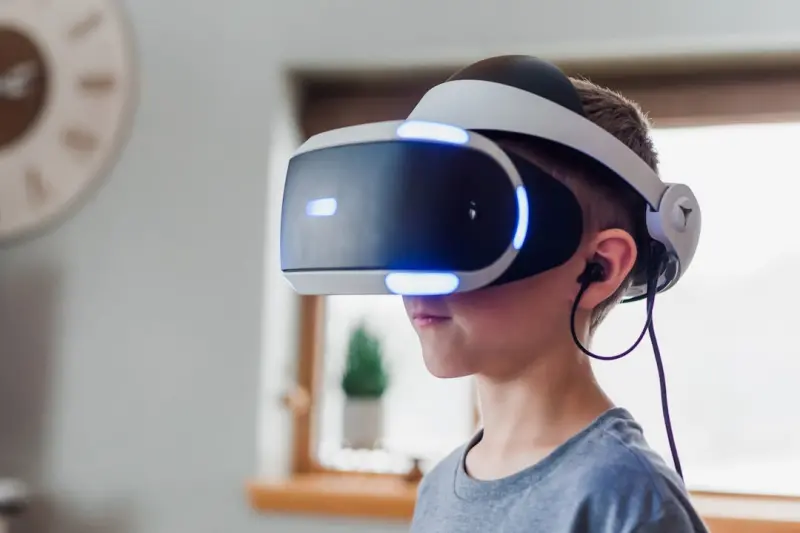
Augmented reality is no longer the exclusive domain of high‑end smartphones. Today’s most popular AR toys are built around lightweight headsets, projection pads, and even simple marker cards that can be scanned with a family tablet. The magic lies in their ability to overlay digital layers onto the physical world without demanding constant screen focus.
Take the interactive storybook mats that project animated characters onto a child’s bedroom floor. As the little explorer moves a toy car across the mat, the projected world reacts—roads light up, bridges appear, and a narrative unfolds based on the child’s choices. This dynamic feedback loop encourages active storytelling, a skill that research shows bolsters language development and empathy.
What makes AR especially compelling for modern families is its scalability. A single set can grow with a child’s abilities, adding new scenarios and challenges as the child matures. Parents love that the same hardware can transition from simple alphabet games to complex problem‑solving missions, extending the product’s lifespan and reducing waste.
Programmable Robotics: From Toys to Mini‑Engineers
If you think of robotics as a niche hobby for older kids, think again. Today’s entry‑level robot kits are designed with intuitive drag‑and‑drop programming interfaces that resemble familiar block‑based coding tools. The result? Children as young as five can command a tiny rover to navigate a maze, respond to voice cues, or even perform simple dances.
Beyond the “wow” factor, programmable robots serve a deeper purpose: they teach systems thinking. By breaking down a task into discrete steps—sense, decide, act—kids learn to anticipate cause and effect, a cornerstone of scientific reasoning. Moreover, many of these kits are built on open‑source hardware, inviting families to tinker with the circuitry, replace sensors, or even 3D‑print custom chassis.
One of the most exciting trends is the emergence of collaborative robot swarms. Rather than a single unit, children can program multiple micro‑bots to work together, simulating concepts like flocking behavior or decentralized problem solving. This mirrors real‑world engineering challenges and fosters a mindset of teamwork and adaptability.
Maker Kits That Bridge the Physical‑Digital Divide
Maker culture has long championed the idea that creativity flourishes when the line between the tangible and the virtual blurs. Recent maker kits for kids embody this philosophy by pairing traditional crafting supplies with companion apps that guide, augment, and share creations.
Imagine a set that includes wooden blocks, magnetic connectors, and a simple circuitry board. The associated app provides step‑by‑step challenges, but also lets kids upload photos of their builds to a community gallery. Peers can remix designs, suggest improvements, or even add animated overlays that bring the physical model to life on screen.
This feedback loop not only validates the child’s effort but also teaches the fundamentals of iterative design. Children quickly learn that a prototype is just a starting point—a version to be tested, tweaked, and shared. The result is a generation of budding designers who view failure not as a setback, but as a data point in a larger creative process.
Why Parents Are Shifting Their Spending Habits
Traditional toy aisles are still stocked with plush animals and plastic action figures, but the sales data tells a different story. Parents are allocating a larger share of their budget to products that promise developmental value, longevity, and sustainability. Three key motivations drive this shift:
- Educational ROI: Toys that double as learning tools are seen as investments in a child’s future skill set, especially in areas like coding, spatial reasoning, and storytelling.
- Adaptability: Products that evolve with a child reduce the need for frequent replacements, aligning with both budgetary constraints and environmental concerns.
- Community Connection: Platforms that enable sharing of creations create a sense of belonging, turning solitary play into a social experience.
These factors intersect beautifully with the tech‑enhanced toys we’ve discussed. For instance, an AR story mat that unlocks new chapters as a child progresses offers both educational payoff and an adaptable experience that can grow over years.
Designing for Freedom: The Balance Between Guidance and Autonomy
One of the biggest pitfalls in tech‑infused toys is over‑prescription. If a product tells a child exactly what to do at every step, it stifles imagination—the very thing toys are meant to nurture. The most successful designs strike a delicate balance: they provide a scaffold, then step back, allowing the child to explore.
Consider a creative coding board that offers a library of pre‑built scripts for common actions—like making a robot move forward or flash a light. The child can start with these building blocks, then experiment by combining them in new ways or tweaking parameters. The device may suggest challenges, but the child decides which to tackle, fostering a sense of agency.
Designers are also embracing modular physical components. By offering interchangeable parts, children can reconfigure a toy in countless ways, ensuring each play session feels fresh. The key is to keep the system intuitive enough that the child doesn’t need a manual to start experimenting.
Bridging Generations: How Adults Are Rediscovering Play
While the primary audience for these toys is children, an unexpected side effect is the resurgence of play among adults. Families are gathering around a shared AR canvas, coding a robot together, or collaborating on a maker project after work. This intergenerational play not only strengthens family bonds but also normalizes lifelong learning.
Many companies are now marketing “family editions” of their kits, which include dual‑user interfaces, collaborative challenges, and even “parent dashboards” that track progress without feeling invasive. These products acknowledge that play is not a solitary activity—it’s a communal ritual that can bridge age gaps.
Commercial Implications: What This Means for Toy Brands
For legacy toy manufacturers, the rise of immersive tech is both a challenge and an opportunity. Brands that cling to purely analog products risk being left behind, while those that integrate digital layers can tap into a growing market of tech‑savvy parents.
Successful strategies include:
- Partnerships with tech platforms: Leveraging existing AR frameworks reduces development costs and accelerates time‑to‑market.
- Open ecosystems: Allowing third‑party developers to create add‑ons or custom content extends the product’s lifespan.
- Data‑informed iteration: Using anonymized usage data (with strict privacy safeguards) to refine challenges, adjust difficulty curves, and introduce new content.
One notable example is a leading board‑game company that launched a hybrid version of its classic strategy game, integrating an AR overlay that reveals hidden terrain and dynamic events. The move revitalized sales and attracted a new demographic of gamers who might have otherwise dismissed the brand as “old‑fashioned.”
Future Outlook: From Playrooms to Learning Hubs
Looking ahead, I see a convergence of three forces: immersive technology, maker culture, and community‑driven content. Together, they will transform the home’s play area into a learning hub where curiosity is the primary curriculum.
Imagine a scenario where a child’s bedtime story is not just read aloud but visualized in 3D space, with interactive elements that respond to the child’s questions. Or a weekend family project where a set of modular robots collaborates with an AR map to simulate a rescue mission, teaching teamwork and problem solving in real time.
These visions are already taking shape, and they point to a future where toys are no longer static objects but evolving platforms that grow with the child, adapt to their interests, and connect them to a global community of creators.
As we continue to push the boundaries of what play can be, remember that the core of any successful toy remains the same: it must spark wonder, invite exploration, and leave room for the unexpected. Technology is merely a catalyst—our imagination is still the engine.
For those interested in the broader context of sustainable and responsible toy design, consider exploring the sustainable toy movement. And if you’re curious about how AI is reshaping product development across industries, the insights in AI‑driven design tools offer a compelling parallel. Finally, the concept of connected play ecosystems underscores the power of seamless integration between physical and digital experiences.

Steph Sanderson is a Toronto-based freelance writer and content creator with a clear passion: crafting compelling articles. With a dedication to clear, engaging prose and a knack for storytelling, Steph brings a wealth of experience to every project.
Related Posts

Playful Learning in the Age of AI: Intelligent Toys Transform Childhood
Intelligent toys are merging adaptive AI, human‑centric design, and eco‑friendly materials to cr... Read More

The Toy Landscape: Analyzing the Trends Driving Demand and Desire in the Global Children’s Market
The contemporary toy industry is navigating a period of profound transformation, moving far beyond t... Read More
Playful Prototyping: How Toys Fuel Business Innovation
Discover how integrating physical toys into team workflows unlocks rapid ideation, improves collabor... Read More
Top Posts

Navigating Tomorrow's Tides: Mastering Your Career in an Age of Unprecedented Change
The future of work is here, and it's evolving fast. Brad Hays shares essential strategies for mastering your career in an age of unprecedented change, from harn...Read More

Leveraging Google Gemini for Real‑Time B2B Insight Generation
Google Gemini’s multimodal capabilities let B2B SaaS platforms deliver instant, context‑aware insights, streamline support, and open new product opportuniti...Read More

Turning Support Conversations into Marketing Gold
Support tickets aren’t just problem‑solving tools—they’re untapped storytelling gold. Learn how to capture, validate, and repurpose post‑support conve...Read More

How to Locate a Lost iPhone, iPad, Apple Watch, and MacBook: A Comprehensive Guide to Finding Your Apple Devices
Losing an Apple device – whether it’s your indispensable iPhone, your versatile iPad, your trusted Apple Watch, or your powerful MacBook – can induce imme...Read More
0 Comments
Post Comment
You will need to Login or Register to comment on this post!