
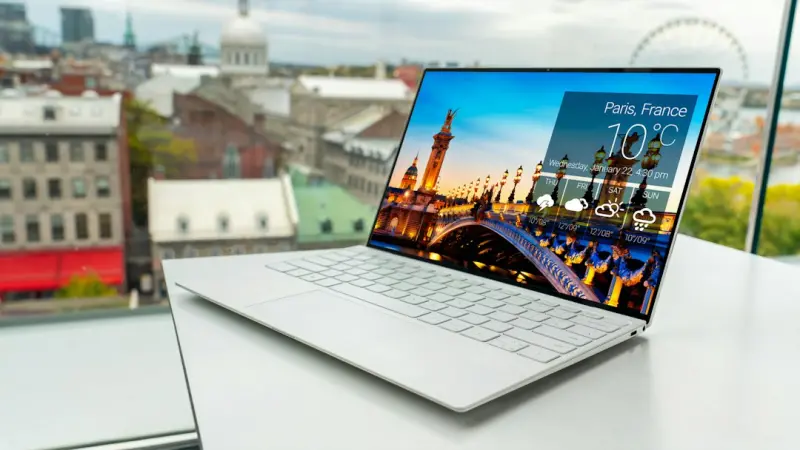
Why the Modern Laptop is Becoming a Personal Innovation Hub
When I first unboxed a clunky notebook back in the early 2000s, the biggest thrill was that it could finally hold my entire music library. Fast forward a couple of decades, and the same device now hosts AI‑driven assistants, high‑resolution virtual studios, and a suite of development environments that would make a data center blush. The laptop has quietly morphed from a portable word processor into a personal innovation hub, and it’s time we stopped treating it like a glorified notepad.
The AI‑Assisted Core: More Than Just a Fancy Keyboard Shortcut
Artificial intelligence is no longer the exclusive domain of cloud services or giant server farms. Today’s CPUs and GPUs are being engineered with dedicated AI cores that can process neural networks locally. This shift means you can run real‑time language translation, background noise cancellation, and even on‑device image enhancement without a single megabyte of data leaving your device.
For power users, this translates into a smoother workflow: imagine a spreadsheet that auto‑suggests formulas based on patterns it recognizes, or a design app that instantly upscales raster images using a diffusion model—all happening on your laptop, offline. The result? A reduction in latency, heightened privacy, and a new level of creative freedom.
Modular Upgradability: The Laptop’s Answer to the Desktop’s Legacy
Remember the joy of swapping out a hard drive or adding a new graphics card to a desktop? Laptops gave that up in the name of thinness, but a quiet revolution is underway. Manufacturers are re‑introducing modularity through standardized expansion slots, magnetic connectors, and even “tool‑free” chassis designs.
These innovations allow you to upgrade RAM, storage, or even swap in a dedicated AI accelerator without the usual screwdriver gymnastics. The benefit is twofold: you extend the useful life of your machine and you avoid the dreaded “obsolescence trap” that forces many users to replace a perfectly functional laptop simply because it can’t keep up with new software requirements.
Sustainability Meets Performance: The Circular Economy of Laptops
Eco‑consciousness is no longer a buzzword; it’s a purchasing decision metric. The industry is responding with laptops built from recycled aluminum, biodegradable polymers, and responsibly sourced rare earth elements. Beyond the materials, there’s a push toward low‑code revolution in firmware updates, allowing devices to receive efficiency patches that reduce power draw without sacrificing performance.
What does this mean for the end‑user? Longer battery life, lower operating costs, and a smaller carbon footprint. When a laptop can be upgraded rather than discarded, you’re actively participating in a circular economy that keeps e‑waste in check while still enjoying cutting‑edge tech.
The Forgotten Ergonomic Factor: Designing for the Human Body
We obsess over specs—CPU clock speed, GPU cores, SSD read/write rates—while overlooking how the device physically interacts with us. A laptop that’s too heavy, has a poorly placed keyboard, or an uncomfortable hinge can cause repetitive strain injuries over time.
Modern manufacturers are addressing this by incorporating adjustable screen hinges that allow for a true laptop‑tablet hybrid experience, keyboard layouts with tactile feedback tuned to reduce finger fatigue, and weight distribution engineering that keeps the center of gravity low. Some even embed haptic feedback into the trackpad to give a more “click‑like” sensation without the mechanical wear of a traditional button.
Software‑Hardware Synergy: When the OS Knows Its Machine
Operating systems are getting smarter about the hardware they run on. By reading the exact specifications of AI cores, thermal sensors, and power management chips, the OS can dynamically allocate tasks to the most efficient subsystem. This software‑hardware symbiosis ensures that intensive workloads, like 4K video rendering or large‑scale data analysis, never throttle the device’s performance unnecessarily.
Developers are also getting in on the act. A growing number of IDEs now detect the presence of on‑device AI accelerators and automatically suggest code optimizations that leverage them. This creates a virtuous loop: better hardware enables smarter software, which in turn pushes hardware manufacturers to innovate further.
Future‑Proofing Your Investment: A Checklist
- AI Core Presence: Look for CPUs or GPUs that advertise dedicated AI inference engines.
- Modular Upgrade Path: Verify that RAM, storage, and expansion slots are user‑replaceable.
- Material Transparency: Choose brands that publish sustainability reports and component sourcing data.
- Ergonomic Design: Test the hinge angle, keyboard feel, and weight balance before buying.
- OS Integration: Prefer operating systems that offer adaptive power and performance profiles based on hardware sensors.
By treating your laptop purchase as a strategic asset rather than a disposable gadget, you’ll reap productivity gains for years to come.
Beyond the Device: The Ecosystem That Complements Your Laptop
No laptop lives in isolation. The peripheral ecosystem—monitors, docking stations, external GPUs, and even smart lighting—can amplify the capabilities of your primary machine. A high‑refresh‑rate monitor paired with an adaptive sync technology can reduce eye strain during long coding sessions, while a dock with Power Delivery can keep your battery topped off while you work.
Even the software landscape matters. Cloud‑based backup solutions that respect privacy‑first hosting standards ensure that your data remains secure without sacrificing accessibility. Meanwhile, a suite of cross‑platform productivity tools can keep your workflow fluid as you transition between your laptop, tablet, and desktop environments.
The Bottom Line: Treat Your Laptop Like a Co‑Founder
If you’re building a business, launching a side hustle, or simply trying to keep up with the rapid pace of digital creation, your laptop is more than a tool—it’s a co‑founder. It needs the right mix of power, flexibility, sustainability, and ergonomics to thrive alongside you.
Invest wisely, upgrade consciously, and don’t forget to consider the broader ecosystem. In doing so, you’ll transform a simple piece of hardware into a catalyst for innovation, creativity, and lasting productivity.
Final Thoughts
The next wave of laptop evolution isn’t about making devices thinner; it’s about making them smarter, greener, and more adaptable to the human body. By focusing on AI integration, modular upgrades, sustainable materials, ergonomic design, and tight software‑hardware coupling, manufacturers are delivering machines that can keep pace with the ever‑expanding demands of modern work. As users, our role is to demand these features, understand their value, and choose devices that align with both our professional ambitions and our responsibility to the planet.

Brad Hays is a freelance writer known for his versatile skill set and ability to craft compelling content across a wide range of industries.
Related Posts
Things To Be Considered Before Buying Student Laptops
In today's digitally driven academic world, a laptop is no longer a luxury but an essential tool for... Read More

Why AI-Optimized Laptops Are the Next Productivity Game‑Changer
A deep dive into the emerging trend of AI‑optimized laptops, covering hardware innovations, sustai... Read More

Modular Laptops: Building a Future‑Proof, Sustainable Workstation
Modular laptops let you swap compute, battery, and I/O components, offering a sustainable, cost‑ef... Read More
Top Posts
Why Custom Software Is the Definitive Competitive Edge for Modern Enterprises
In the relentless march of digital transformation, businesses face a stark choice: conform to the generic standards imposed by off-the-shelf (OTS) solutions, or...Read More

The Hidden Power of Ambient Soundscapes for Mental Resilience
Discover why ambient soundscapes are becoming a vital tool for mental resilience, how to create your own, and the role of secure, empathy‑driven tech in enhan...Read More

Micro‑Wins, Mega Impact: Embedding Real‑Time Recognition in Remote SaaS Teams
Discover practical, data‑backed ways to celebrate everyday victories in distributed SaaS teams, from AI‑powered kudos bots to 10‑minute virtual toasts, bu...Read More

When Players Become Architects: The Modding Wave Redefining Gaming
A deep dive into the rise of modding, showing how community tools, AI assistance, and new revenue models are turning players into architects of the games they l...Read More
0 Comments
Post Comment
You will need to Login or Register to comment on this post!