
For centuries, hair has served as a primary symbol of vitality, identity, and personal aesthetic. It is often referred to as our "crowning glory," and for good reason—the way we wear our hair is an extension of our personality and a reflection of our internal health. Consequently, the experience of hair thinning or loss can be more than just a cosmetic concern; it can profoundly impact self-esteem and emotional well-being.
In the evolving landscape of regenerative medicine, one treatment has emerged as a beacon of hope for those seeking to restore their natural density without resorting to invasive surgery: Platelet-Rich Plasma (PRP) therapy. Once the secret of elite athletes for joint recovery, PRP has transitioned into the forefront of aesthetic dermatology. This guide serves as a comprehensive exploration of PRP hair treatment, detailing the science, the procedure, and the transformative potential it holds for your locks.
The Science of Regeneration: What is PRP?
To understand how PRP revitalizes hair, one must first understand the remarkable composition of human blood. Our blood consists of four primary components: red blood cells, white blood cells, plasma, and platelets. While platelets are best known for their role in clotting blood after an injury, they are also "biological goldmines" of growth factors.
Platelet-Rich Plasma is exactly what the name suggests—plasma that has been concentrated with a significantly higher-than-normal density of platelets. These platelets contain specialized proteins, such as Vascular Endothelial Growth Factor (VEGF) and Transforming Growth Factor (TGF), which act as messengers. When injected into the scalp, these growth factors signal the body to repair damaged tissues, stimulate dormant hair follicles, and increase blood flow to the scalp (a process known as angiogenesis).
In essence, PRP therapy is an autologous treatment—meaning it uses your own biological material. This minimizes the risk of allergic reactions or rejection, making it one of the safest regenerative procedures available today.
The Candidate Profile: Is PRP Right for You?
While PRP is a powerful tool, it is not a "magic wand" for all types of hair loss. Its efficacy depends largely on the stage and cause of the thinning.
The ideal candidates for PRP are individuals in the early to middle stages of Androgenetic Alopecia (commonly known as male or female pattern baldness). It is particularly effective for those experiencing general thinning rather than total baldness. Since PRP works by stimulating existing follicles, it requires a "living" follicle to interact with. If an area of the scalp has been completely smooth for many years, the follicles may have become dormant beyond the point of reactivation.
Additionally, PRP is an excellent option for:
- Women experiencing postpartum hair loss: Helping the body transition back to its normal growth cycle.
- Stress-induced thinning (Telogen Effluvium): Providing the nutritional and growth support needed to jump-start the recovery phase.
- Preventative maintenance: For those with a strong genetic predisposition to hair loss who wish to bolster follicle health before significant thinning occurs.
The Procedure: What to Expect in the Clinic
One of the most appealing aspects of PRP hair treatment is its efficiency. Often referred to as a "lunchtime procedure," the entire process typically takes between 45 to 60 minutes.
Step 1: The Collection
The process begins similar to a routine lab test. A small amount of blood (usually 20ml to 50ml) is drawn from your arm by a medical professional.
Step 2: The Centrifugation
The vial of blood is placed in a centrifuge—a machine that spins at high speeds. This rapid rotation uses centrifugal force to separate the blood into layers based on density. The "liquid gold" (the platelet-rich plasma) is isolated from the red and white blood cells. This concentration process ensures that the plasma being injected has a platelet count 5 to 10 times higher than regular blood.
Step 3: Activation and Injection
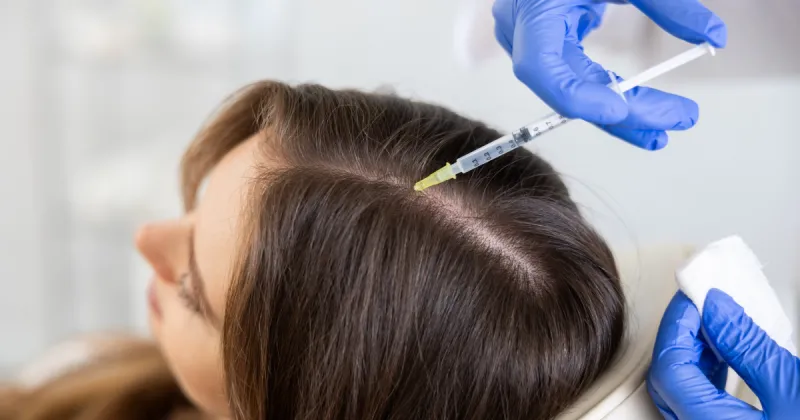
After the scalp is cleaned and sometimes treated with a topical numbing agent, the concentrated PRP is injected into the thinning areas of the scalp. Physicians often use a "nappage" technique or a series of micro-injections at the level of the hair follicle (roughly 3mm deep). This ensures the growth factors are delivered precisely where the biological "machinery" of hair growth resides.
Managing Expectations: Timeline and Results
In a world of instant gratification, it is vital to remember that biological regeneration takes time. Hair growth operates on a specific cycle: the Anagen (growth) phase, the Catagen (transition) phase, and the Telogen (resting) phase.
Most patients begin to notice a difference in hair texture and shedding within the first two to three months. You may notice that your hair feels "sturdier" or that you are losing fewer strands in the shower. Visible improvements in density and the appearance of new "baby hairs" typically peak between six to nine months after the initial treatment.
A standard protocol usually involves an initial "loading phase" of three to four treatments, spaced roughly four to six weeks apart. Following this, maintenance sessions are recommended every six to twelve months to sustain the activity of the follicles and combat the ongoing nature of genetic hair loss.
The Benefits: Why Choose PRP?
The surge in PRP’s popularity is attributed to several distinct advantages over traditional hair restoration methods:
- Minimal Downtime: Unlike hair transplant surgery, which requires significant recovery time and involves incisions, PRP allows you to return to your daily activities immediately. Some mild tenderness or redness at the injection site is common but usually subsides within 24 hours.
- Increased Hair Shaft Diameter: PRP doesn't just grow new hair; it strengthens existing hair. By improving the health of the follicle, the hair produced is often thicker and more pigmented, providing better scalp coverage.
- Synergistic Potential: PRP works exceptionally well when combined with other therapies. Whether you are using Minoxidil, Finasteride, or Low-Level Laser Therapy (LLLT), PRP acts as a catalyst, enhancing the overall results of your hair restoration regimen.
- Natural Results: Because the hair is your own and is growing from your natural follicles, there are no "plugs" or unnatural-looking hairlines. The transition is gradual and subtle.
Safety and Recovery
As a professional medical procedure, PRP is remarkably low-risk. Since the substance is derived from the patient's own blood, the risk of communicable disease or immunogenic reaction is virtually non-existent.
Post-treatment care is straightforward. Patients are generally advised to avoid washing their hair for 12 to 24 hours to allow the scalp to remain undisturbed. Avoiding strenuous exercise or high-heat environments (like saunas) for two days is also standard advice to minimize swelling.
The Holistic Perspective
While PRP is a formidable tool in the fight against hair loss, the most successful outcomes are seen in patients who adopt a holistic approach to hair health. Hair is a non-essential tissue in the eyes of the body; if you are stressed, malnourished, or experiencing hormonal imbalances, the body will divert resources away from your hair to vital organs.
To maximize the benefits of PRP, ensure you are supporting your body with:
- Nutrition: A diet rich in biotin, zinc, iron, and protein.
- Scalp Health: Keeping the scalp clean and free of excessive inflammation.
- Stress Management: High cortisol levels are a known trigger for hair thinning.
Conclusion
The journey toward revitalizing your locks is both a biological and an emotional one. PRP hair treatment represents a significant milestone in modern aesthetics—a bridge between science and self-confidence. By leveraging the body’s innate healing power, we are no longer forced to simply accept the thinning of our hair as an inevitable part of aging.
If you are noticing the first signs of thinning or looking to add volume and strength back to your mane, PRP offers a professional, evidence-based, and minimally invasive solution. However, the first step is always a consultation with a qualified specialist who can assess your specific needs and create a tailored roadmap for your restoration journey. Your hair has the potential to flourish once again; sometimes, it just needs a concentrated boost of its own natural vitality.

Amanda is a passionate writer exploring a kaleidoscope of topics from lifestyle to travel and everything in between.
Related Posts

The Rise of Clean Beauty: How Slow Living Fuels Radiant Skin
Explore how slow living principles transform clean beauty routines, emphasizing transparency, mindfu... Read More
When Algorithms Meet Lipsticks: The New Wave of AI-Driven Beauty
Discover how AI is transforming beauty—from hyper‑personalized formulas and ethical data handlin... Read More

Beyond the Mirror: How AI and AR Are Redefining Beauty Experiences
A deep dive into the technologies—AI, AR, smart packaging, and community‑driven insight—revolu... Read More
Top Posts

The Hidden Forces Shaping Today’s Shopping Experience
Discover the evolving forces behind modern retail—from AI assistants and virtual try‑ons to sustainable choices and community marketplaces—transforming ho...Read More
Greening the Cloud: Practical Steps SaaS Leaders Can Take Today
A deep dive into how SaaS firms can make their cloud operations sustainable, covering energy audits, renewable contracts, workload optimization, modular hardwar...Read More

The Sprint Culture Revolution: How Speed Shapes Modern Society
A deep dive into how our obsession with speed influences politics, work, home life, and even our pets—offering a path to balance rapid progress with thoughtfu...Read More

Content Marketing as a Living System: Nurturing Adaptive Narratives
Learn to treat content marketing like a living organism—using feedback loops, modular storytelling, and ecosystem alignment—to create adaptive narratives th...Read More
0 Comments
Post Comment
You will need to Login or Register to comment on this post!