

The Old Grid’s Blind Spot
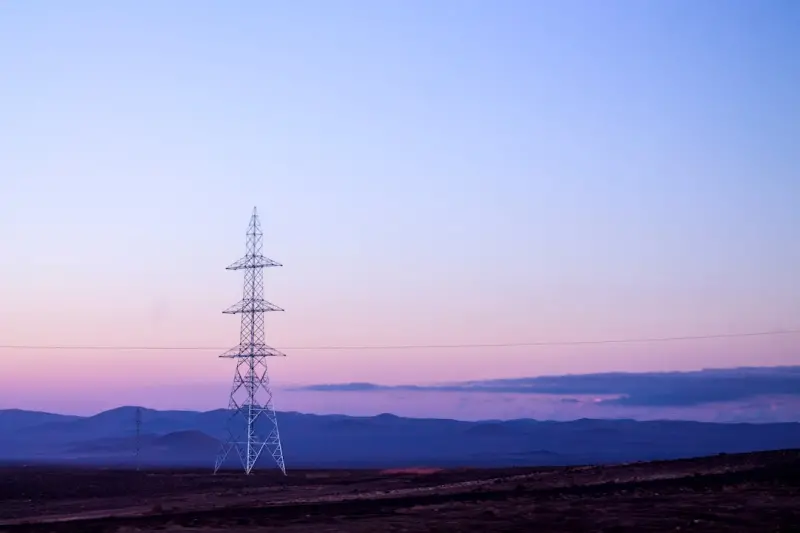
When I first walked onto a wind‑farm site in the Midwest, the horizon was a jagged line of turbines humming against a sky that seemed to promise endless power. Yet, as the turbines turned, I couldn’t help noticing the antiquated substations that still resembled relics from the 1960s. The reality is that most of our electricity still flows through a centralized, monolithic grid that was designed for a world of predictable, one‑directional power flow. It’s a system built for coal‑fired plants, not the distributed, renewable resources we champion today.
That blind spot isn’t just technical—it’s cultural. Decision‑makers often measure success by the megawatts delivered, not by the resilience, equity, or carbon impact of the pathways that get those megawatts to the end‑user. To truly re‑imagine energy, we need to shift from a “supply‑first” mindset to a “value‑first” one, where the quality of the energy experience matters as much as the quantity.
Why Data Is the New Fuel
In the SaaS world, I’ve spent years watching companies turn raw data into actionable insight. The same principle applies to energy, but the stakes are higher. Every kilowatt‑hour generated, stored, or consumed leaves a digital footprint—voltage, frequency, temperature, weather conditions, even the behavior of the homeowner who adjusts a thermostat. When that data remains siloed, it’s like having a reservoir of oil that no one can drill.
Enter low‑code data integration. By leveraging platforms that let engineers stitch together sensor streams without writing endless lines of code, utilities can achieve real‑time visibility across the entire energy ecosystem. The result? Predictive maintenance that prevents outages before they happen, demand‑response programs that reward consumers for shaving peaks, and dynamic pricing that reflects true grid conditions.
But data alone isn’t magic. It needs a context—a story that explains why a sudden spike in consumption occurred. That narrative often involves weather anomalies, local events, or even social trends. When you marry data with human insight, you unlock a level of agility that traditional grid operators could only dream of.
AI and Synthetic Data Lighting the Way
Artificial intelligence promises to be a game‑changer for energy, but training robust models requires massive datasets—datasets that are often incomplete, noisy, or proprietary. This is where synthetic data becomes a strategic asset. By generating realistic, privacy‑preserving replicas of real‑world energy usage patterns, AI can be trained to forecast demand, detect anomalies, and optimize storage without exposing sensitive customer information.
Imagine a scenario where a utility wants to anticipate the impact of a heatwave on residential air‑conditioning load. With synthetic data, the model can simulate thousands of possible outcomes, factoring in varying building insulation levels, occupant behavior, and even the influence of smart‑home devices. The AI then suggests targeted incentives—perhaps a discounted on‑peak rate for households that pre‑cool their homes—reducing strain on the grid while keeping customers comfortable.
Beyond forecasting, synthetic data fuels advanced grid simulations that test the resilience of micro‑grids against cyber‑attacks, equipment failures, or extreme weather events. These simulations, once the realm of academic research, are now accessible to mid‑size utilities thanks to cloud‑native AI services.
Human‑Centric Security for Energy Infrastructure
Security in the energy sector has traditionally been about firewalls and perimeter defenses. However, as the grid becomes more digitized, the attack surface expands, and the human element emerges as both the weakest link and the most powerful line of defense. A human‑centric security approach reframes safety as a shared responsibility, blending technology with behavioral insights.
Consider the rise of remote monitoring stations that grant engineers access to substations via VPNs. While convenient, this also introduces phishing vectors targeting staff. By embedding security awareness into daily workflows—think just‑in‑time training pop‑ups when a user logs into a critical system—you dramatically reduce the likelihood of credential compromise.
Moreover, integrating identity‑based access controls with real‑time risk scoring can automatically adjust privileges based on contextual factors such as location, device health, and recent activity patterns. This dynamic approach ensures that even if credentials are stolen, the attacker faces a constantly shifting security landscape that’s hard to navigate.
From Microgrids to Whole‑Community Resilience
Microgrids have been the buzzword for years, but most pilots remain isolated experiments. The next evolution is to view microgrids as building blocks of a resilient, community‑wide network. By interlinking these smaller grids, we can create a mesh that balances load, shares excess renewable generation, and collectively bargains with larger utilities for better rates.
Take a coastal town that invests in solar rooftops and a battery storage facility. When a storm knocks out the main transmission line, the local microgrid can operate autonomously, keeping essential services like hospitals and schools running. Once the main grid is restored, the microgrid feeds surplus energy back, earning revenue for the community and reducing overall carbon footprints.
This model also democratizes energy ownership. Residents can buy stakes in the storage asset, receiving dividends based on performance. Such financial incentives encourage broader participation, turning energy from a utility‑provided service into a shared community asset.
Actionable Steps for Energy Leaders
- Audit Your Data Landscape. Map every sensor, meter, and API. Identify gaps where data is missing or siloed and prioritize integration using low‑code platforms.
- Invest in Synthetic Data Pipelines. Partner with AI vendors that offer synthetic data generation to protect privacy while enhancing model robustness.
- Embed Security into Culture. Move beyond quarterly training—deploy continuous, context‑aware learning modules that adapt to emerging threats.
- Scale Microgrids Strategically. Start with critical infrastructure, then expand to residential zones, creating a layered resilience architecture.
- Align Incentives Across Stakeholders. Use dynamic pricing and community ownership models to ensure that the benefits of clean, resilient energy flow back to the people who help make it possible.
Re‑imagining energy isn’t a single technology rollout; it’s a holistic transformation that blends data, AI, security, and community empowerment. When you approach the grid as a living, learning system—much like the SaaS platforms we built in my early career—you unlock a future where power is not just abundant, but also intelligent, secure, and equitable.

Margaret Thomson is a seasoned freelance writer specializing in the dynamic worlds of marketing and advertising. With a career deeply rooted in the marketing field, Margaret brings a wealth of practical experience and insightful knowledge to her writing.
Related Posts

The Future of Energy: Trends and Insights
The future of energy is rapidly evolving. Learn about the latest trends and insights shaping the ene... Read More
Energy‑Smart Enterprises: Turning Grid Volatility into Profit
Learn how to convert energy price swings into a competitive edge using AI‑driven analytics, flexib... Read More

Invisible Power: Turning Everyday Motion into Renewable Energy
Discover how everyday movements and heat can be harvested for electricity, creating a subtle yet pow... Read More
Top Posts

The Power of LinkedIn: Unlocking Career Opportunities in the Digital Age
Learn how to unlock career opportunities on LinkedIn and take your professional life to the next level with expert insights and actionable tips....Read More

Guide To Data-Driven Casino Marketing
In the glittering, high-stakes world of casino resorts, success has long been attributed to a blend of strategic location, captivating entertainment, and a dash...Read More

Impact of Chemical Pesticides
With modern agriculture, few innovations have been as transformative, yet as contentious, as chemical pesticides. Heralded as a cornerstone of the Green Revolut...Read More

Human‑First Micro‑Interactions: Redefining Web Design in the Age of AI
Micro‑interactions are the quiet heroes of web design. Learn how AI tools empower designers to craft human‑first experiences that delight users and strength...Read More
0 Comments
Post Comment
You will need to Login or Register to comment on this post!