
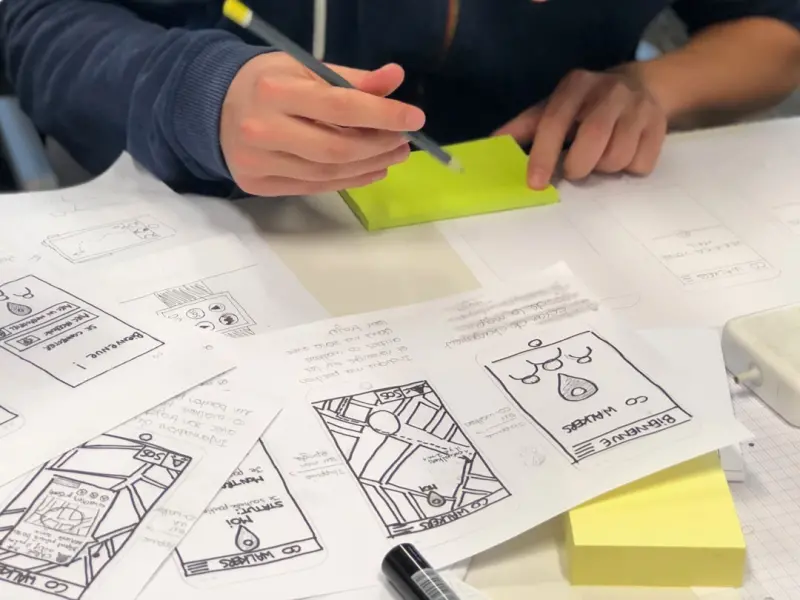
Why Interdisciplinary Project‑Based Learning Matters
Education today is no longer a linear transfer of facts; it is an ecosystem where critical thinking, creativity, and collaboration intertwine to prepare learners for a world that refuses to stay still. By centering curricula around real‑world challenges—whether designing a water‑filtration system for a local community or mapping the social impact of a new policy—students are forced to synthesize knowledge from science, humanities, and the arts, producing work that is both meaningful and memorable. This shift from isolated subject silos to fluid, interdisciplinary projects ignites curiosity, builds resilience, and equips graduates with the adaptability employers now demand.
Merging Physical and Digital Spaces for Immersive Learning
Classrooms are evolving into hybrid studios where augmented reality, virtual simulations, and tactile maker‑spaces coexist, allowing learners to experiment with concepts that were once confined to textbook diagrams. Imagine a biology class where students virtually dissect a frog while simultaneously manipulating 3D‑printed models, or a history lesson that transports them to a reconstructed ancient marketplace, each interaction deepening comprehension through embodied experience. These blended environments break down barriers between theory and practice, turning abstract ideas into concrete, unforgettable moments.
Educators as Learning Catalysts
The role of the teacher is transforming from content deliverer to learning catalyst, guiding inquiry, curating resources, and modeling reflective practice. To thrive in this new paradigm, educators must engage in continuous professional development that blends pedagogical theory with hands‑on experimentation, ensuring they can scaffold complex projects without stifling student autonomy. Schools that embed a sustainable energy curriculum into science labs, for example, empower teachers to connect climate science with engineering design, fostering a culture of relevance and urgency.
Building Scholarly Networks Through Relationship‑Focused Collaboration
Just as businesses rely on strategic alliances, academic institutions benefit from intentional, relationship‑driven networks that amplify resources, expertise, and impact. By fostering cross‑institutional partnerships—whether between a liberal arts college and a technical university—students gain access to diverse perspectives, while faculty can co‑create interdisciplinary grant proposals that push the boundaries of traditional research. The practice of relationship‑focused networking for scholars encourages a culture of shared success, reducing duplication of effort and expanding the reach of innovative pedagogy.
AI‑Enhanced Inquiry: From Data Mining to Insight Generation
Artificial intelligence is no longer a futuristic buzzword; it is an everyday ally that can streamline literature reviews, suggest methodological approaches, and even flag ethical considerations in student research. When learners harness AI‑driven tools, they shift from manual data collection to higher‑order analysis, freeing mental bandwidth for synthesis and creative problem‑solving. A compelling illustration of this potential lies in the way AI tools are revolutionizing family history research, turning genealogical quests into rapid, evidence‑based narratives—an approach that can be replicated across disciplines to accelerate discovery.
Redesigning Assessment for Authentic Learning Outcomes
Traditional exams, with their focus on rote memorization, are giving way to authentic assessments that capture the depth and breadth of student learning through portfolios, public showcases, and iterative feedback loops. By evaluating process as much as product—such as documenting design iterations, reflecting on setbacks, and presenting findings to community stakeholders—educators obtain a richer picture of competence, while students develop a growth mindset anchored in continual improvement. These evidence‑based assessment models align more closely with professional standards, ensuring graduates can demonstrate tangible impact beyond the classroom walls.
Equity, Accessibility, and Universal Design for Learning
Inclusivity must be baked into every facet of project‑based curricula, guaranteeing that learners of all abilities can engage meaningfully with complex challenges. Universal Design for Learning (UDL) principles—multiple means of representation, expression, and engagement—provide a flexible framework that respects diverse cognitive styles, language proficiencies, and socio‑economic backgrounds. When teachers embed multimodal resources, scaffolded checkpoints, and culturally responsive content, they dismantle barriers, fostering an environment where every student feels valued and empowered to contribute.
Community Partnerships as Real‑World Laboratories
Local businesses, non‑profits, and government agencies serve as living laboratories where students can apply classroom insights to solve tangible problems, creating a symbiotic relationship that benefits both learners and the community. For instance, a collaborative project with a municipal water department might task engineering students with designing low‑cost filtration prototypes, while sociology majors assess the social implications of water access, producing a holistic solution that informs policy. These partnerships not only enrich curricula but also cultivate civic responsibility, ensuring graduates emerge as engaged, solution‑oriented citizens.
Charting the Future of Learning
The journey toward a truly interdisciplinary, project‑driven education system is both exciting and demanding, requiring bold vision, sustained investment, and a willingness to experiment beyond entrenched norms. By weaving together immersive technologies, AI‑enhanced inquiry, equitable design, and community collaboration, educators can craft learning experiences that are as dynamic and resilient as the world their students will inherit. The time to act is now—let's reimagine classrooms as incubators of curiosity, compassion, and capability, and empower the next generation to shape a brighter tomorrow.

Jim Pearse, a seasoned freelance writer, brings a wealth of knowledge and passion to the world of home and garden. From the intricacies of landscaping to the nuances of interior design, Jim delves into every aspect of creating comfortable, beautiful, and functional living spaces.
Related Posts
When Curiosity Leads the Classroom: A Fresh Take on Modern Learning
A new perspective on education that puts curiosity first, empowers student voice, reimagines assessm... Read More
The Future of Education: How Sustainable Living is Revolutionizing the Classroom
Sustainable living is revolutionizing education. Learn how eco-friendly practices are transforming t... Read More
Beyond the Chalkboard: How Digital Collaboration Is Redefining Education
A fresh look at the rise of digital collaboration tools in education, showing how teachers can turn ... Read More
Top Posts

Meta Is Shutting Down Its Mac and Windows Messenger Apps
In an era defined by aggressive technological competition and relentless demands for operational efficiency, technology giants are routinely forced to rationali...Read More
Celebrating Life's Milestones in the Digital Age
The digital age has revolutionized the way we celebrate life's milestones, from weddings and graduations to birthdays and anniversaries. But what does this mean...Read More
Link Building in the Age of Trust: Strategies That Actually Stick
A deep dive into modern link building, emphasizing authentic relationships, data‑driven outreach, and sustainable tactics that cut through the noise and deliv...Read More
The Evolution of Digital Tools: Navigating the Intersection of Technology and Sustainable Living
The evolution of digital tools is transforming the way we live and interact with one another. Learn how to navigate the intersection of technology and sustainab...Read More
0 Comments
Post Comment
You will need to Login or Register to comment on this post!