
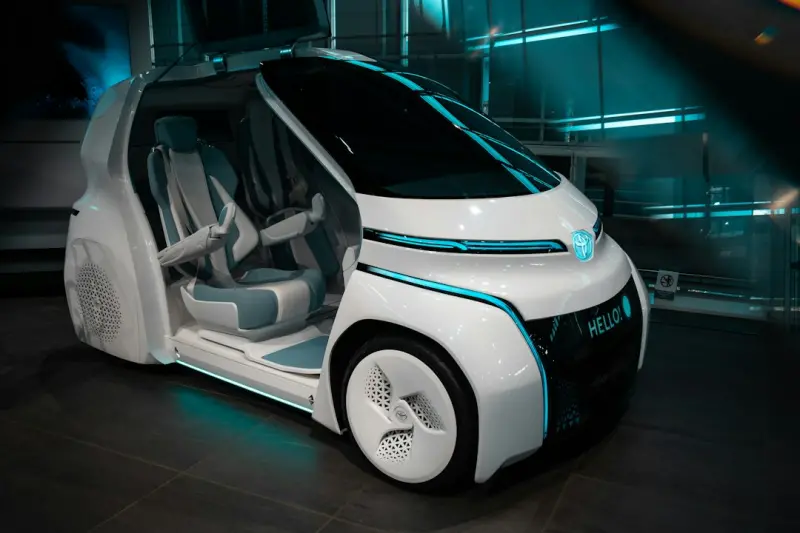
The Battery Revolution No One Saw Coming
When I first unboxed my flagship phone last year, I was thrilled by the camera, the display, and the sleek design. Yet the moment the battery icon dipped below 80 %, I felt a familiar pang of disappointment. It’s a feeling many of us share: we buy cutting‑edge hardware only to watch it run out of juice faster than we’d like. Over the past twelve months, however, a quiet storm has been brewing in labs around the globe. New chemistries, ultra‑fast charging protocols, and AI‑driven power‑management software are converging to rewrite the rules of mobile endurance. This isn’t just an incremental upgrade; it’s a full‑scale battery renaissance that could reshape how we work, create, and stay connected on the go.
Graphene and Solid‑State: The Materials Game‑Changer
For decades, lithium‑ion has dominated the smartphone market, and while it remains reliable, its theoretical limits are being hit. Enter graphene‑enhanced anodes and solid‑state electrolytes. Graphene’s lattice structure offers exceptional conductivity and flexibility, allowing batteries to charge at up to ten times the speed of conventional cells without the dreaded heat buildup. Meanwhile, solid‑state designs replace the liquid electrolyte with a ceramic or polymer matrix, dramatically reducing the risk of swelling and extending cycle life.
Early adopters of graphene‑infused batteries report charging from 0 % to 80 % in under ten minutes, a figure that would have seemed fantastical just a few years ago. The solid‑state approach, on the other hand, promises up to 2 × the total capacity in the same physical footprint, meaning you could get a full day of heavy use from a phone that’s still comfortably slim.
Ultra‑Fast Charging: From Minutes to Seconds
Speed isn’t just about the raw wattage any more. New standards like Dynamic Power Allocation let the phone’s firmware negotiate the optimal voltage and current on a per‑app basis. Imagine streaming a 4K video while the device simultaneously powers a high‑resolution camera and an AI assistant—each component receives precisely the power it needs, preventing bottlenecks and overheating.
One of the most exciting developments is over‑the‑air (OTA) charging. By embedding tiny resonant coils in the device and using specialized base stations, manufacturers can top up a phone’s battery without plugging in a cable. While still in its infancy, OTA charging could become a staple in coffee shops, airports, and even public transit, turning idle moments into charging opportunities.
AI‑Driven Power Management: Smarter Than Ever
Hardware improvements are only half the story. Modern smartphones now host on‑device AI engines that continuously analyze usage patterns. By predicting when you’ll need intensive performance—say, during a video conference or a gaming session—the system can pre‑emptively allocate resources, throttle background tasks, and even adjust screen refresh rates in real time.
These algorithms go beyond simple “battery saver” modes. They learn which apps you habitually open at certain times, how often you check notifications, and even your typical ambient lighting conditions. The result? A battery that lasts longer without you having to manually tweak settings, and a device that feels responsive because it’s always operating at the sweet spot between performance and efficiency.
Security Meets Power: Why Privacy Matters in Battery Tech
With more intelligence baked into the power‑management layer, concerns about data privacy naturally arise. The same AI that predicts your usage could, in theory, infer sensitive habits about your work schedule or personal life. That’s why forward‑thinking companies are adopting a privacy‑first architecture for their power‑management modules. By processing data locally on the device and encrypting any necessary telemetry, manufacturers can deliver smarter batteries without compromising user trust.
The Business Angle: Total Cost of Ownership and Sustainability
For enterprises, the battery revolution isn’t just a consumer perk—it’s a bottom‑line lever. Longer‑lasting batteries reduce the frequency of device replacements, directly lowering the total cost of ownership (TCO). Moreover, solid‑state cells contain fewer volatile chemicals, simplifying recycling and aligning with corporate sustainability goals.
Companies that equip their field teams with phones that can survive a full day of intensive GPS use, video uploads, and constant messaging without needing a midday charge can see productivity gains of up to 15 %. When you factor in the reduced downtime for charging and the lower environmental impact, the ROI becomes compelling.
What to Look for When Choosing Your Next Phone
- Charging Speed Specs: Look beyond the headline “120 W” claim. Verify if the device supports adaptive voltage scaling and whether the charger is included.
- Battery Chemistry: Phones advertised with “graphene‑enhanced” or “solid‑state” will generally outperform traditional lithium‑ion in both speed and longevity.
- AI Power Management: Check for on‑device AI features that adjust performance based on usage patterns; this is often highlighted in the software specifications.
- Security Framework: Ensure the manufacturer outlines how power‑related data is stored and processed, ideally with a clear privacy‑first stance.
- Future‑Proofing: Compatibility with OTA charging stations or emerging wireless standards can future‑proof your investment.
Real‑World Use Cases: From Creators to Corporates
Content creators are among the first to benefit. A filmmaker on location can capture hours of 8K footage, rely on a battery that lasts through a full shoot day, and recharge in under ten minutes between takes. For sales teams, a device that stays alive during back‑to‑back client meetings means never missing a crucial note or call.
Even the health sector sees advantages. Telemedicine practitioners using high‑resolution imaging apps can trust that their device won’t falter mid‑consultation, and the rapid charge capability ensures they’re ready for the next patient without a lengthy wait.
Looking Ahead: The Next Horizon
While graphene and solid‑state are leading the charge now, researchers are exploring lithium‑sulfur and even organic polymer batteries that could double energy density while remaining environmentally friendly. Coupled with advances in quantum‑dot photovoltaics for integrated solar charging, the idea of a smartphone that never truly runs out of juice may soon be less sci‑fi and more everyday reality.
As we stand on the cusp of this battery renaissance, it’s worth remembering that the true value isn’t just in longer screen time—it’s in the freedom to stay productive, creative, and connected without the constant anxiety of hunting for a power outlet. The next generation of smartphones promises exactly that: a seamless blend of power, speed, and intelligence that finally lets the hardware keep up with the demands of our digital lives.

Amanda is a passionate writer exploring a kaleidoscope of topics from lifestyle to travel and everything in between.
Related Posts

The Ultimate Guide to the Best Alternative Phones for Tweens
The decision to give a child their first phone marks a major milestone—and a significant source of... Read More
Switching From iPhone to Android: What You Need to Know
The decision to transition from one major smartphone ecosystem to another, particularly from Apple's... Read More

Smartphones as Personal Data Guardians: The Rise of On‑Device AI
On‑device AI is turning smartphones into personal data fortresses, delivering smart features while... Read More
Top Posts

Online Gaming Risks for Kids: A Comprehensive Guide to Protecting Your Children
Online gaming has become an increasingly popular form of entertainment for children and teenagers. However, with the rise of online gaming comes the risk of exp...Read More
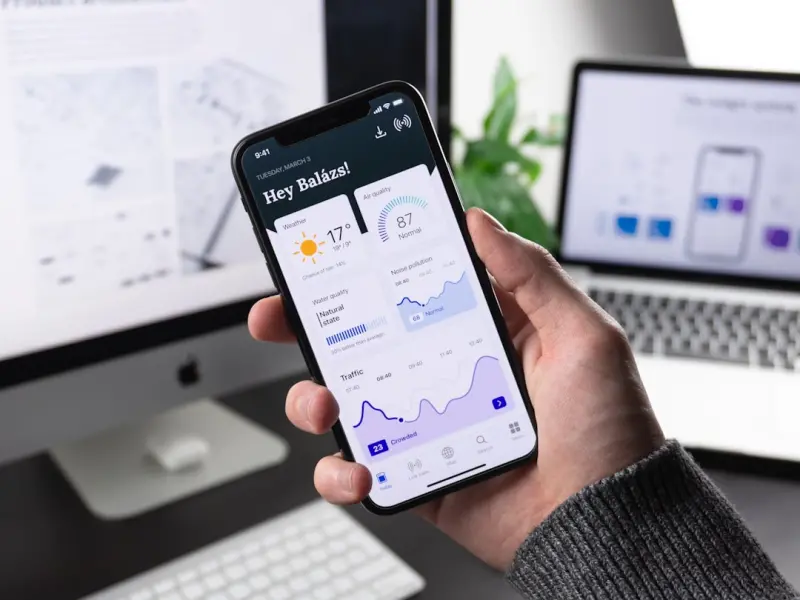
Why Mobile Apps Are the New Competitive Edge for B2B SaaS Companies
Mobile apps have evolved from a nice‑to‑have feature to a strategic necessity for B2B SaaS firms. This post dives into native‑first advantages, data‑dri...Read More

When Love Becomes a Creative Sprint: Redefining Modern Relationships
Treat your partnership like a creative sprint—fast, intentional, and collaborative. Learn the habits that turn everyday love into a dynamic, thriving adventur...Read More
Micro‑Wins, Mega Impact: Embedding Real‑Time Recognition in Remote SaaS Teams
Discover practical, data‑backed ways to celebrate everyday victories in distributed SaaS teams, from AI‑powered kudos bots to 10‑minute virtual toasts, bu...Read More
0 Comments
Post Comment
You will need to Login or Register to comment on this post!