
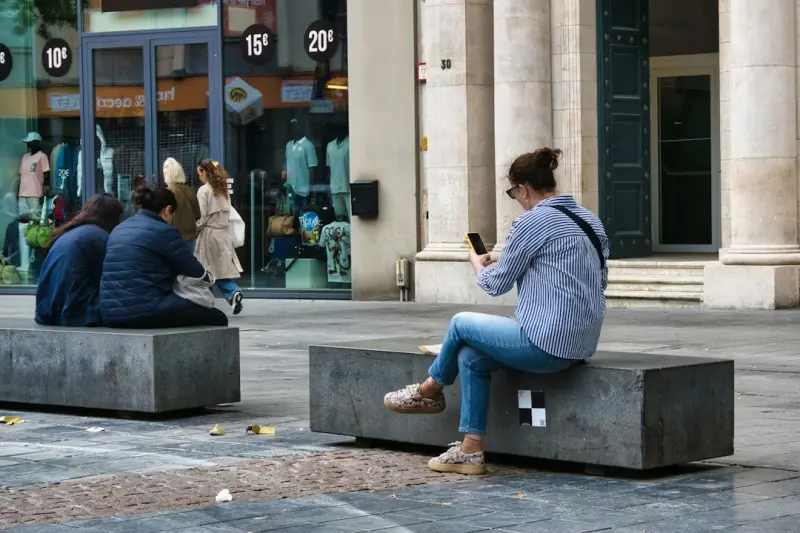
From Brick‑And‑Mortar to Byte‑And‑Band: Reimagining Public Spaces in a Digital Society
When I walk through my neighborhood park, I’m struck by the same paradox that haunts many of us: the space is bustling with people, yet a handful of them are glued to their screens, isolated in a crowd. The park, once a communal hearth where stories were exchanged over a picnic table, now doubles as a Wi‑Fi hotspot and a stage for digital performance. This shift isn’t a glitch—it’s the symptom of a broader societal transformation where the boundaries between physical and virtual community are dissolving.
In this piece, I’ll explore how we can consciously design the next generation of public spaces—libraries, plazas, transit hubs—to serve as digital commons that amplify, rather than dilute, our social fabric. I’ll draw on real‑world examples, highlight emerging tools, and suggest practical steps for civic leaders, designers, and everyday citizens who want to nurture a more inclusive, collaborative future.
The Rise of the “Hybrid Commons”
Historically, public spaces performed three core functions: meeting place, learning arena, and democratic forum. They were the crucible where strangers became neighbors, where ideas were tested, and where power was contested. Today, those same functions are being reproduced online—on social media feeds, community forums, and collaborative platforms. The challenge is that digital spaces often lack the serendipity, tactile richness, and accessibility of their brick‑and‑mortar counterparts.
Enter the concept of the hybrid commons: a physical environment intentionally wired to support digital interaction without supplanting the embodied experience. Think of a city square equipped with open‑source Wi‑Fi, interactive kiosks that surface local civic data, and AR (augmented reality) installations that turn a fountain into a living information canvas. The goal isn’t to turn parks into coworking lounges, but to make them places where the online and offline amplify each other.
Why the Hybrid Model Matters
- Equity of Access – Not everyone can afford high‑speed internet at home. Public Wi‑Fi and shared digital tools democratize access to information, job opportunities, and civic participation.
- Social Cohesion – Physical proximity fosters trust. When digital tools are anchored to shared spaces, they inherit that trust and become catalysts for collective action.
- Resilience – In crises—from natural disasters to public‑health emergencies—hybrid commons can pivot quickly, delivering real‑time alerts and coordination points both on‑ground and online.
Case Studies: From Theory to Practice
1. The “Living Library” of Helsinki
Helsinki’s central library has transformed a traditional reading room into a knowledge hub that blends physical books with a curated digital marketplace. Visitors can scan QR codes on shelves to instantly pull up community‑generated reviews, discussion forums, or even local volunteer opportunities related to the book’s theme. The library also hosts “micro‑talks” broadcast live on a community YouTube channel, allowing remote participants to join the conversation without leaving their homes.
What makes this model compelling is its story‑driven approach—the space isn’t just a repository of texts; it’s a launchpad for narratives that ripple through the city.
2. Seoul’s “Digital Plaza” Initiative
Seoul’s municipal government installed interactive LED panels throughout its main plaza that display real‑time air quality, public transit updates, and community polls. Citizens can vote on local issues via a simple tap, and the results are projected instantly, turning the plaza into a live town‑hall. The system is built on open‑source software, allowing developers to add layers—like local art showcases or language‑learning games—without needing a new hardware overhaul.
This initiative illustrates the power of data‑enabled community building. By surfacing collective metrics in an accessible format, the city transforms passive observers into active participants.
3. “Neighbourhood Pods” in São Paulo
In a low‑income district of São Paulo, a nonprofit partnered with local schools to create “Neighbourhood Pods”—small, solar‑powered kiosks that double as Wi‑Fi hotspots and digital learning stations. Residents can reserve the pod for virtual tutoring sessions, livestream community workshops, or host digital art exhibitions. The pods are managed through a community‑run app, ensuring that the technology serves the residents’ needs, not the other way around.
These pods underscore the importance of local stewardship. When the community controls the digital layer, the space becomes a true commons rather than a top‑down tech deployment.
Design Principles for Building Hybrid Commons
- Human‑Centered Connectivity – Prioritize seamless, low‑friction ways for people to transition between offline and online activities. Simple QR codes, NFC tags, and clear signage lower the barrier to participation.
- Open Data Architecture – Use open standards and APIs so that civic data can be repurposed by community developers. This fosters an ecosystem of third‑party apps that enhance the core experience.
- Modular Physical Elements – Design furniture and fixtures that can accommodate both traditional uses (seating, shelter) and tech upgrades (charging stations, projection surfaces).
- Inclusive Content Curation – Ensure that digital content reflects the diversity of the community. Offer multilingual interfaces, accessibility options, and local cultural references.
- Privacy‑First Governance – Clearly communicate what data is collected, how it’s used, and give users granular control. Trust is the currency that makes any hybrid space viable.
Tools and Platforms to Jump‑Start Your Hybrid Space
While the vision may feel grand, a handful of readily available tools can help municipalities and community groups prototype hybrid experiences:
- OpenStreetMap + Leaflet.js – Create interactive maps that highlight local resources, events, and real‑time data layers without costly licensing.
- Matrix.org – An open‑source messaging protocol that can power community chat rooms, bulletin boards, and live Q&A sessions anchored to physical locations.
- Glitch or Replit – Quick, collaborative coding environments for citizens to develop mini‑apps that run on public kiosks.
- Solar‑Powered USB Hubs – Affordable hardware that supplies charging points and can be paired with low‑bandwidth Wi‑Fi routers for off‑grid connectivity.
These tools embody the under‑the‑radar approach that empowers grassroots innovation without waiting for massive budget approvals.
Measuring Impact: From Footfall to Feel‑Good Metrics
Traditional metrics for public spaces focus on foot traffic and maintenance costs. In the hybrid era, we should expand our KPI set to capture digital‑physical synergy:
- Engagement Ratio – Number of digital interactions per physical visitor (e.g., QR scans, app sign‑ups).
- Community Sentiment Score – Periodic micro‑surveys accessed via kiosks that gauge feelings of safety, belonging, and usefulness.
- Co‑Creation Index – Count of community‑submitted content pieces (photos, stories, code snippets) that are displayed or utilized in the space.
- Equity Reach – Demographic breakdown of users accessing free Wi‑Fi versus those who have home broadband.
Tracking these indicators helps city planners iterate, justify funding, and demonstrate the social return on investment (SROI) of hybrid commons.
Challenges and Pitfalls to Navigate
Every transformation encounters friction. Here are some common hurdles and ways to mitigate them:
Digital Divide
Even with free Wi‑Fi, some residents lack devices or digital literacy. Partner with local NGOs to run device‑loan programs and hands‑on workshops that teach basic navigation skills.
Vandalism and Security
Public hardware can become a target. Opt for ruggedized enclosures, use tamper‑detecting sensors, and involve community “watch” groups who take pride in maintaining the space.
Data Privacy Concerns
Collecting footfall data or usage stats can trigger privacy fears. Adopt privacy‑by‑design principles: anonymize data at the source, provide opt‑out mechanisms, and be transparent about data governance.
Over‑Technology
Too many screens can drown out the natural ambience of a park or plaza. Balance tech with green spaces, seating, and quiet zones. Remember that the tech is a catalyst, not the centerpiece.
Getting Started: A Five‑Step Playbook for Communities
- Community Scan – Host a series of listening sessions (both in‑person and virtual) to understand what residents want from a hybrid space.
- Pilot a Micro‑Node – Choose a modest location—perhaps a corner of an existing park—and install a single digital kiosk or Wi‑Fi hotspot.
- Co‑Create Content – Invite local artists, teachers, and entrepreneurs to contribute digital assets (e.g., AR murals, micro‑courses).
- Iterate Based on Data – Use the engagement metrics outlined earlier to refine the experience. Add features that work; retire those that don’t.
- Scale Thoughtfully – Once the pilot shows impact, replicate the model in other neighborhoods, adapting to each area’s cultural and spatial context.
By following this playbook, even a small municipality can begin to stitch together a network of hybrid commons that reinforce the social contract in the digital age.
Looking Ahead: The Future of Public Life
Imagine a city where every street corner offers a moment of both tactile and virtual connection—a child learns to read a storybook while an AR overlay suggests a local volunteer event tied to the narrative. Picture a future where a commuter’s morning train ride is punctuated by a pop‑up digital art exhibit that invites passersby to co‑author a community poem in real time.
These aren’t sci‑fi fantasies; they’re extensions of the same desire that drove the creation of the first public squares centuries ago: the yearning for shared experience. By consciously weaving digital threads into the fabric of our physical spaces, we honor that legacy while preparing for the societal shifts ahead.
So the next time you sit on a bench, glance at the QR code on the lamppost, and see a live feed of neighborhood stories, remember: you’re part of a living experiment. Your engagement, curiosity, and feedback are the very ingredients that will shape the public commons of tomorrow.

Armed with a degree in English Literature, Jill’s journey into the digital space wasn't just a career move; it was a natural extension of her lifelong love affair with storytelling. While some writers view search engine optimization (SEO) as a rigid constraint, Jill sees it as a creative puzzle. She understands the delicate art of balancing the algorithmic demands of search engines with the human desire for resonance, emotion, and value. To Jill, keywords aren't just targets to hit; they are the breadcrumbs that lead eager readers straight to the answers they’ve been searching for.
Related Posts

Cannabis and Teens: How Parental Use Influences Adolescent Attitudes
A recent study from Washington State University, published in the Journal of Child and Family Studie... Read More
The Power of Sustainable Living: A Path to a Better Future
Sustainable living is a powerful tool for creating a better future. Learn how adopting eco-friendly ... Read More
The Sprint Culture Revolution: How Speed Shapes Modern Society
A deep dive into sprint culture’s impact on work, social interaction, and digital habits, offering... Read More
Top Posts
The Ultimate Guide to Starting Your Own Garden
There’s a profound satisfaction that comes from plucking a sun-ripened tomato from your own vine, snipping fresh herbs for dinner, or admiring a vibrant bloom...Read More

Smart Wearables & Community Networks for Kid Safety
Discover how the convergence of smart wearables, sensor‑rich playgrounds, and community mesh networks is redefining outdoor safety for kids, offering proactiv...Read More

Reskilling and Upskilling: Your Indispensable Guide to Career Resilience in a Changing World
In a rapidly evolving job market, reskilling and upskilling are crucial for career resilience. This article, penned by Robert Mathews, provides an essential gui...Read More

From Pixels to Petals: How Digital Tools Are Redefining Modern Weddings
Discover the latest digital innovations—AI planning platforms, ultra‑quiet appliances, and micro‑storytelling techniques—that are making modern weddings...Read More
0 Comments
Post Comment
You will need to Login or Register to comment on this post!