
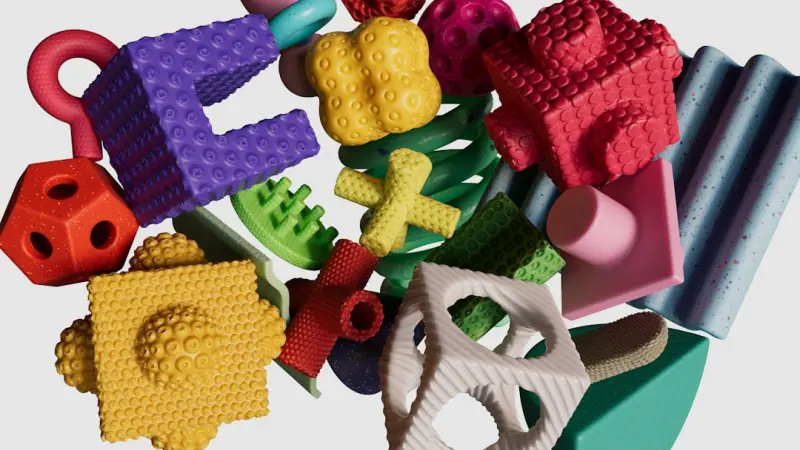
When I was a kid, the most exciting thing in the world was a toy that could do something no other could—whether it was a wind‑up robot that marched across the floor or a set of blocks that snapped together in impossible ways. Fast forward to today, and the definition of “exciting” has exploded. Parents, educators, and even investors are watching a quiet but powerful shift: toys are becoming both greener and smarter, merging sustainability with cutting‑edge technology to create play experiences that feel fresh, responsible, and deeply engaging.
The Green Wave: Why Eco‑Friendly Materials Matter More Than Ever
It’s no secret that the global conversation around climate change has moved from niche activism to mainstream urgency. That momentum has seeped into every corner of consumer goods, and toys are no exception. The old model—plastic, chemically treated, shipped halfway around the world—just doesn’t sit well with a generation of parents who are increasingly scrutinizing the environmental footprints of everything they bring into their homes.
Modern toy manufacturers are answering the call with three main strategies:
- Renewable Raw Materials: Bamboo, organic cotton, and plant‑based bioplastics are replacing petroleum‑derived polymers. These materials are not only biodegradable but also often sourced from responsibly managed farms, reducing deforestation and supporting local economies.
- Design for Disassembly: Companies are engineering toys so that parts can be separated for recycling or repurposing. Think of a wooden train set where each carriage is a standalone piece that can be sanded, painted, or even turned into a new puzzle.
- Closed‑Loop Production: Some forward‑thinking firms are adopting circular manufacturing processes, where waste from one product line becomes feedstock for another. The result? A dramatically lower carbon footprint and a story that resonates with eco‑conscious shoppers.
What’s remarkable is that these greener choices are not compromising on fun. In many cases, they’re enhancing it. A soft, organic‑cotton plush feels more comforting than its synthetic counterpart, and a wooden puzzle offers a tactile satisfaction that plastic simply can’t replicate.
Smart Play: The Rise of AI‑Powered Interactive Toys
If sustainability is the heart of the new toy movement, intelligence is its brain. Artificial intelligence is no longer the exclusive domain of smartphones and home assistants; it’s quietly infiltrating playrooms, promising experiences that adapt, learn, and grow alongside the child.
Here’s a snapshot of how AI is reshaping the landscape:
- Conversational Companions: Voice‑enabled dolls and robots that can hold simple conversations, answer questions, and even tell bedtime stories customized to a child’s interests.
- Adaptive Learning Platforms: Puzzle games that analyze a child’s problem‑solving patterns and adjust difficulty in real time, ensuring a perfect balance between challenge and achievement.
- Emotion Recognition: Sensors that detect facial expressions or tone of voice, allowing toys to respond with empathy—comforting a frustrated player or celebrating a triumph with genuine enthusiasm.
One might wonder if adding AI to a toy risks turning play into a data‑driven experience that feels more like a test than a pastime. The answer lies in intentional design. When developers prioritize privacy, limit data collection to non‑identifiable metrics, and focus on enhancing the child's emotional and cognitive development, AI becomes a tool for deeper connection rather than surveillance.
When data‑driven experiences Meet the Playroom
Imagine a building block set that knows when a child is struggling with a particular shape and subtly offers a hint, or a plush animal that lights up with a calming hue when it detects a child’s heart rate rising during an intense game. This isn’t speculative fiction; it’s the emerging reality of responsive play. By integrating low‑energy sensors and edge‑computing chips, toys can process data locally, offering instant feedback without relying on cloud servers—a crucial factor for privacy and latency.
These innovations are also fostering new forms of creativity. Kids can now program their own toy behaviors using visual coding interfaces, turning a simple robot into a platform for learning basic programming concepts. The line between “toy” and “educational tool” blurs, making the act of play a gateway to lifelong skills.
Balancing Fun and Function: Lessons from career evolution for Toy Makers
In many ways, the journey of a modern toy company mirrors the career path of a tech professional who must stay ahead of rapid change. Companies that succeed are those that embed a culture of continuous learning, experimentation, and iteration. They treat each product launch not as a final destination but as a data point for the next cycle.
Key takeaways for toy designers and entrepreneurs:
- Iterate Quickly: Use rapid prototyping—3D printing, modular electronics—to test concepts in weeks rather than months.
- Gather Real‑World Feedback: Deploy beta programs with families, gather qualitative insights, and iterate based on authentic play patterns.
- Embrace Cross‑Disciplinary Teams: Blend expertise from material science, AI ethics, child psychology, and storytelling to craft holistic experiences.
By treating each toy as a living product that evolves with its users, companies can stay relevant in a market where trends shift faster than a child’s attention span.
Case Study: The Eco‑Bot Phenomenon
To illustrate the synergy of sustainability and smart tech, let’s dissect the recent success of Eco‑Bot, a modular robot kit made from recycled aluminum and biodegradable polymer casings. Eco‑Bot comes with a suite of sensors that allow it to navigate simple mazes, respond to voice commands, and even learn new movements through a drag‑and‑drop programming app.
What set Eco‑Bot apart?
- Transparent Supply Chain: Every component is traceable via QR codes that link to a dashboard showing the source of raw materials.
- Upgradeable Architecture: Kids can swap out motor modules, add new sensor packs, or replace worn parts without discarding the entire unit.
- Community‑Driven Content: An online hub lets families share custom code snippets, fostering a collaborative learning environment.
Parents love the peace of mind that comes from a product built on ethical sourcing, while kids are captivated by the endless possibilities for customization. Eco‑Bot’s sales trajectory demonstrates that when you align environmental values with interactive technology, the market response can be both enthusiastic and sustainable.
How virtual try‑on tech Is Influencing Toy Retail
Even the shopping experience for toys is undergoing a transformation. Borrowing from fashion’s success with augmented reality mirrors, toy retailers are now offering “virtual playroom” experiences. Shoppers can project a life‑size model of a building block set into their living room via a smartphone camera, visualizing how it will look on a shelf or floor.
This technology reduces return rates—a critical metric for sustainable business—by ensuring buyers know exactly what they’re getting. It also adds an element of excitement, turning the pre‑purchase phase into a mini‑play session that can be shared on social media, amplifying word‑of‑mouth marketing.
Future Forecast: What Will Play Look Like in the Next Decade?
Looking ahead, I see three converging trends that will define the next era of toys:
- Hyper‑Personalization: Using AI to tailor storylines, challenges, and learning outcomes to each child’s unique preferences and developmental stage.
- Zero‑Waste Design: Products that are designed for indefinite reuse, repair, or upcycling, effectively becoming heirloom items passed down through generations.
- Play‑Integrated Wellness: Toys that monitor subtle physiological signals (like breathing or posture) to guide children toward healthier habits—think a plush friend that encourages deep breathing during a calm‑down moment.
These directions suggest a future where toys are not just objects of entertainment but partners in growth, guardians of the planet, and catalysts for lifelong curiosity.
Practical Tips for Parents Who Want to Embrace This New Wave
If you’re a parent eager to navigate this evolving landscape, here are actionable steps you can take:
- Read Labels Carefully: Look for certifications like FSC (Forest Stewardship Council) for wood, GOTS (Global Organic Textile Standard) for fabrics, and ASTM for safety standards.
- Prioritize Modularity: Choose toys that can be expanded or reconfigured, ensuring they grow with your child’s abilities.
- Test the Tech: Before buying an AI‑enabled toy, research its data policies. Opt for products that process data locally and offer clear opt‑out mechanisms.
- Support Independent Makers: Small studios often experiment with innovative materials and designs that large manufacturers overlook.
- Engage in Co‑Creation: Many smart toys come with companion apps that let you code new behaviors. Involve your child in this process to turn playtime into a collaborative project.
By making informed choices, you not only enrich your child’s play experience but also contribute to a market shift toward responsibility and imagination.
Conclusion: Play Is Evolving, And So Should We
The toy industry stands at a fascinating crossroads where environmental stewardship meets intelligent design. The products emerging from this nexus aren’t just better for the planet; they’re better for the mind, fostering curiosity, resilience, and empathy. As parents, educators, or simply lifelong learners, we have the opportunity to champion toys that reflect the values we hold dear—creativity, sustainability, and thoughtful innovation.
So the next time you walk past a shelf of brightly colored plastic figurines, pause and consider: Could this be the next generation of play that teaches my child about the world while protecting it? The answer, increasingly, is a resounding yes.

Brad Hays is a freelance writer known for his versatile skill set and ability to craft compelling content across a wide range of industries.
Related Posts
Eco‑Friendly Play: A New Chapter for Toys
Sustainable toys go beyond eco‑materials; they foster creativity, longevity, and environmental ste... Read More
The Quiet Revolution of Sustainable, AI‑Enhanced Playthings
A deep dive into the emerging trends of sustainable materials, AI‑driven interactivity, and curate... Read More

The Power of Play: How Toys Can Impact Our Mental Wellbeing
Toys and play can have a profound impact on our mental wellbeing, reducing stress and anxiety, impro... Read More
Top Posts

The Unexpected Power of Neighborhood Time Banks in a Hyperconnected World
Time banks are reintroducing the barter of hours for services, forging stronger community bonds and offering a sustainable alternative to monetary transactions ...Read More

TikTok for B2B: Turning 15‑Second Clips Into Revenue Engines
A practical guide from Dale Peterson on using TikTok’s fast‑moving platform to generate high‑quality B2B leads, complete with a 30‑day launch plan, real...Read More

Why Low‑Code Is the Secret Weapon for SaaS Innovators
Low‑code platforms are reshaping SaaS development by cutting time‑to‑market, reducing churn, and lowering costs, while still requiring skilled engineers f...Read More

The Hidden Levers of On-Page SEO: From Microcopy to Machine Learning
A deep dive into modern on‑page SEO tactics—microcopy, schema, visual hierarchy, and interactive elements—showing how each can be leveraged to improve ran...Read More
0 Comments
Post Comment
You will need to Login or Register to comment on this post!