
Why Your Career Should Feel Like a Startup Lab
In the world of software, we spend endless hours perfecting the product‑market fit of the next big feature. Yet, when we look at our own professional journeys, we often treat them like static résumés that need occasional polishing. That mindset is a relic. The modern workplace is a living experiment, and the most resilient careers are built the way we build successful SaaS products: with rapid iteration, data‑driven decisions, and a willingness to pivot when the market (or your interests) shifts.
Adopt the “Minimum Viable Skill” (MVS) Philosophy
Just as a product team releases an MVP to learn from real users, you can launch a minimum viable skill—a compact, usable version of a competency you want to own. Pick a skill that aligns with where your industry is heading—think data storytelling, AI‑assisted workflow automation, or voice‑first content creation. Then, spend a focused sprint (one to two weeks) building a prototype: a short presentation, a small automation script, or a podcast episode. The goal isn’t perfection; it’s feedback.
- Define success metrics. Will you measure engagement, time saved, or the number of people who reference your work?
- Gather data fast. Use analytics tools, peer reviews, or even simple surveys to gauge impact.
- Iterate. Refine the skill based on the signals you collect, just as you would iterate a UI component.
This loop creates a habit of learning that’s measurable and repeatable, turning abstract career aspirations into concrete, testable experiments.
Leverage Emerging Platforms as Personal Branding Labs
Traditional thought leadership—whitepapers, conference slides, long‑form blog posts—still matters, but the signal‑to‑noise ratio is shifting. New formats let you showcase expertise in bite‑sized, highly shareable ways. For instance, the rise of concise video clips has turned many professionals into micro‑influencers overnight. By mastering the power of short‑form video for personal branding, you can demonstrate a skill set in under a minute, get immediate audience feedback, and iterate your messaging at scale.
Audio is undergoing a similar renaissance. Social audio platforms give you a stage to discuss industry trends, interview peers, and practice storytelling—all in real time. The low production barrier means you can experiment with topics, formats, and even your vocal style without the overhead of video editing. Think of each episode as a sprint retrospective: what resonated, what fell flat, and what you’ll tweak next.
Build a Personal Data Dashboard
What if you could see your career health in real time, just like a CFO monitors cash flow? A personal data dashboard aggregates signals from multiple sources: LinkedIn profile views, GitHub contributions, speaking engagement invitations, and even sentiment from peer feedback tools. By visualizing these metrics, you spot trends early—perhaps a sudden dip in content engagement that signals a need to refresh your topics, or a spike in code commits that could be leveraged into a technical blog series.
Start simple: a spreadsheet that pulls in LinkedIn analytics via export, a Google Data Studio report for content performance, and a Trello board for skill‑building tasks. Over time, integrate automation (Zapier, Make) to pull data from new tools you adopt. The dashboard becomes your personal OKR (Objectives and Key Results) tracker, grounding your career decisions in hard data rather than gut feeling.
Embrace “Strategic Failure” as a Learning Asset
In product development, a failed A/B test isn’t a disaster; it’s a data point. The same principle applies to career moves. If a webinar you hosted underperforms, dissect why: Was the promotion misaligned? Did the content miss the audience’s pain point? Capture those insights in a post‑mortem document and file them for future reference.
Strategic failure also means saying “no” to opportunities that don’t align with your current experiment roadmap. Turning down a shiny project that distracts from your MVS work isn’t selfish—it’s protecting your bandwidth for high‑impact learning.
Curate a “Learning Sprint” Calendar
Just as product teams allocate sprint cycles, block out dedicated learning sprints in your calendar. Pick a theme—machine‑learning basics, public speaking, or design systems—and map out micro‑goals for the two‑week period:
- Week 1: Consume three high‑quality resources (courses, podcasts, books).
- Week 2: Produce an artifact (a demo app, a recorded talk, a design mock‑up).
- End of Sprint: Share the artifact with a peer group for feedback.
By treating learning as a sprint, you create urgency, focus, and a clear hand‑off point for evaluation.
Network Like a Product Launch
Networking is often framed as “building relationships,” but it can be re‑imagined as a series of product launches. Identify a “target audience” (e.g., data engineers in fintech), craft a “value proposition” (you’ve built a pipeline that reduces ETL latency by 30%), and “release” your expertise through a short demo, a blog post, or a conversation at a meetup. Measure the “adoption rate” by tracking follow‑up meetings or collaboration invitations.
This systematic approach turns vague networking into a measurable growth engine, and it aligns with the data‑centric mindset we’re cultivating throughout this article.
Future‑Proof Your Career with a Portfolio Mindset
Instead of a static résumé, maintain a dynamic portfolio that showcases the outcomes of each skill experiment. Include brief case studies with the following structure:
- Problem. What challenge did you aim to solve?
- Approach. How did you apply the new skill?
- Result. Quantify impact—time saved, revenue generated, audience reached.
- Learnings. What did the data reveal, and how will you iterate?
This format not only impresses recruiters but also serves as a personal knowledge base, reminding you of the patterns that work across domains.
Conclusion: Turn Your Career Into a Living, Breathing Product
If you treat your professional development as a static artifact, you’ll eventually find it obsolete. By borrowing the experimental rigor of SaaS development—MVS testing, data dashboards, strategic failure, sprint cycles, and launch‑focused networking—you create a career that evolves as quickly as the market does. The result? Not just a job you keep, but a craft you continually refine, a brand you actively shape, and a future you design with intention.

Jim Pearse, a seasoned freelance writer, brings a wealth of knowledge and passion to the world of home and garden. From the intricacies of landscaping to the nuances of interior design, Jim delves into every aspect of creating comfortable, beautiful, and functional living spaces.
Related Posts

Redefining Career Success: A Creative’s Playbook for the Modern Workforce
Learn how to turn non‑linear career paths into strengths, using AI, intentional branding, and well... Read More

Career Planning - What Should You Be Considering?
In an increasingly dynamic and competitive world, the concept of a linear, lifelong career path is l... Read More

How To Care for an Aging Loved One While Pursuing Your Dream Career
Caring for an aging loved one while pursuing your dream career can be a challenging balancing act. I... Read More
Top Posts

Edge‑First Web Development: Building Faster, Safer Experiences
Adopting an edge‑first mindset transforms web applications by reducing latency, enhancing security, and improving SEO. This guide walks SaaS teams through the...Read More

Embedded AI Micro‑Tools: A New Wave of SaaS Productivity
Embedded AI micro‑tools are tiny, context‑aware assistants that appear directly within SaaS applications, delivering instant insights and automation. This a...Read More
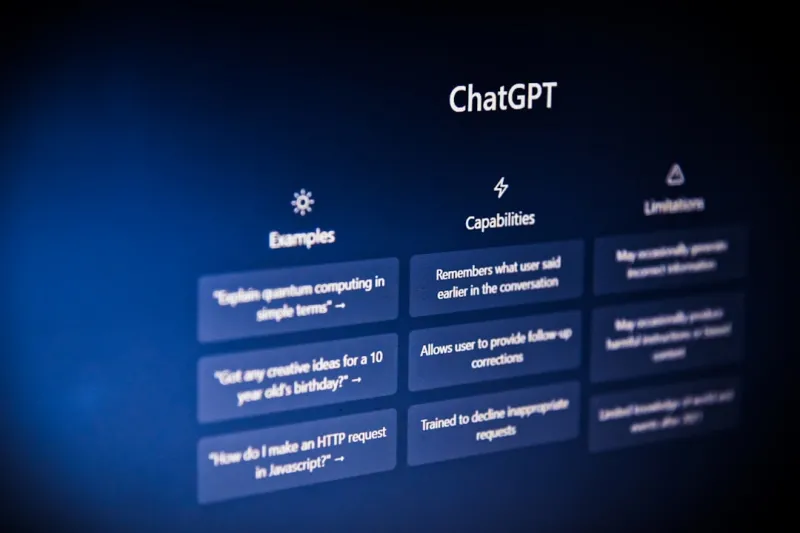
The ChatGPT Revolution: How AI is Changing the Way We Interact
ChatGPT is a revolutionary AI model that's changing human-computer interaction. Learn about its impact on modern society and the potential risks and benefits....Read More

When Your Refrigerator Becomes a Remote Team MVP
Smart appliances are turning into silent productivity partners for remote teams, offering real‑time data, automated alerts, and predictive insights that free ...Read More
0 Comments
Post Comment
You will need to Login or Register to comment on this post!