
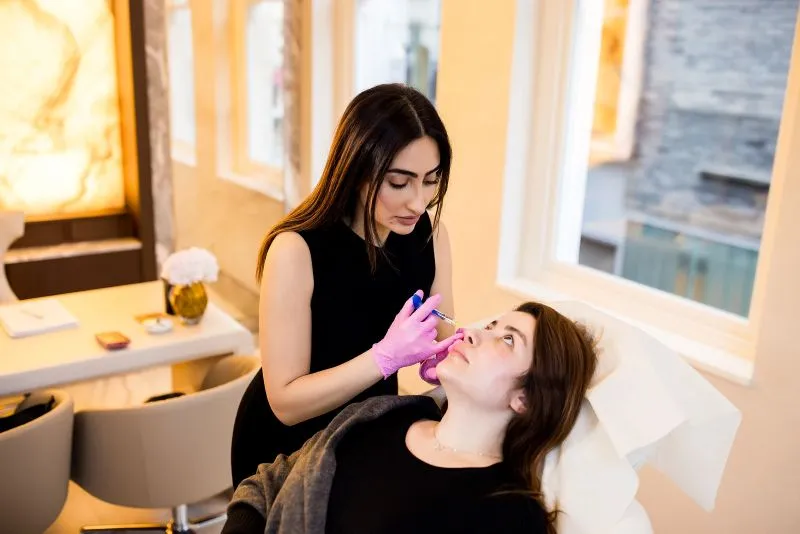
In the contemporary landscape of aesthetic medicine, the paradigm of facial rejuvenation has shifted from surgical finality to the art of subtle, non-invasive refinement. Among the most transformative movements in this evolution is the "Nose Filler Glow-Up"—a phenomenon colloquially known as the "liquid rhinoplasty." Once a procedure reserved for the Hollywood elite or those willing to undergo significant surgical trauma, profile sculpting has been democratized through the sophisticated application of dermal fillers.
This trend is not merely about changing a single feature; it is an exercise in facial harmonization. By utilizing hyaluronic acid to strategically adjust the contours of the nasal bridge and tip, practitioners can achieve a "glow-up" that balances the entire face, often yielding results that rival traditional surgery with a fraction of the downtime.
The Architectural Shift: Defining the Liquid Rhinoplasty
At its core, the nose filler procedure involves the precise injection of dermal fillers—most commonly comprised of hyaluronic acid (HA)—into specific anatomical planes of the nose. Unlike a surgical rhinoplasty, which involves the resection of bone and cartilage to reduce the size of the nose, the liquid approach is additive.
It may seem counterintuitive that adding volume can make a nose appear smaller or more refined. However, the science lies in light reflection and geometric symmetry. By filling a depression above a dorsal hump, the practitioner creates a straight line that allows light to travel uninterrupted down the bridge. This visual streamlining eliminates the shadows that emphasize a bump, resulting in a profile that appears more delicate and aesthetically "slimmer" to the observer’s eye.
The "Glow-Up" Mechanics: What Can Fillers Truly Achieve?
The "Nose Filler Glow-Up" has gained viral momentum precisely because of its versatility. It addresses several aesthetic concerns that were previously thought to be correctable only via the scalpel:
1. The Correction of the Dorsal Hump
The most common motivation for seeking a liquid rhinoplasty is the prominence of a nasal bridge bump. By placing filler in the "radix" (the dip between the forehead and the nose) and the area just below the hump, the practitioner creates an illusion of a perfectly straight dorsal aesthetic line. This instant straightening is perhaps the most dramatic component of the profile glow-up.
2. The Nasal Tip Lift
Commonly referred to as the "Tinkerbell Lift," this technique involves injecting filler at the base of the columella (the tissue between the nostrils) or at the tip itself. This provides structural support to a drooping tip, rotating it upward for a more youthful, "perky" appearance. A lifted tip can also improve the appearance of the nasolabial angle, creating a more harmonious transition between the nose and the upper lip.
3. Refining Asymmetry and Deviations
For individuals with minor deviations resulting from genetics or past trauma, filler can act as a corrective camouflage. By adding volume to the concave side of a bridge, a practitioner can restore a sense of midline balance, making the nose appear more centered and less distracting from the rest of the facial features.
4. Narrowing the Visual Width
While filler cannot physically narrow the nasal alae (nostrils), it can sharpen the "nasal bridge highlights." By creating a more defined, high-projecting bridge, the light gathers in a narrower strip, creating an optical illusion of a more refined and slender nose.
The Psychology of the Profile: Why the Trend is Exploding
The rise of the Nose Filler Glow-Up is inextricably linked to the "Zoom Effect" and the ubiquity of social media. We live in an era where we are constantly confronted with our own likeness—not just in the mirror, but in high-definition digital formats. The side profile, in particular, has become a focus of aesthetic concern.
A "glow-up" indicates more than a physical change; it implies an boost in confidence and a refinement of identity. For many, the nose is the "anchor" of the face. When it feels disproportionate, it can overshadow the eyes and lips. By sculpting the nose to better fit the facial "Golden Ratio," patients often report that their eyes appear brighter and their cheekbones more prominent, simply because the visual distraction of an irregular nasal bridge has been neutralized.
Professional Precision: The Importance of Anatomy and Safety
While the "instant" nature of the procedure is a major selling point, the professionalism and expertise required to perform it cannot be overstated. The nose is one of the most complex "danger zones" in aesthetic medicine. It possesses a high density of terminal arteries that are directly linked to the ophthalmic artery.
A professional glow-up is not a DIY endeavor or a task for an unqualified injector. It requires a deep understanding of the vascular anatomy of the nose. Compressing or accidentally injecting filler into a blood vessel can lead to vascular occlusion, skin necrosis, or, in extreme and rare cases, vision loss.
Professional practitioners mitigate these risks through:
- Aspiration: Checking for blood return before injecting.
- Using Micro-cannulas: These blunt-tipped tools are less likely to pierce a vessel than traditional needles.
- Incremental Dosing: Using small amounts of filler over two sessions rather than over-filling in one.
- Hyaluronidase Availability: Ensuring an enzyme is on hand to instantly dissolve the filler if any signs of vascular compromise appear.
Non-Surgical vs. Surgical: Setting Realistic Expectations
The "Nose Filler Glow-Up" is a powerful tool, but it is not a replacement for surgery in all cases. A professional consultation is vital for establishing what is achievable.
- Longevity: Hyaluronic acid fillers in the nose typically last between 12 to 18 months. Because the nose is a static area with little muscle movement, the filler degrades more slowly than it does in the lips or around the mouth.
- Reductive Needs: If a patient desires a physically smaller nose or requires the removal of large amounts of bone/cartilage, filler is not the solution. Filler adds volume; it cannot take it away.
- Functional Issues: Liquid rhinoplasty is strictly aesthetic. It will not fix a deviated septum or improve breathing. For functional concerns, a surgical septorhinoplasty remains the gold standard.
However, for those seeking a "trial run" of a new look, or those who wish to avoid the significant costs and two-week bruising recovery period of surgery, the liquid option is unparalleled.
The Consultation and Aftercare: The Path to the Glow-Up
The journey to a sculpted profile begins with a holistic facial assessment. A professional injector will look at the nose in relation to the chin and forehead. Often, a "profile glow-up" might involve a microscopic amount of filler in the chin to balance a newly straightened nose—a process known as profile balancing.
Post-procedure, the "instant" results are truly remarkable. Most patients experience minor swelling or redness for 24 to 48 hours. Professional advice typically includes avoiding heavy eyewear for a few days to ensure the filler stays in its precise location and refraining from intense exercise to minimize inflammation.
Conclusion: The New Standard of Facial Harmonization
The Nose Filler Glow-Up trend represents more than just a fleeting social media fad; it is a testament to the sophistication of modern aesthetic dermatology. It allows individuals to take control of their most prominent facial feature through a "lunchtime procedure" that is reversible, customizable, and remarkably effective.
By choosing a path of subtle enhancement over drastic alteration, patients can achieve a version of themselves that feels more balanced and confident. In the hands of a skilled professional, the liquid rhinoplasty is not about creating a "perfect" nose, but about sculpting a profile that allows the beauty of the entire face to shine through. As we continue to refine our techniques and materials, the artistry of the non-surgical profile will undoubtedly remain a cornerstone of the modern glow-up.

Lauren Miller is a true outdoors enthusiast who has found her passion in the trades. When she's not working hard on the job, you can find her writing, camping, fishing, and exploring all that nature has to offer. A dedicated partner to her wife Beth, Lauren loves nothing more than spending quality time together and experiencing the great outdoors side by side.
Related Posts

The Transparent Beauty Revolution: Tech‑Driven Skincare That Actually Works
Modern consumers demand transparency, data‑backed efficacy, and sustainability. This post reveals ... Read More

Why Your Skincare Routine Needs a Data‑Driven Makeover
Discover how AI skin analysis, adaptive learning, and personalized formulations are revolutionizing ... Read More

The Hidden Power of the Skin Microbiome in Modern Beauty
Explore the science behind the skin microbiome, its impact on product formulation, and practical ste... Read More
Top Posts

What are the best Lawnmowers for Homeowners
Choosing the right lawnmower is essential for maintaining a healthy and beautiful property. This guide explores the best lawnmowers for homeowners, comparing ga...Read More

Step Into Signature Style: Curate Your Perfect Shoe Wardrobe
A fresh look at building a shoe wardrobe that balances daring designs with comfort and eco‑friendly choices, offering practical styling tips and smart shoppin...Read More

Nature‑Infused Home Offices: Boosting Well‑Being with Biophilic Design
A practical guide to integrating plants, natural materials, and organic light into your home office, showing how nature‑focused design can enhance productivit...Read More

Driving the Future: Lauren Miller’s 2024 Automotive Trends and Insights
Lauren Miller dives into 2024’s hottest automotive shifts—from EV breakthroughs and AI‑powered cabins to eco‑luxury interiors—offering a fresh, person...Read More
0 Comments
Post Comment
You will need to Login or Register to comment on this post!