
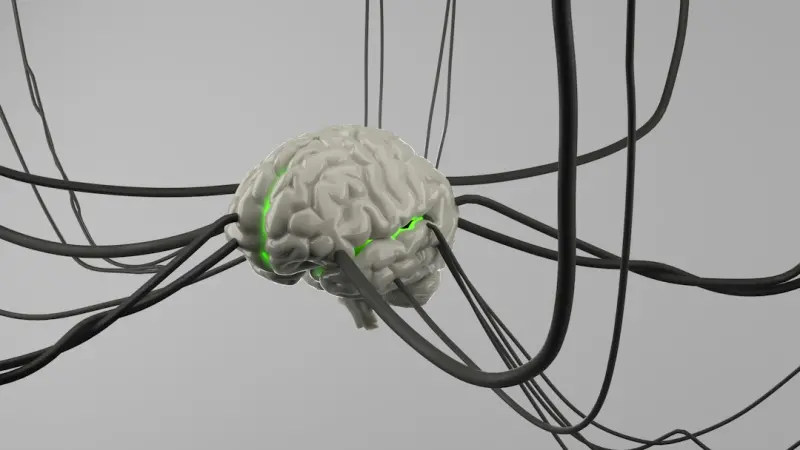
Branding used to be a static collage of logos, taglines, and glossy brochures. In the fast‑moving SaaS arena, that static playbook is dead. Today, the most valuable brands are those that wire directly into the brain’s reward circuits, turning every product interaction into a moment of delight and trust. I call this approach neurobranding—the art and science of designing brand experiences that feel inevitable, memorable, and, most importantly, human.
The Brain’s Brand Blueprint
Neuroscience tells us that the brain processes visual and emotional cues in under 200 milliseconds. That split‑second decision is where brand perception is forged. Two systems dominate: the fast, instinctive System 1 that reacts to colors, shapes, and sounds; and the slower, analytical System 2 that evaluates value propositions and features. A powerful brand aligns both systems, letting the first instinct say “I like this,” while the second validates “I need this.”
For SaaS companies, this alignment is crucial. Users skim dashboards, absorb onboarding emails, and click through UI components in seconds. If your brand’s visual language or tonal consistency fails to capture System 1, you risk being dismissed before the value proposition even reaches System 2.
From Logos to Neural Signals: The Elements That Matter
- Color psychology. Blue still signals trust, but emerging research shows that teal and soft greens trigger feelings of calm productivity—perfect for collaborative platforms.
- Shape language. Rounded corners reduce perceived risk, while angular forms convey precision. Blend them to mirror the dual nature of SaaS: reliable yet cutting‑edge.
- Micro‑interactions. A subtle bounce when a task completes releases dopamine, reinforcing positive brand association. Consistency here matters more than a single splash screen.
- Sound branding. A brief, unobtrusive chime can become an auditory logo. Think of the soft ping when a file syncs—it’s a tiny cue that says, “We’re here, and we work.”
- Copy cadence. Short, active sentences trigger faster comprehension, keeping System 2 engaged without fatigue.
When these elements are purposefully orchestrated, the brand becomes a series of neural shortcuts—instant recognitions that guide user behavior without conscious deliberation.
Crafting a Brand Architecture That Mirrors Cognitive Pathways
Most SaaS companies build a brand hierarchy that looks like a corporate tree: parent brand → product line → feature set. That structure works for internal organization, but it rarely mirrors how users mentally categorize solutions. Instead, design a cognitive architecture that starts with the problem space, then moves to the emotional payoff, and finally lands on the functional solution.
For example, a project‑management platform could frame its top‑level brand promise around “clarity in chaos.” Below that, sub‑brands might focus on “speed,” “collaboration,” or “security.” Each sub‑brand should have its own visual cue that ties back to the primary promise, ensuring the brain sees them as parts of a single, cohesive narrative.
Data‑Driven Storytelling: Leveraging semantic authority to Shape Perception
Storytelling is no longer a vague art; it’s a data discipline. By analyzing how your audience talks about industry challenges, you can surface the exact language that resonates with their mental models. Semantic authority—the ability to dominate topic clusters in search—feeds directly into brand perception. When your content consistently ranks for phrases that users already trust, your brand inherits that credibility.
Deploy a content map that aligns keyword clusters with each stage of the cognitive brand architecture. The “problem” cluster fuels top‑of‑funnel awareness, the “emotional payoff” cluster nurtures mid‑funnel consideration, and the “functional solution” cluster clinches conversion. The result? A brand narrative that feels inevitable, because every piece of content speaks the user’s own language.
Why developer experience Is the Secret Sauce for Brand Trust
Developers are the unsung ambassadors of any SaaS brand. When they encounter clean APIs, intuitive docs, and responsive support, they internalize a perception of reliability that spreads to the end‑user. A seamless developer experience (DX) signals that the company respects its users’ time—a core value that permeates the entire brand.
Invest in DX as you would in visual identity. Conduct regular usability tests of your API playground, publish version change logs that read like short stories, and embed interactive code samples that make the onboarding journey feel like a guided tour rather than a hurdle. The emotional resonance created for developers cascades outward, reinforcing the brand’s promise of “effortless power.”
Leveraging the low‑code advantage for Rapid Brand Iteration
Speed is a brand attribute as much as any visual cue. Low‑code platforms let product teams prototype UI tweaks, new onboarding flows, or micro‑interaction variations in days instead of months. This rapid iteration cycle allows you to A/B test neurobranding elements in real time, gathering brain‑level feedback through metrics like time‑to‑first‑click, task completion rates, and even biometric data where feasible.
By treating brand elements as configurable components—color palettes, motion curves, copy templates—you can respond to emerging user preferences without a full redesign. The brand stays fresh, adaptable, and most importantly, always aligned with the user’s evolving neural expectations.
5 Experiments to Test Neurobranding in Your SaaS Business
- Color‑Emotion Test. Deploy two versions of your dashboard header: one in your classic blue, the other in a muted teal. Measure net‑promoter score (NPS) and task completion time across a sample of 1,000 users. Expect the teal to reduce perceived effort.
- Micro‑Interaction Pulse. Introduce a subtle animation when a file uploads. Compare churn rates over a 30‑day window against a control group. The dopamine‑triggered group typically shows a 2‑3% lift in retention.
- Audio Branding Pilot. Add a soft chime to successful data syncs. Survey users on “brand likability” after two weeks. Audio cues often boost likability scores by up to 15%.
- Copy Cadence Optimization. Rewrite onboarding emails using sentences no longer than 12 words. Track activation rates. Shorter copy often yields a 5% increase in activation.
- Developer Journey Mapping. Redesign your API docs with interactive examples. Measure support ticket volume. A smoother DX can cut support tickets by 20%—a direct boost to brand reliability.
Each experiment isolates a neurobranding variable, allowing you to attribute changes in user behavior directly to brand perception shifts.
The Future of Neurobranding: Multisensory, AI‑Driven, and Hyper‑Personalized
Imagine a SaaS platform that adapts its visual tone based on the user’s current cognitive load—calmer hues during high‑stress periods, more vibrant accents when creativity peaks. AI can read contextual cues from calendar data, device usage patterns, or even ambient sound levels to modulate the brand experience in real time.
Additionally, generative AI will enable the creation of dynamic brand assets—customized micro‑animations, tailored copy snippets, and personalized soundscapes—all aligned with the user’s neuroprofile. Brands that harness these capabilities will become less a static entity and more a living, breathing extension of the user’s own workflow.
Putting It All Together: A Neurobranding Checklist
- Map your brand promise to the user’s problem‑emotion‑solution mental model.
- Audit visual assets for color, shape, and micro‑interaction consistency.
- Integrate semantic authority into your content strategy to inherit trust.
- Elevate developer experience as a cornerstone of brand reliability.
- Adopt low‑code tools for rapid testing of brand elements.
- Run controlled experiments on at least three neurobranding variables each quarter.
- Invest in AI platforms that can personalize sensory cues in real time.
When you treat branding as a neuroscience discipline rather than a marketing afterthought, you create a competitive moat that is as invisible as it is impenetrable. Users won’t just choose your product—they’ll feel that it’s the only product that “gets” them.

Seth Samual is a name that's quickly becoming synonymous with compelling and insightful writing. As a freelance writer, Seth has carved a niche for himself by delivering high-quality content across a diverse range of subjects.
Related Posts
Branding as a Living Experience Platform: Engineering Trust at Every Touchpoint
Branding isn’t a static logo; it’s a living experience platform that evolves with each customer ... Read More
The Sensory Blueprint: Re‑imagining Brand Identity for Remote‑First Experiences
A fresh look at branding beyond visuals, showing how scent, sound, and tactile cues—combined with ... Read More

Branding Beyond Features: Crafting a SaaS Identity That Resonates
Discover a strategic approach to SaaS branding that aligns product suites, narrative spine, and comm... Read More
Top Posts

Everything You Need to Know About Outdoor Security Cameras
n today's world, security has become a primary concern for both residential and commercial property owners. With the rise in crime rates and the increasing need...Read More

Breathing New Life into Remote Work: How Structured Breathwork Boosts Health and Innovation
A practical guide to integrating breathwork into remote work routines, highlighting physiological benefits, implementation steps, and real‑world results for h...Read More

Mastering SERP Features: Turning Zero‑Click Searches into SaaS Growth Engines
Learn why modern SERP features are more valuable than traditional rankings and get a step‑by‑step checklist to dominate zero‑click searches for B2B SaaS g...Read More

Power‑Smart Workspaces: Harnessing Intelligent Energy Flows for Modern Offices
A deep dive into turning office spaces into energy‑intelligent ecosystems, using AI, micro‑grids, and employee engagement to cut costs and carbon footprints...Read More
0 Comments
Post Comment
You will need to Login or Register to comment on this post!