

Brand Architecture Meets Human Experience: Designing Brands That Feel Like Places
When I first stepped into a coffee‑shop that smelled of roasted beans, heard the soft hum of conversation, and caught a glimpse of a hand‑drawn mural on the wall, I realized I wasn’t just consuming a product—I was entering a brand space. That feeling is the essence of modern branding: it’s less about a logo and more about an environment that invites people to linger, explore, and return.
Most brand discussions still orbit around visual guidelines, voice tones, and messaging hierarchies. Those are the scaffolding, sure, but the true architecture lives deeper—in the sensory, emotional, and behavioral patterns we engineer for our audiences. In this article I’ll share a framework I call Brand Narrative Architecture, a way to think about branding as a deliberately designed space that users can navigate, personalize, and co‑create.
The Foundations: Brand DNA as a Blueprint
Every brand, at its core, carries a unique DNA: a set of values, purpose, personality traits, and functional promises. Think of this DNA as the foundation slab of a building. If the slab is weak, everything built on top will wobble. The first step is to map this DNA in a way that is both granular and flexible.
- Purpose Core – The why that transcends profit. Example: “Empower creators to turn ideas into impact.”
- Value Pillars – The ethical and practical commitments (e.g., transparency, agility, delight).
- Personality Nodes – The human traits (curious, supportive, bold) that give the brand a relatable voice.
- Functional Promises – The measurable deliverables (speed, reliability, scalability) that set expectations.
By documenting these elements in a living brand genome map, you give every stakeholder a reference point for decision‑making. It also enables you to align the more tactile aspects of experience—packaging, UI, even office space—with the underlying DNA.
Designing the Spatial Narrative: From Entrance to Exit
Architecture teaches us that the journey through a building is as important as the destination. Apply that logic to a brand and you get a spatial narrative that guides every touchpoint:
- The Entrance (First Impressions) – Your website’s hero section, social media banner, or storefront sign. It should instantly communicate the purpose core.
- The Lobby (Orientation) – Navigation menus, onboarding flows, or help centers that orient users and set expectations.
- The Hallways (Exploration) – Blog articles, case studies, community forums where curiosity is encouraged.
- The Rooms (Deep Dives) – Product demos, workshops, or webinars that let users immerse themselves in the brand’s value pillars.
- The Exit (Advocacy) – Referral programs, user‑generated content campaigns, or thank‑you notes that turn customers into ambassadors.
Each “room” should reflect a specific set of DNA elements. For instance, the Hallways might foreground the personality nodes (playful, supportive) through interactive quizzes or conversational bots, while the Rooms emphasize the functional promises (speed, reliability) via live performance dashboards.
Sensory Branding: The Power of the Unseen
We often underestimate the impact of non‑visual cues. A subtle scent, a consistent ambient sound, or the tactile feel of packaging can embed a brand deeper into memory. Consider how a tech company might use a faint, high‑pitch chime when a user completes a successful sync—over time, that sound becomes a subconscious affirmation of reliability.
To harness this, map each sense to a brand DNA element:
- Sight – Color palettes tied to the purpose core (e.g., vibrant orange for “empower”).
- Sound – Audio motifs aligned with personality nodes (e.g., warm acoustic chords for “supportive”).
- Touch – Material choices in packaging that echo functional promises (e.g., matte textures to signal smooth, hassle‑free experience).
- Smell – Ambient scents in physical spaces that evoke the brand’s emotional promise (e.g., a faint citrus note for “fresh ideas”).
- Taste – Rare but powerful in event marketing (e.g., branded coffee blends at a developer summit).
This multisensory approach builds a more resilient emotional connection, especially when visual fatigue is high.
Co‑Creation: Turning Audiences into Architects
In a traditional building, architects dictate the design, and occupants adapt. In modern brand spaces, the most successful “structures” invite occupants to shape rooms themselves. Co‑creation can happen on three levels:
- Micro‑Customization – Let users choose UI themes, dashboard layouts, or even tone of email communications. This makes the brand feel personal without sacrificing consistency.
- Content Collaboration – Invite community members to author case studies, submit use‑case videos, or suggest feature road‑maps. Their contributions become part of the brand’s narrative hallway.
- Strategic Partnerships – Align with complementary brands to create joint experiences (e.g., a productivity app integrating a meditation service). The partnership becomes a new wing of the brand building.
The key is to keep the overarching DNA visible, ensuring that while users add bricks, they never undermine the foundation.
Data‑Driven Narrative Tuning
Just as a building’s HVAC system is adjusted based on sensor data, a brand’s narrative should be refined continuously with real‑world feedback. This is where the Decision Labs: Turning Data Into Actionable Business Experiments approach shines.
Set up hypothesis‑driven experiments at each touchpoint. For example:
- Test two different onboarding welcome messages to see which yields a higher activation rate.
- Measure the dwell time in a product tutorial room after adding a new interactive element.
- Survey sentiment after introducing a subtle auditory cue in the checkout flow.
Collect quantitative metrics (conversion, time‑on‑page) and qualitative signals (NPS, open‑ended feedback). Then iterate the spatial narrative accordingly. Over time, the brand architecture becomes a self‑optimizing ecosystem rather than a static blueprint.
Brand as a Narrative Engine for Content
Content is the connective tissue of the brand building. When you view each piece of content as a “room” in the architecture, you ensure consistency and purpose. The TikTok untapped playbook offers a useful analogy: short, high‑energy videos are like pop‑up art installations—quick, immersive, and highly shareable.
Apply that principle to other formats:
- Long‑form articles become the “lecture halls” where deep expertise is shared.
- Interactive webinars act as “workshops” where participants co‑build knowledge.
- Social posts serve as “signage” that reinforces the purpose core in bite‑sized messages.
By mapping every format to a spatial function, you prevent the disjointed feeling that often plagues multichannel campaigns.
Semantic Cohesion: Aligning Language with Structure
Language is the plumbing that moves users through the brand space. A well‑structured semantic SEO framework can be repurposed for internal consistency. Identify the core entities that define your brand—people, products, outcomes—and ensure they appear in a predictable hierarchy across all copy.
For example, if “innovation” is a central entity, it should consistently appear alongside “collaboration” and “impact” in headings, meta tags, and user‑facing messages. This creates a mental map that guides users intuitively, much like a well‑signposted hallway.
Scaling the Architecture Across Teams
All the above sounds great—but execution requires cross‑functional alignment:
- Brand Ops Teams maintain the DNA map and approve any new “room” designs.
- Product Teams translate functional promises into feature specifications.
- Marketing Teams ensure content and campaigns occupy the correct narrative spaces.
- Customer Success reinforces the brand’s purpose core during support interactions.
- HR & Culture reflect the brand’s personality in internal rituals, onboarding, and office ambience.
Regular cross‑department workshops—think of them as “architectural review meetings”—keep the whole building coherent as it expands.
The Future: Brands as Living Ecosystems
Imagine a brand where each user’s journey subtly reshapes the space for the next visitor—a living ecosystem that evolves with its community. This isn’t speculative futurism; it’s the natural progression when you treat branding as architecture, sensory design, and data‑driven experimentation in one unified discipline.
Start small: map your DNA, sketch the spatial narrative, launch a few micro‑customizations, and set up measurement loops. Over months, you’ll see the brand space become more inviting, memorable, and ultimately, a competitive differentiator that no logo alone could achieve.
Remember, a brand isn’t a static symbol hanging on a wall. It’s a place people want to return to, a space they want to shape, and a narrative they want to share. Build it wisely, and the community you create will keep the doors open for years to come.

Jim Pearse, a seasoned freelance writer, brings a wealth of knowledge and passion to the world of home and garden. From the intricacies of landscaping to the nuances of interior design, Jim delves into every aspect of creating comfortable, beautiful, and functional living spaces.
Related Posts
Beyond Logos: Crafting a Brand Experience That Sells SaaS
A brand is more than a logo; it’s an experience that spans every user interaction. This post outli... Read More
Human‑Centric Branding in the Age of AI
A deep dive into building a human‑centric brand in an AI‑dominated SaaS world, with practical st... Read More
The Sprint Mindset: Redefining Modern Branding for Speed and Impact
Learn how applying a sprint mindset to branding can boost speed, relevance, and community engagement... Read More
Top Posts
AI Learning Buddies: How Smart Companions Are Redefining Childhood Education
AI learning companions are turning homework into interactive adventures, blending personalized tutoring, gamified challenges, and augmented reality to empower k...Read More

Navigating the Security Frontier in 2026: AI, Zero Trust, and Sustainable Defenses
A deep dive into 2026’s security challenges—AI‑driven attacks, zero‑trust adoption, smart‑home protection, and sustainable defenses—offering actiona...Read More
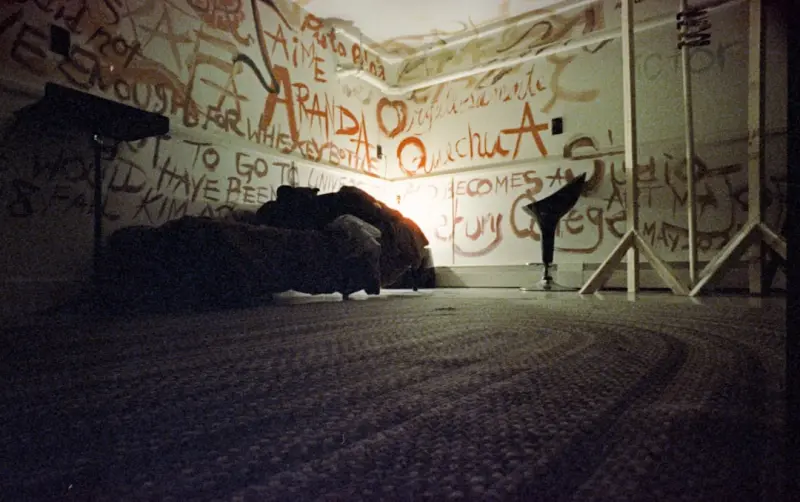
Designing Narrative Spaces: How to Turn Home Décor into a Living Story
Turn your home into a living narrative by curating personal artifacts, layering senses, and using modular design. Learn practical steps to create spaces that te...Read More

When AI Becomes Your Boardroom Ally: Decision‑Making at the Speed of Thought
A deep dive into decision‑intelligence AI, showing how boardrooms can move from static reports to dynamic, data‑backed strategies while maintaining ethical ...Read More
0 Comments
Post Comment
You will need to Login or Register to comment on this post!