
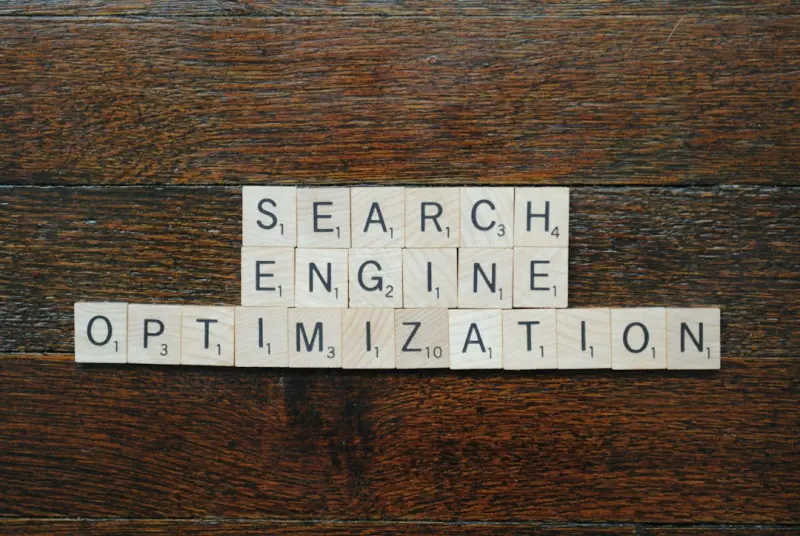
When I first started polishing landing pages for a tech startup, I quickly realized that the real magic happens not in the headline alone, but in the subtle, often‑overlooked details that whisper relevance to both users and search engines. That whisper is what I call semantic on‑page SEO – a disciplined approach that aligns every element on a page with the intent behind the search query, while simultaneously delivering a frictionless experience for the human reader.
Why Semantic Signals Matter More Than Ever
Search engines have evolved from simple keyword matchers to sophisticated interpreters of context. They now ask themselves: What does the user truly want? and Does this page answer that need in the most authoritative way possible? The answer lies in the semantic signals you embed throughout your HTML – from headings and <alt> tags to schema markup and internal link architecture. When these signals are clear and consistent, you’re essentially giving the algorithm a well‑structured map that points directly to your most valuable content.
Crafting a Hierarchical Content Blueprint
Begin with a clear hierarchy. Your primary <h2> tags should encapsulate the core topics of the page, while subsequent <h3> and <h4> tags break those topics into digestible sub‑sections. This not only helps crawlers understand the logical flow but also guides readers through a narrative that feels natural.
- Start with a concise, keyword‑rich
<title>tag. Keep it under 60 characters and place the primary term near the beginning. - Use a compelling
<meta description>that mirrors user intent. Although not a ranking factor, a well‑crafted description can boost click‑through rates, which indirectly influences rankings. - Leverage
<h2>to outline the main sections. Each<h2>should answer a specific question that a searcher might type. - Employ
<h3>and<h4>for supporting points. This layered approach creates a semantic lattice that both humans and bots can traverse with ease.
Optimizing Textual Content for Intent
Beyond headings, the body copy must reflect the same level of intent alignment. Here are three tactics I swear by:
- Answer the “Five Ws” early. Within the first 100 words, address who, what, when, where, and why. This signals relevance to the search engine and satisfies impatient readers.
- Integrate synonyms and related entities. If your primary keyword is “on‑page SEO checklist,” sprinkle terms like “content optimization,” “HTML best practices,” and “search intent mapping.” This creates a semantic cluster that reinforces the main topic.
- Embed
<alt>text that describes images in context. Instead of generic “image1,” write “semantic HTML diagram illustrating heading hierarchy.” This improves accessibility and gives another avenue for relevance.
Structured Data: The Unseen SEO Booster
Schema markup is often dismissed as a “nice‑to‑have,” but it’s actually a high‑impact, low‑effort win. By adding Article, FAQ, or HowTo schemas, you enable search engines to surface rich results that stand out on the SERP. The result? Higher click‑through rates and more qualified traffic.
Implementation tip: Use JSON‑LD format and place the script just before the closing <body> tag. Validate your markup with Google’s Rich Results Test to ensure there are no syntax errors.
Speed and Core Web Vitals: The Technical Backbone
If a page loads slowly, even the most compelling content will lose its impact. Core Web Vitals—Largest Contentful Paint (LCP), First Input Delay (FID), and Cumulative Layout Shift (CLS)—are now direct ranking signals. Here’s how I address them without compromising design:
- Lazy‑load below‑the‑fold images. This reduces initial payload while preserving visual quality.
- Serve next‑gen image formats (WebP, AVIF). They compress more efficiently than traditional JPEG/PNG.
- Leverage a Content Delivery Network (CDN). Edge servers deliver assets faster to global audiences.
- Minify and defer non‑critical JavaScript. Keep the main thread free for rendering primary content.
Internal Linking as Semantic Glue
Every internal link is an opportunity to reinforce topical authority. Instead of generic anchor text like “click here,” use descriptive, context‑rich phrases that tell both users and crawlers where the link leads. For instance, linking to a deep‑dive on “authority‑focused partnership tactics” not only enriches the reader’s journey but also signals to search engines that your site has a cohesive knowledge graph around that concept.
Check out my recent deep‑dive on authority‑focused partnership tactics for a practical framework on how to weave these links into a natural narrative.
Balancing E‑A‑T with Freshness
Expertise, Authoritativeness, and Trustworthiness (E‑A‑T) remain cornerstone concepts for content that aims to rank, especially in “Your Money or Your Life” niches. Demonstrate expertise by:
- Including author bios with credentials.
- Citing reputable sources and linking out to them with
rel="noopener noreferrer"for security. - Updating statistics and case studies regularly.
Freshness is a complementary factor. Even evergreen topics benefit from periodic revisions—adding new data points, revisiting case studies, or reflecting algorithm updates. A simple “last updated” timestamp can improve both user trust and search engine perception.
Micro‑Copy and Voice Consistency
While headline and body text carry the bulk of SEO weight, the smaller pieces—button labels, error messages, tooltip text—contribute to the overall user experience. Consistent voice across these micro‑interactions reduces cognitive load and signals a polished, professional brand.
For example, replace generic “Submit” with “Get My SEO Audit.” The extra context aligns the button with the page’s intent, subtly reinforcing the primary keyword without over‑optimization.
Testing, Measuring, and Iterating
On‑page SEO isn’t a set‑and‑forget task. Use tools like Google Search Console, PageSpeed Insights, and heat‑mapping software to monitor performance. Track metrics such as:
- Organic click‑through rate (CTR) from SERPs.
- Average time on page and scroll depth.
- Core Web Vitals scores over time.
When you notice a drop—say, a rising CLS score—revisit the offending element (often a late‑loading ad or an oversized image) and remediate promptly. Continuous iteration keeps the page in sync with evolving search engine expectations.
Integrating Site‑Wide Architecture
On‑page efforts shine brightest when they sit atop a solid site architecture. A logical URL hierarchy, breadcrumb navigation, and a well‑structured XML sitemap provide the scaffolding that lets search engines crawl efficiently. Moreover, a clear navigation menu reduces bounce rates by guiding users to related content, which in turn boosts dwell time—a subtle yet valuable ranking cue.
For those building or revamping a platform, consider reading about engineering‑centric site performance. The principles of streamlined code and modular architecture translate directly into faster page render times and smoother on‑page SEO outcomes.
Final Thoughts: The Art of Quiet Optimization
On‑page SEO isn’t about screaming keywords at the top of the page; it’s about whisper‑quiet, precise alignment between what a searcher seeks and what your content delivers. When every heading, image, link, and micro‑copy piece speaks the same semantic language, you create a cohesive experience that satisfies both humans and machines. The result? Higher rankings, deeper engagement, and ultimately, more conversions.
Take a moment to audit a recent article using the checklist below. If you find any gaps—missing schema, sluggish load times, or vague internal links—treat them as low‑hanging fruit and fix them today. The cumulative impact of these small, intentional tweaks compounds into a powerful SEO engine that works for you, not against you.
- Verify heading hierarchy (H1 → H2 → H3).
- Ensure
<alt>text is descriptive and keyword‑aligned. - Implement at least one relevant schema markup.
- Run PageSpeed Insights and address any LCP, FID, or CLS warnings.
- Audit internal links for descriptive anchor text.
- Update any outdated statistics or references.
- Check micro‑copy for brand voice consistency.
When you treat each page as a living, breathing entity—optimized for intent, speed, and authority—you’ll see the quiet power of semantic on‑page SEO transform your traffic, leads, and bottom line.

Laura Wilson is a freelance writer specializing in the dynamic and ever-evolving field of health. With a passion for translating complex medical information into accessible and engaging content, Laura brings a wealth of knowledge and a fresh perspective to topics ranging from preventative care and nutrition to cutting-edge research and innovative treatments.
Related Posts

On-Page SEO in 2024: Dale Peterson’s Proven Playbook for Ranking Success
Dale Peterson shares his 2024 on‑page SEO playbook, covering semantic HTML, meta tags, internal li... Read More
Elevating On‑Page SEO: From Intent Mapping to AI‑Assisted Content
Learn how to future‑proof your pages with intent‑driven layouts, semantic HTML, AI‑assisted co... Read More

Human‑First On‑Page SEO: Storytelling, Structure, and Search Success
Learn a fresh, human‑first framework for on‑page SEO that combines narrative architecture, seman... Read More
Top Posts

The Laptop Revolution: How My Portable Powerhouse Fuels Creative Freedom
Rose DesRochers reveals why a sleek, portable laptop is the ultimate creative ally, blending performance, battery life, and security to keep ideas flowing anywh...Read More
Celebrating Life's Milestones: How Sustainable Living Can Enhance Your Special Occasions
Sustainable living can add depth and significance to our celebrations. Learn how to make your special occasions more eco-friendly with simple yet effective meas...Read More
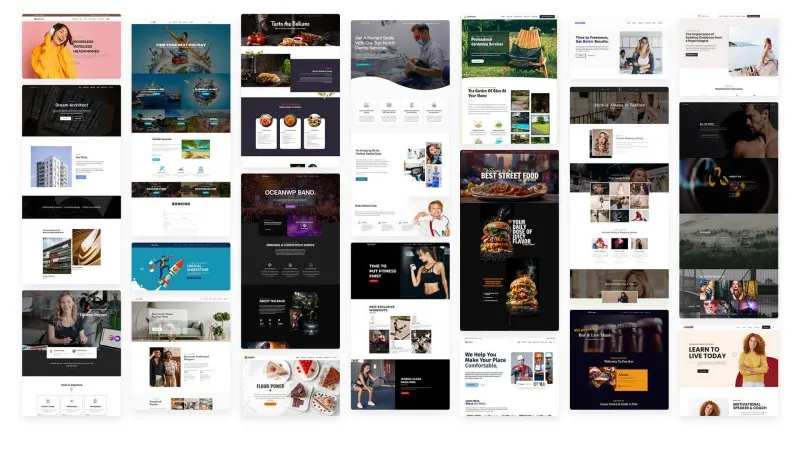
Harnessing All-in-One WordPress Themes for Comprehensive Digital Strategy
In the rapidly evolving landscape of digital presence, the challenge is no longer merely building a website; it is constructing a scalable, high-performance dig...Read More
Elevating On‑Page SEO: From Intent Mapping to AI‑Assisted Content
Learn how to future‑proof your pages with intent‑driven layouts, semantic HTML, AI‑assisted content checks, visual SEO tactics, and a 7‑day action plan ...Read More
0 Comments
Post Comment
You will need to Login or Register to comment on this post!