
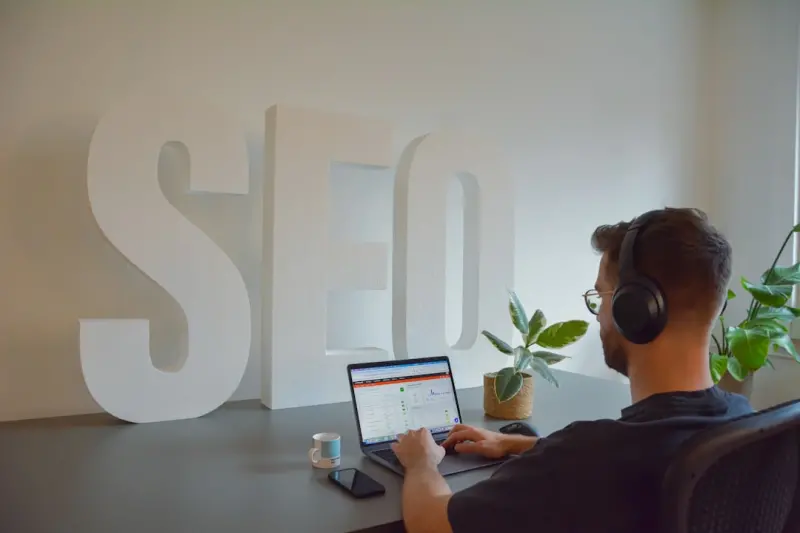
When I first fell in love with SEO, it was all about cramming keywords into meta tags and praying Google would notice. Fast forward a few years, and the game has become a sophisticated dance between user intent, structured data, and the ever‑watchful eye of AI. On‑page SEO is no longer a checklist; it’s an experience that guides a visitor from the moment they type a query to the instant they click “buy.” In this post I’ll peel back the layers of modern on‑page optimization, share the tactics that keep my own pages ranking, and show you how to future‑proof your content in a world where machines read as much as humans do.
1. Mapping User Intent Directly Into Your Page Layout
Every piece of content starts with a question: What does the user really want? The old “informational vs. transactional vs. navigational” buckets are still useful, but they’re too blunt for today’s nuanced queries. I’ve begun to map intent clusters directly onto the page hierarchy. Think of each heading, subheading, and even bullet point as a response to a specific user need.
- Primary intent sits in the
<h1>and first paragraph – answering the core question. - Secondary intent fills
<h2>sections, diving into related concerns. - Tertiary intent lives in
<h3>and list items, providing quick wins and actionable steps.
This structure does two things: it satisfies search engines that parse heading hierarchy for relevance, and it guides human readers through a logical flow that feels almost conversational. The result? Lower bounce rates, longer dwell times, and a stronger signal that your page truly satisfies the query.
2. Semantic HTML & Structured Data: The Dynamic Duo
Semantic HTML is more than just clean code – it’s a language that tells crawlers exactly what each piece of content represents. Pair that with Bing SEO strategies for enterprises, which emphasize schema markup, and you have a powerhouse combination.
Start by using appropriate tags: <article> for the main piece, <section> for thematic groups, <aside> for related resources, and <time> for dates. Then layer in schema.org types – Article, FAQPage, HowTo – that match the page’s purpose. When Google or Bing can instantly read “this is a step‑by‑step guide,” they’re far more likely to surface it in rich results.
One tip I swear by: validate your markup with Google’s Rich Results Test and Bing’s Schema Markup Validator before you push live. A tiny syntax error can nullify an entire effort, and you’ll waste hours chasing phantom ranking drops.
3. AI‑Generated Content: Quality Controls You Can’t Skip
Artificial intelligence has turned content creation from a labor‑intensive chore into a near‑instant process. But the speed comes with a price – AI can produce bland, generic copy that fails to meet E‑E‑A‑T (Experience, Expertise, Authoritativeness, Trustworthiness) standards. My approach is a three‑step “human‑in‑the‑loop” audit:
- Prompt engineering: Craft prompts that force the model to produce data‑backed statements, cite sources, and adopt a distinct brand voice.
- Fact‑check layer: Use tools like Grammarly’s plagiarism checker, alongside manual verification, to ensure every statistic is current and accurate.
- Stylistic polishing: Add anecdotes, analogies, and personal insights that only a human can provide. This not only boosts readability but also signals to Google that a real expert authored the piece.
When you treat AI as a first draft rather than a finished product, you retain the efficiency boost while safeguarding the quality signals that search engines love.
4. Visual SEO: Images, Videos, and Core Web Vitals
Pages that load fast and look great on every device get a ranking advantage. Beyond the usual alt text and file compression, I now treat visual assets as a separate SEO silo.
- Responsive image sets using
srcsetensure the browser serves the optimal size, cutting down on load time. - Video schema (
VideoObject) lets you surface thumbnails in SERPs, driving click‑throughs even before the user watches the video. - Lazy‑loading with intersection observers preserves LCP (Largest Contentful Paint) scores while still delivering a rich media experience.
When you pair these tactics with a solid dedicated hosting environment, you eliminate bottlenecks that would otherwise sabotage your Core Web Vitals scores. In practice, this translates to a measurable boost in both rankings and user satisfaction.
5. Internal Linking as a Content Architecture Blueprint
Many marketers view internal links as a way to pass PageRank, but the real power lies in information architecture. By strategically linking related pages, you create pathways that guide both crawlers and readers through a narrative journey.
My method involves three layers:
- Hub pages – Broad, high‑authority pieces that cover a topic cluster.
- Spoke pages – Deep dives that answer specific sub‑questions.
- Contextual anchors – Inline links using natural language, not generic “click here.”
Use descriptive anchor text that mirrors the target page’s intent. For example, instead of “read more,” try “learn how to optimize schema markup for e‑commerce.” This not only improves relevance signals but also reduces bounce by presenting the next logical piece of information.
6. The Metrics That Matter: From Clicks to Conversions
It’s easy to get lost in vanity metrics like impressions and average position. Real on‑page success is measured by how the page influences the funnel. Track these three KPI groups:
- Engagement signals: Avg. time on page, scroll depth, and interaction events (e.g., video plays).
- Conversion pathways: Form completions, CTA clicks, and micro‑conversions such as “download PDF.”
- Search performance: Click‑through rate (CTR) and position changes after on‑page updates.
Set up custom dashboards in Google Analytics or a BI tool, and tie each metric back to a specific on‑page change. When you see a 15% lift in scroll depth after adding a FAQ schema, you have concrete proof that the effort paid off.
7. Future‑Proofing: Preparing for the Next Wave of Search
Search engines are evolving toward “answer‑first” experiences powered by AI. That means your on‑page content must be both concise enough for a quick answer and deep enough for a comprehensive read. Here’s a quick checklist to stay ahead:
- Keep the
meta descriptionunder 160 characters, summarizing the primary answer. - Place a concise
FAQblock at the top, using natural language questions. - Include a “Read more” toggle that expands into the full article – giving both snippet‑friendly and long‑form content.
- Maintain a
data‑structuredknowledge graph that connects your brand, products, and related concepts.
By building these layers now, you’ll be ready when Google’s AI models start pulling directly from your structured content to answer user queries.
8. Putting It All Together: A 7‑Day Action Plan
Ready to apply these ideas? Here’s a simple sprint you can run on any existing page:
- Day 1 – Intent audit: List primary, secondary, and tertiary intents, then map them to headings.
- Day 2 – Semantic cleanup: Replace generic
<div>tags with proper semantic tags. - Day 3 – Schema rollout: Add appropriate schema markup and test with the Rich Results tool.
- Day 4 – Visual upgrade: Optimize images, implement
srcset, and add video schema if applicable. - Day 5 – Internal link audit: Add at least three contextual internal links using descriptive anchors.
- Day 6 – AI polish: If you used AI for the draft, run the three‑step human audit.
- Day 7 – Metric baseline: Capture pre‑update metrics, then set up alerts for any significant changes over the next two weeks.
Following this roadmap will give you a measurable uplift while reinforcing a sustainable on‑page SEO process.
9. The Human Touch Still Wins
All the technical wizardry in the world won’t replace the need for genuine expertise. Your voice, anecdotes, and real‑world examples are what set you apart from a sea of templated content. In every piece I write, I ask myself: “If I were a reader, would this help me solve a problem right now?” If the answer is “yes,” you’re on the right track.
On‑page SEO isn’t a static set of rules; it’s an evolving practice that blends data, design, and human insight. By treating each page as an experience rather than a mere ranking factor, you’ll not only climb SERPs but also build lasting relationships with your audience.

Freelance writer with a flare for everything. I am passionate about topics I write crafting stories and compelling content that connect with audiences. Journeying through the realms of creativity as a freelance creator. #WriterLife #ContentCreator
Related Posts
Optimizing Your Website for Voice Search: The Future of On-Page SEO
Learn how to optimize your website for voice search and stay ahead of the competition with our exper... Read More

The Architecture of Modern SEO: Building Authority Through Interlinking
Discover how to build a robust SEO ecosystem through strategic interlinking. Learn how to connect yo... Read More

The Human‑First Blueprint for On‑Page SEO Success
Discover a fresh, human‑centric approach to on‑page SEO that leverages cognitive load theory, se... Read More
Top Posts
Why WordPress Is the Secret Engine Behind Modern B2B Content Hubs
Learn why treating WordPress as a strategic, API‑first content platform—rather than just a website builder—enables B2B teams to deliver personalized exper...Read More

The Ultimate Guide to Keeping Kids Safe in a Digital World
A comprehensive, parent‑focused guide that blends home safety, digital protection, community support, and emergency preparedness to keep kids safe while foste...Read More

Why Managed WordPress Hosting Is the Secret Weapon for Modern B2B Brands
Managed WordPress hosting transforms a volatile web presence into a predictable growth engine, offering performance, security, and cost transparency that B2B Sa...Read More

Unlocking the Hidden Potential of Virtual Private Servers for Modern Enterprises
A deep dive into why VPS remains a strategic asset for enterprises, covering compliance sandboxes, AI prototyping, CI/CD pipelines, and hybrid cloud integration...Read More
0 Comments
Post Comment
You will need to Login or Register to comment on this post!