
Why Every SaaS Leader Needs a Dedicated Experimentation Platform
When I first stepped into the SaaS trenches, I learned the hard way that intuition alone doesn’t win deals—it wins experiments. The market moves faster than any single product roadmap, and the only reliable way to keep pace is to institutionalize rapid, data‑driven testing across every layer of your business. This isn’t about sprinkling A/B tests on a landing page; it’s about building a holistic experimentation platform that empowers product, marketing, sales, and even finance teams to validate hypotheses before they become costly commitments.
The Cost of Guesswork in Modern SaaS
Imagine you’re about to launch a new pricing tier. You’ve run the numbers, consulted the board, and feel confident. Six months later, churn spikes, and you realize the tier cannibalized existing revenue streams. The fallout isn’t just lost ARR—it’s the erosion of trust in decision‑making. According to a recent industry benchmark, companies that rely on ad‑hoc intuition lose up to 30 % of potential growth opportunities each year.
That loss isn’t a one‑off; it ripples through product roadmaps, sales forecasts, and even investor confidence. The antidote? A systematic platform where hypotheses are queued, tested, and either validated or dismissed in days—not months.
Core Pillars of an Effective Experimentation Engine
- Unified Hypothesis Management: A central repository where any team can submit a hypothesis, tag it with business impact, and assign owners. Think of it as a living backlog of “what‑if” questions.
- Cross‑Functional Data Integration: Pull in telemetry from product analytics, CRM pipelines, finance dashboards, and even support tickets. The richer the data, the sharper the insight.
- Automated Experiment Execution: Whether it’s feature flags, email cadence changes, or pricing adjustments, the platform should trigger experiments automatically and roll them back if they breach predefined thresholds.
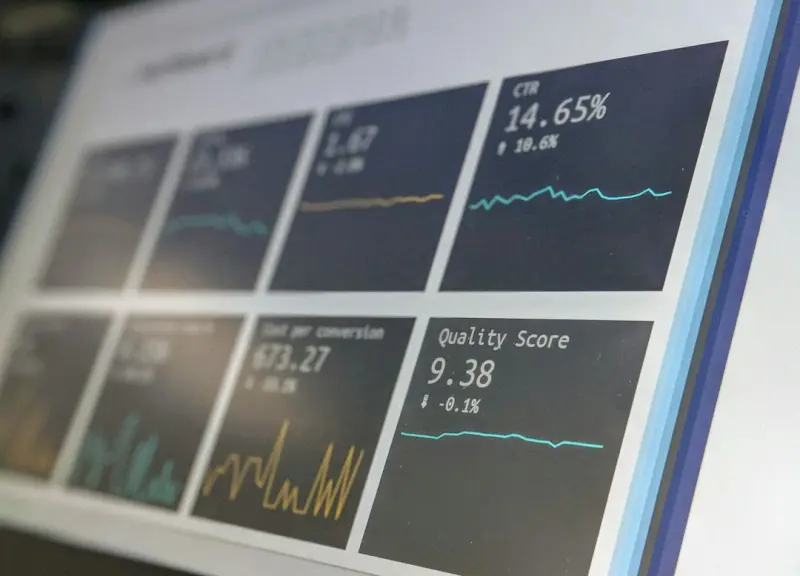
- Real‑Time Reporting & Governance: Dashboards that surface key metrics, confidence intervals, and risk alerts. Governance layers ensure compliance—especially important when experiments touch pricing or customer data.
- Learning Loop Closure: Once an experiment concludes, the findings must be captured, disseminated, and, crucially, fed back into the product and strategy roadmaps.
Building vs. Buying: What to Consider
Many SaaS leaders initially look for an off‑the‑shelf solution. While there are robust A/B testing tools for front‑end experiences, few address the full‑stack needs of a growing B2B operation. A custom‑built platform offers three decisive advantages:
- Tailored Metrics: You define success in terms of Net Revenue Retention, Customer Lifetime Value, or Sales Cycle Length—metrics that generic tools simply don’t capture.
- Seamless Integration: Direct hooks into your existing ERP, subscription billing system, and data warehouse avoid the “data silo” nightmare.
- Scalable Governance: You control who can launch experiments, set approval workflows, and embed compliance checks—critical for regulated industries.
If resources are tight, start with a modular approach: adopt a feature‑flag service for product experiments, pair it with a lightweight hypothesis tracker, and gradually layer on data pipelines. The key is to avoid “partial adoption” where teams operate in silos, defeating the purpose of a unified platform.
Experimentation Culture: The Human Side of the Equation
Technology alone won’t create a thriving experimentation ecosystem. You need a culture of curiosity that celebrates both wins and “failed” tests as learning opportunities. This is where AI safety guardrails can serve as a metaphor: just as you set boundaries for AI, you set boundaries for experiments—defining acceptable risk, ethical considerations, and customer impact.
Leadership plays a pivotal role. When executives publicly discuss their own hypotheses and share outcomes—successful or not—teams internalize that learning is the ultimate KPI. Moreover, recognize the psychology of loss aversion: people fear negative outcomes more than they value potential gains. Counteract this by establishing “experiment credit” systems where every validated hypothesis earns recognition, regardless of the result.
Case Study: Turning a Feature Flag into a Revenue Engine
One mid‑size SaaS firm I consulted for struggled with a new “collaboration” module. The product team believed it would boost churn‑prevention, but sales argued it would complicate onboarding. Instead of launching full‑scale, they used an internal experimentation platform to:
- Deploy the module to 5 % of new sign‑ups via a feature flag.
- Track activation, time‑to‑value, and churn metrics against a control group.
- Run parallel messaging experiments to see which value proposition resonated.
The data revealed a 12 % uplift in activation but a 3 % increase in support tickets. Armed with these insights, the team refined the UI (leveraging lessons from evolving design systems) and adjusted the onboarding flow. Within a quarter, the module contributed a net 8 % increase in ARR, and the support overhead was mitigated through targeted help‑center content.
Linking Experimentation to Revenue Forecasting
Finance teams often complain about the “black box” nature of product forecasts. By feeding experiment outcomes directly into revenue models, you transform speculative assumptions into quantifiable drivers. For example, a pricing experiment that shows a 4 % lift in average contract value (ACV) can be modeled across the pipeline, providing a more accurate forecast that satisfies both CFOs and investors.
When experiment data is baked into the forecasting engine, you also unlock a new level of scenario planning. What if the next quarter’s churn reduction experiment fails? Your model can automatically adjust ARR projections, giving leadership a realistic “what‑if” view instead of relying on gut feelings.
Integrating Content Experiments: Beyond the Product
While product and pricing experiments often get the spotlight, content is an equally fertile ground for testing. Micro‑storytelling has proven to increase engagement, but you can take it further:
- Test headline variations across thought‑leadership pieces.
- Experiment with different content formats (short video vs. long‑form article) for the same topic.
- Measure downstream metrics: demo requests, MQL conversion, and even closed‑won rates.
When you see a piece of content that consistently drives a higher lead‑to‑opportunity ratio, you can replicate its structural elements across the content library, creating a virtuous cycle of data‑informed storytelling.
Measuring Experiment Success: Beyond P‑Values
Statistical significance is a useful baseline, but in a business context you need to ask deeper questions:
- Economic Impact: Does the lift translate to net new revenue after accounting for implementation cost?
- Customer Experience: Are you improving NPS or creating friction?
- Strategic Alignment: Does the result move the needle on long‑term product vision?
By scoring experiments on a multi‑dimensional rubric, you avoid the trap of “statistically significant but business irrelevant” outcomes.
Future‑Proofing Your Experimentation Platform
Technology evolves—new AI recommendation engines, real‑time data streams, and edge‑computing capabilities will reshape how experiments are run. To stay ahead:
- Adopt a modular architecture that allows plugging in new data sources without overhauling the core.
- Invest in observability so you can monitor experiment latency, data quality, and system health.
- Maintain a sandbox environment for testing new experiment frameworks before rolling them out company‑wide.
By treating the platform itself as a product—complete with a roadmap, release cadence, and user feedback loop—you ensure it scales alongside the business.
Getting Started: A Six‑Month Playbook
If you’re ready to bring experimentation to the heart of your organization, follow this pragmatic roadmap:
- Month 1–2: Diagnose & Consolidate
Audit existing testing tools, document current hypothesis flow, and identify data gaps. - Month 3: Build the Core
Develop a lightweight hypothesis tracker, integrate feature‑flag service, and set up basic reporting dashboards. - Month 4: Pilot Cross‑Team Experiments
Run 3–5 pilot tests spanning product, pricing, and content. Capture learnings and refine governance. - Month 5: Expand Data Integration
Connect CRM, finance, and support data sources. Implement automated risk alerts. - Month 6: Institutionalize & Scale
Roll out the platform to all squads, launch a company‑wide “experiment of the month” showcase, and embed findings into quarterly planning.
By the end of the first half‑year, you’ll have a living engine that surfaces insights daily, turning what used to be speculative decisions into data‑backed actions.
Conclusion: From Reactive to Proactive Growth
The SaaS landscape will never stop throwing new variables at you—regulatory shifts, emerging competitors, and evolving customer expectations. A dedicated experimentation platform transforms uncertainty into a competitive advantage. It gives every stakeholder—from the CTO tweaking a feature flag to the CRO adjusting a pricing tier—a clear, evidence‑based path forward.
Remember, the goal isn’t to experiment for its own sake; it’s to embed a disciplined learning loop that fuels sustainable, predictable growth. When you can answer “What if we change X?” with real data instead of a gut feeling, you’ve built a business that doesn’t just survive the market’s volatility—it thrives on it.

Paul Flynn is a versatile freelance writer equipped with a diverse skillset and a portfolio that reflects his wide-ranging interests and expertise. From crafting compelling website copy and engaging blog posts to delivering in-depth articles and meticulously researched reports, Flynn demonstrates a remarkable ability to adapt his writing style to suit various audiences and purposes.
Related Posts

Scaling Business Operations with No-Code Automation
No-code automation lets businesses replace manual, repetitive tasks with visual workflows, deliverin... Read More

Why A Professional Moving Company is Essential in the Age of Constant Productivity
In the contemporary professional landscape, time is the ultimate non-renewable resource, and product... Read More

Ethical Data: The New Competitive Edge
This article explains why treating data ethically is no longer a compliance issue but a strategic ad... Read More
Top Posts

From Sunlit Roofs to Smart Grids: How SMEs Can Own Their Energy Destiny
A practical guide for SMEs showing how modular generation, real‑time data, and innovative financing transform energy from a hidden expense into a strategic ad...Read More

Cannabis and Teens: How Parental Use Influences Adolescent Attitudes
A recent study from Washington State University, published in the Journal of Child and Family Studies, sheds light on a concerning trend: teenagers are more lik...Read More

Privacy‑First SEO: Thriving in a Cookieless World
Discover practical, privacy‑first SEO tactics that boost rankings without relying on third‑party cookies, from contextual keyword clusters to trust‑centri...Read More

Edge AI: Real‑Time Decisions at the Network Edge
Edge AI moves intelligent inference from the cloud to devices at the network’s edge, delivering instant decisions, cutting costs, and unlocking new business o...Read More
0 Comments
Post Comment
You will need to Login or Register to comment on this post!