
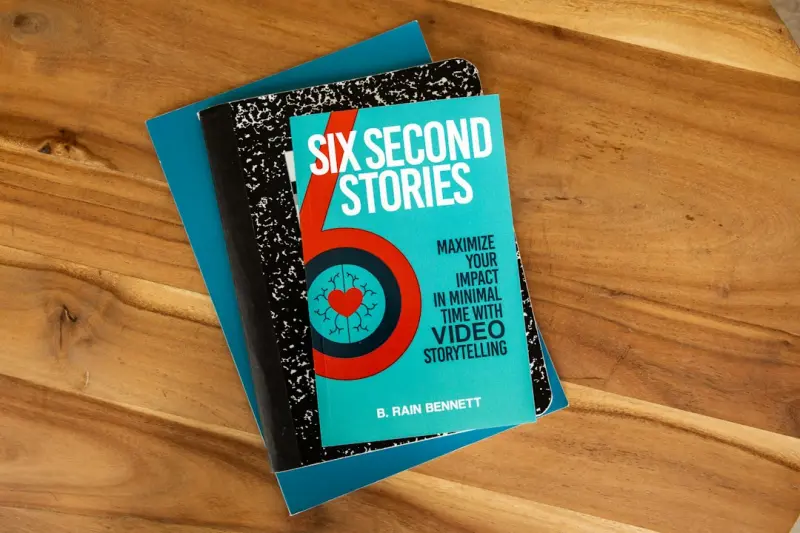
Why Micro‑Storytelling Is the Secret Weapon Your Content Strategy Needs
When I first walked into a conference room with a stack of white‑paper drafts, I realized we were treating our audience like they were reading a novel—long, dense, and demanding a full‑time commitment. In the B2B SaaS world, that approach is a relic. Modern buyers skim, switch tabs, and expect value in bite‑sized moments. The answer? micro‑storytelling—a series of tightly‑crafted, narrative‑driven snippets that collectively guide a prospect from curiosity to conversion.
The Anatomy of a Micro‑Story
Think of a micro‑story as a single, self‑contained episode that delivers three things:
- Hook: A relatable pain point or surprising insight that stops the scroll.
- Conflict: The challenge the prospect faces, framed in human terms.
- Resolution: A concise demonstration of how your solution flips the script.
When you string together 5‑7 of these episodes across a blog series, an email drip, or a LinkedIn carousel, you create a narrative arc that feels personal without demanding a novel‑length read.
Why Traditional Long‑Form Content Is Losing Its Edge
Let’s be honest: the average B2B decision‑maker spends under three minutes on any single piece of content. Long‑form pieces still have a place—think in‑depth research reports or technical guides—but they must be paired with digestible micro‑stories that act as entry points. If you launch a 12‑page white paper without a series of micro‑teasers, you risk it gathering digital dust.
Recent data from GA4’s predictive models shows a 27% higher engagement rate for content that is broken into modular, narrative chunks versus monolithic PDFs. The pattern is clear: people engage more when they can consume value in short, repeatable doses.
How to Build a Micro‑Story Framework That Scales
Start with a content map of your buyer’s journey. Identify the five most common objections or questions at each stage—awareness, consideration, decision. For each objection, craft a micro‑story that:
- Introduces a character (real customer, persona, or even an internal team member).
- Highlights a moment of friction (e.g., “Our data pipelines kept crashing during peak traffic”).
- Shows a concrete step your SaaS product took to resolve it (e.g., “We switched to an event‑driven architecture that auto‑scaled”).
Once you have a library of 20‑30 micro‑stories, you can repurpose them across formats:
- Social posts: One‑sentence hooks with a visual.
- Email sequences: A short anecdote followed by a CTA.
- Interactive quizzes: Use story fragments as question stems.
- Video shorts: 15‑second clips that dramatize the conflict‑resolution loop.
Micro‑Storytelling Meets Modern Marketing Tools
It’s tempting to think micro‑storytelling is just a creative exercise, but the right tech stack can amplify its impact dramatically. Tools that enable dynamic content stitching—think headless CMS platforms with API‑first delivery—let you serve the right micro‑story to the right audience segment in real time. Meanwhile, AI‑enhanced copy assistants can suggest hook variations, ensuring you never run out of fresh angles.
For those still hunting for the right toolkit, unlocking the hidden power of modern digital marketing tools offers a practical rundown of platforms that integrate content personalization, analytics, and automation—all the ingredients you need to make micro‑stories work at scale.
Measuring Micro‑Story Success Without Getting Lost in the Numbers
Metrics matter, but you don’t have to drown in dashboards. Focus on three high‑level signals:
- Engagement lift: Compare click‑through rates (CTR) of micro‑story posts versus traditional long‑form teasers.
- Time‑to‑conversion: Track how many touchpoints a prospect needs before moving to a qualified lead status. Micro‑stories often shave a day or two off the funnel.
- Share velocity: The speed at which a micro‑story is reshared or quoted indicates resonance.
Because micro‑stories are lightweight, you can A/B test variations quickly—swap the hook, change the visual, or adjust the conflict wording. The agility of micro‑story testing is one of its greatest advantages over the slower, monolithic content cycles of the past.
Case Study: From Data Overload to Narrative Clarity
One of our SaaS clients—an analytics platform serving Fortune 500 firms—was drowning prospects in feature‑heavy webinars. Attendance plateaued at 12%, and post‑webinar surveys showed “information overload” as the top complaint.
We distilled the core value proposition into a series of seven micro‑stories, each focusing on a single use case (e.g., “How a retail chain cut inventory errors by 30%”). These stories were distributed as short LinkedIn carousel posts, followed by an email that linked to a 5‑minute explainer video. The results?
- Webinar registrations jumped 45% after the micro‑story series went live.
- Average time on the new explainer video rose to 3 minutes 12 seconds, versus 1 minute 15 seconds on the old 30‑minute webinar.
- Qualified‑lead conversion increased by 22% within the first month.
The takeaway? When you replace dense information with narrative snapshots, prospects can more easily map your solution to their own challenges.
Integrating Micro‑Storytelling with SEO—Yes, It’s Possible
SEO isn’t just about keyword density; it’s about relevance and dwell time. Micro‑stories can boost both. By embedding concise, keyword‑rich narratives into FAQs, blog snippets, or schema‑enhanced content blocks, you create multiple entry points for search engines and users alike.
For example, a micro‑story titled “How a FinTech startup cut onboarding friction by 40%” can be optimized for long‑tail queries like “reduce onboarding friction fintech”. When paired with structured data, that snippet can appear as a rich result, driving qualified traffic without a heavy reliance on traditional long‑form SEO tactics.
Practical Tips to Keep Your Micro‑Stories Fresh
- Rotate characters: Use a mix of customer avatars, internal champions, and industry analysts to keep perspectives varied.
- Leverage real‑time data: Pull in recent statistics or trending hashtags to make stories feel timely.
- Experiment with formats: Not every story needs to be text—try GIFs, short audio clips, or even meme‑style visuals.
- Invite user‑generated content: Encourage customers to submit their own micro‑stories. This builds community and adds authenticity.
- Document the process: Maintain a living “storyboard” in your content repository so new team members can pick up the narrative flow without reinventing the wheel.
Addressing Common Objections to Micro‑Storytelling
“It’s too simplistic for a complex SaaS product.” Simplicity is a strength. Complex products become digestible when you break them into human‑centric moments. The complexity lives in the solution, not the story.
“Our brand voice is already defined; we can’t change it.” Micro‑storytelling doesn’t replace your voice; it amplifies it. The tone stays consistent—you’re just delivering it in smaller, more frequent packets.
“We don’t have the resources to produce so many stories.” Start small. One story per week is a manageable cadence. Over time, the library compounds, and you’ll have a reusable asset bank.
Putting It All Together: A 30‑Day Micro‑Story Sprint
Ready to test the waters? Here’s a quick sprint plan:
- Day 1‑3: Map the buyer journey and identify top 5 objections per stage.
- Day 4‑7: Draft 10 micro‑stories (2 per stage) using the hook‑conflict‑resolution template.
- Day 8‑10: Choose two distribution channels (e.g., LinkedIn carousel + email drip) and schedule the first wave.
- Day 11‑14: Monitor engagement metrics (CTR, shares, dwell time) and iterate on the hook.
- Day 15‑21: Publish a second wave with revised stories based on data insights.
- Day 22‑30: Conduct a mini‑audit: measure lead velocity, compare against baseline, and decide on scaling.
Even a modest pilot can reveal whether micro‑storytelling accelerates your funnel. The key is to treat each story as an experiment, not a final product.
Looking Ahead: The Future of Narrative‑Driven Content
As AI‑generated content becomes more prevalent, the differentiator will be human authenticity. Micro‑stories anchored in real experiences, emotions, and outcomes will stand out against generic, algorithm‑crafted copy. By building a robust library now, you future‑proof your content engine against the noise.
In short, micro‑storytelling is not a fad; it’s a strategic shift toward human‑first, data‑backed communication. When you give prospects a series of relatable, bite‑size narratives, you guide them gently but decisively toward the solution you offer. It’s a win‑win for marketers, sales teams, and—most importantly—your customers.

Steph Sanderson is a Toronto-based freelance writer and content creator with a clear passion: crafting compelling articles. With a dedication to clear, engaging prose and a knack for storytelling, Steph brings a wealth of experience to every project.
Related Posts

The Sprint Mindset: Reinventing Content Marketing for Speed and Impact
Learn why speed, data‑driven storytelling, and collaborative sprints are the new essentials for wi... Read More

Is It Better To Refresh Content Or Create New Pages
In the digital marketing world, content is unequivocally king, yet its reign is contingent upon rele... Read More

The Hidden Engine: Turning Customer Success into Content Gold
Learn how to capture real customer victories, turn them into versatile content formats, and build a ... Read More
Top Posts

From Street to Boardroom: The Rise of Adaptive Footwear
Adaptive footwear blends modular design with premium comfort, offering a sustainable, versatile solution for modern professionals and redefining the future of f...Read More

Best AI Video Generator of 2026: 5 Tools Worth Using for Video Creation and Talking Photos
As of June 2026 the top AI video generator does much more than what was previously thought to be their primary function. By then the best tools will also includ...Read More

The Road Ahead: How Modern Cars Inspire Creative Innovation
From engine hums to electric silence, discover how modern cars shape my creative process and inspire fresh content strategies for today’s creators....Read More

Reinventing Account‑Based Marketing with Real‑Time Orchestration
Traditional ABM is static and slow. This post shows how real‑time data orchestration can turn a list of accounts into a living, revenue‑generating conversat...Read More
0 Comments
Post Comment
You will need to Login or Register to comment on this post!