

Why Edge AI Is the Next Game‑Changer for Enterprise Tech
When I first heard the buzzword “edge AI,” I imagined a futuristic sci‑fi scene where tiny robots whisper decisions to each other in the dark corners of a data center. The reality is far more pragmatic—and far more powerful. Edge AI is about moving intelligent inference from the cloud straight to the devices, sensors, and micro‑servers that sit at the periphery of your network. This shift is not just a technical curiosity; it’s a strategic lever that can slash latency, cut bandwidth costs, and unlock new business models that were previously out of reach.
The Latency Problem That Keeps CEOs Up at Night
Traditional cloud‑centric architectures suffer from a simple, stubborn truth: distance equals delay. Every millisecond of round‑trip time adds up, especially for applications that demand real‑time responses—think autonomous drones, industrial robotics, or high‑frequency trading platforms. In many cases, the delay isn’t just a minor inconvenience; it’s a hard stop that can turn a promising product into a regulatory nightmare.
- Industrial IoT: A sensor detecting a pressure anomaly must trigger a shut‑off within seconds, not minutes.
- Retail: Personalized recommendations need to appear the instant a shopper picks up a product, not after a cloud request.
- Healthcare: Wearable devices monitoring vital signs must alert caregivers before a crisis escalates.
Enter edge AI. By processing data where it’s generated, you eliminate the back‑and‑forth that creates bottlenecks. The result? Decisions that are instantaneous, reliable, and—crucially—secure.
How Edge AI Works: A Peek Under the Hood
At its core, edge AI consists of three building blocks:
- Optimized Models: Machine‑learning models are compressed, quantized, and sometimes pruned to fit the limited memory and compute of edge devices.
- Hardware Acceleration: Specialized chips—like NVIDIA Jetson, Google Coral, or Intel Movidius—provide the horsepower needed for inference without draining power.
- Orchestration Layer: A lightweight runtime (e.g., TensorFlow Lite, ONNX Runtime) manages model updates, monitoring, and fallback to the cloud when needed.
These components work in concert to ensure that an edge node can think locally, while staying synchronized with the broader enterprise ecosystem.
Business Benefits That Extend Beyond Speed
While latency reduction is the headline, the ripple effects of edge AI touch every corner of a modern organization:
- Bandwidth Savings: By sending only the insights (e.g., “anomaly detected”) rather than raw data streams, you dramatically lower network traffic and associated costs.
- Data Sovereignty: Keeping sensitive data on‑premises helps compliance with regulations like GDPR or HIPAA, reducing exposure to cross‑border data transfers.
- Scalability: Edge nodes can be added incrementally, letting you expand capabilities without a massive cloud overhaul.
- Resilience: If the internet connection drops, edge devices continue to operate autonomously, preserving critical functionality.
Edge AI in Action: Real‑World Use Cases
Let’s explore a few vivid scenarios where edge AI is already making a tangible impact.
Smart Manufacturing Floors
Factories are outfitted with cameras that monitor assembly lines. An edge AI model detects defective parts on the fly, triggering a robotic arm to remove them before they reach the next station. The system runs at 30 frames per second with zero cloud latency, translating to a 25% reduction in waste and a measurable boost in throughput.
Connected Retail Shelves
Imagine a grocery aisle where shelves are equipped with weight sensors and vision modules. Edge AI evaluates stock levels and shopper interactions, automatically updating inventory in the ERP and prompting staff to restock. Because the inference happens locally, the shelf can alert staff within one second of a product running low, improving shelf availability and sales conversion.
Precision Agriculture
Farmers deploy drones that scan crops for signs of disease. Edge AI processes the imagery on‑board, flagging affected areas in real time. The farmer receives a heatmap on their tablet while the drone is still aloft, enabling immediate, targeted treatment and reducing pesticide usage.
Challenges You Must Tackle Before Going Edge
Edge AI is not a silver bullet; it introduces a new set of considerations:
- Model Management: Updating models across thousands of devices requires a robust CI/CD pipeline. Tools that automate versioning and rollback are essential.
- Security: Edge nodes become attack surfaces. Secure boot, encrypted inference, and regular vulnerability scans are non‑negotiable.
- Hardware Diversity: Different devices have varying capabilities. A one‑size‑fits‑all model can’t work; you need a strategy for tailoring models to each hardware tier.
- Observability: Without proper telemetry, you’ll be blind to performance degradation. Integrate metrics that capture latency, inference accuracy, and resource utilization.
Speaking of observability, I recently explored how the new observability paradigm can be applied to edge AI, turning raw logs into actionable insights that keep your distributed fleet healthy.
Getting Started: A Practical Roadmap
Ready to bring edge AI into your organization? Follow this three‑phase roadmap:
Phase 1: Pilot and Validate
Identify a high‑impact use case where latency or bandwidth is a proven pain point. Build a small proof‑of‑concept using a development kit (e.g., Raspberry Pi + Coral USB Accelerator). Measure baseline metrics—latency, data volume, accuracy—against cloud‑only benchmarks.
Phase 2: Scale and Harden
Once the pilot proves ROI, expand to a broader set of devices. Implement a centralized model registry and an automated rollout pipeline. Harden security by enabling secure boot and encrypting model files at rest.
Phase 3: Optimize and Evolve
Continuously monitor performance and iterate on model size and hardware selection. Leverage developer experience best practices to keep your engineering teams productive and motivated. Remember, edge AI is an evolving landscape; staying ahead means embracing a culture of rapid experimentation.
The Strategic Edge: Turning Technology into a Competitive Moat
Companies that embed intelligence at the edge create a moat that is hard for competitors to replicate. The moat isn’t just speed; it’s a combination of proprietary models, data collected at the source, and tightly integrated hardware‑software stacks. Over time, this ecosystem becomes a source of defensible advantage, driving both revenue growth and brand differentiation.
Future Trends to Watch
Edge AI is still in its infancy, and several emerging trends promise to accelerate its adoption:
- Federated Learning: Train models across edge devices without moving raw data to the cloud, preserving privacy while improving accuracy.
- 5G & Beyond: Ultra‑low‑latency connectivity will blur the line between edge and cloud, enabling hybrid inference pipelines.
- AI‑First Search: As search engines evolve to become more AI‑centric, optimizing your edge‑generated content for AI‑first search will become crucial for discoverability.
In short, the edge is no longer a peripheral afterthought; it’s the new core of intelligent enterprise architecture. By embracing edge AI now, you position your organization to lead the next wave of digital transformation.

When it comes to the world of blogging and writing, Rose DesRochers is a name that stands out. Her passion for creating quality content and connecting with her audience has made her a trusted voice in the industry. Aside from her skills as a writer and blogger, Rose is also known for her compassionate nature.
Related Posts

Can You Leave Chargers Plugged In All the Time?
In our modern, tech-driven lives, chargers have become ubiquitous. Whether it’s for our smartphone... Read More

The Rise of Edge AI: Redefining Real‑Time Enterprise Decision‑Making
Edge AI brings instant inference, data sovereignty, and bandwidth savings to enterprises, unlocking ... Read More

The Rise of Edge‑First SaaS: Why Proximity Beats Power
Edge‑first SaaS shifts computation and storage to the network’s periphery, delivering lower late... Read More
Top Posts

The Secret Power of Curated Experience Gifts
Turn ordinary celebrations into unforgettable memories with experience‑focused gifts that speak to personality, purpose, and lasting impact. From cooking clas...Read More

Powering the Block: How Community Microgrids are Redefining Energy Independence
Explore the rise of community microgrids—local, self‑sufficient energy networks that cut costs, boost reliability, and put power back in the hands of neighb...Read More
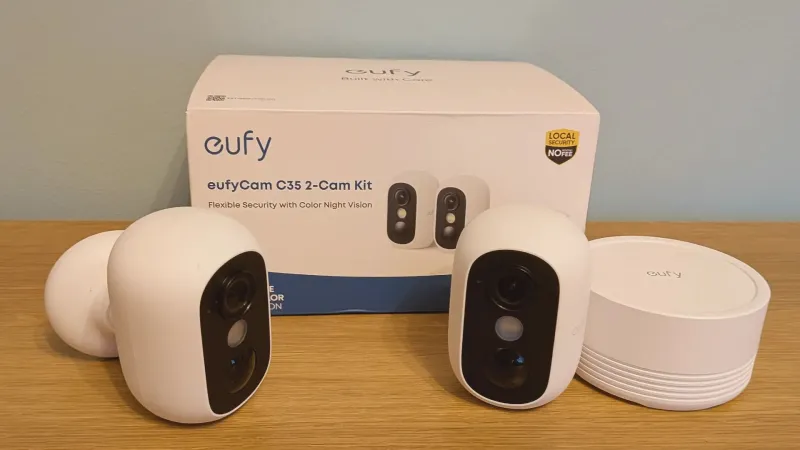
This Small Security Camera Is My New Favorite No-Subscription Choice
For years, the smart home security market has operated on a "razor and blade" business model. We buy the hardware—often at a premium—only to realize that th...Read More

Algorithmic Governance: How Code Is Quietly Rewriting Politics
A deep dive into the rise of algorithmic governance, examining the impact of AI‑generated legislation, automated lobbying, and tech‑driven campaign finance ...Read More
0 Comments
Post Comment
You will need to Login or Register to comment on this post!