
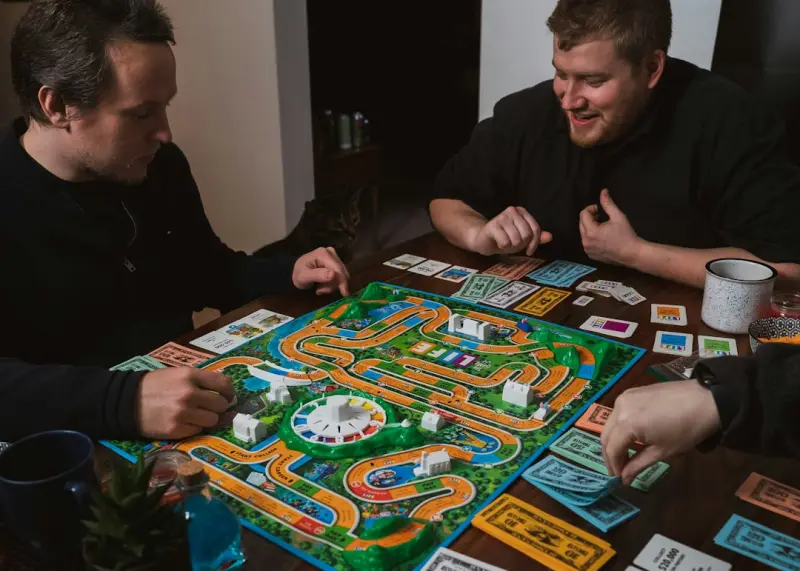
Why Play Is the New Classroom for Kids & Teens
When I was a kid, “learning” meant worksheets, flashcards, and the occasional after‑school tutoring session. Today, my own kids (and the teens I mentor) are mastering algebra while building virtual cities, writing code while designing video game levels, and exploring history through augmented reality quests. The shift isn’t a fad; it’s a fundamental re‑alignment of how young brains engage with information. In this post I’ll unpack why play‑based learning is exploding, how parents and educators can harness it responsibly, and what the next wave of interactive tools might look like.
The Science Behind Playful Learning
Neuroplasticity—the brain’s ability to rewire itself—thrives on novelty, challenge, and reward. Play naturally blends these ingredients. When a child solves a puzzle in a game, dopamine spikes, reinforcing the learning loop. Studies show that learners who engage with interactive content retain up to 30% more information than those who passively listen to a lecture.
But it’s not just about memory. Play cultivates critical thinking, collaboration, and resilience. A teen who repeatedly fails a level, recalibrates strategy, and finally succeeds is practicing the same growth‑mindset skills that CEOs value in boardrooms. The difference is the medium: a colorful avatar replaces a corporate spreadsheet, yet the cognitive muscles being exercised are identical.
From Screens to Skill‑Sets: The Rise of Gamified Education Platforms
Platforms like modular smartphone ecosystems are redefining hardware flexibility, but the real excitement lives in the software that runs on them. Imagine a modular device where a child can swap out a “science kit” module for a “music composition” module, each loaded with curated, game‑style lessons. The hardware becomes a physical manifestation of a learning path, reinforcing the idea that knowledge is not a static download but a stackable toolkit.
Similarly, TikTok’s short‑form video engine has inadvertently become a classroom. Educational creators (often called “edutokers”) break down complex subjects—quantum physics, world history, even financial literacy—into 60‑second bursts that are highly shareable. The platform’s algorithm surfaces content that aligns with a learner’s interests, creating a personalized syllabus that evolves in real time.
These tools are not just entertaining; they’re engineered with learning science in mind. Adaptive difficulty curves, instant feedback loops, and badge systems keep motivation high, while analytics dashboards give parents and teachers insight into mastery levels and knowledge gaps.
Balancing Freedom and Structure
One of the biggest concerns parents voice is “screen time.” The key is not to ban screens, but to curate the experience. Here are three practical steps to strike that balance:
- Set Intentional Sessions: Rather than open‑ended scrolling, schedule 20‑minute blocks where your child tackles a specific challenge—like building a sustainable city in a simulation game.
- Co‑Play and Discuss: Join the activity. Ask why they chose a particular strategy, what they learned, and how it might apply outside the game.
- Leverage Analytics: Many platforms provide progress reports. Review them together to celebrate wins and identify areas for deeper exploration.
When you treat digital play as a structured learning activity, the “time spent” metric becomes a quality indicator rather than a guilt‑inducing number.
Real‑World Skills Emerging from Play
Let’s break down three skill clusters that are thriving in today’s playful ecosystems:
1. Computational Thinking
Games that require logic sequencing, pattern recognition, and debugging—think block‑based coding adventures—are teaching kids the fundamentals of programming before they ever open an IDE. These skills translate directly to problem‑solving in STEM careers.
2. Digital Storytelling
Interactive narrative platforms let teens script their own stories, embed branching choices, and even publish to community hubs. They’re learning scriptwriting, visual design, and audience engagement—all while honing empathy through perspective‑taking.
3. Financial Literacy
Virtual economies in sandbox games (e.g., building a market, trading resources) expose players to concepts of budgeting, supply‑and‑demand, and risk assessment. When a teen decides to invest virtual currency in a new in‑game technology, they’re rehearsing real‑world financial decision‑making.
Case Study: A Middle School’s “Quest‑Based” Curriculum
At a progressive middle school in the Pacific Northwest, teachers replaced a traditional history unit with a “Time‑Travel Quest.” Students formed guilds, each tasked with solving a series of challenges—decoding ancient scripts, negotiating with simulated historical figures, and building timelines using an augmented reality sandbox.
Results were striking:
- Engagement rose from 45% to 87% based on student surveys.
- Retention scores on post‑unit tests improved by 28%.
- Collaboration metrics (peer‑reviewed projects) showed a 40% increase in cross‑team communication.
What made this work? The curriculum blended the intrinsic motivation of a game quest with the rigorous standards of a state‑approved history syllabus. Teachers acted as “quest masters,” guiding rather than dictating, and the technology provided real‑time data on each student’s progress.
Design Principles for Parents and Educators
When selecting a platform or designing a play‑centric activity, keep these five principles in mind:
- Alignment with Learning Objectives: The game mechanics should map clearly to the skill you want to develop.
- Scalable Difficulty: Adaptive algorithms should keep challenges within the learner’s “zone of proximal development.”
- Feedback Fidelity: Immediate, specific feedback outperforms generic praise.
- Safe Social Interaction: Moderated chat and privacy controls protect younger users while encouraging collaboration.
- Data Transparency: Choose tools that let you see the metrics behind the fun, so you can intervene when needed.
Looking Ahead: The Next Generation of Playful Learning
Emerging technologies are poised to deepen the immersion:
- Mixed Reality (MR): Imagine a history lesson where students walk through a reconstructed ancient market, interacting with virtual vendors while receiving contextual pop‑ups.
- AI‑Generated Content: Adaptive story engines could tailor narratives to each learner’s interests, creating a unique educational adventure every time.
- Wearable Haptics: Physical feedback (vibrations, pressure) could reinforce correct actions in coding puzzles or language drills, engaging kinesthetic learners.
These innovations will blur the line between “play” and “work” even further, making lifelong learning feel like an adventure rather than a chore.
Practical Takeaways for Today
To start integrating playful learning right now, try the following checklist:
- Identify one subject where your child shows curiosity.
- Find a reputable game‑based platform that aligns with that subject.
- Schedule short, regular sessions and set a clear goal for each.
- Participate: ask open‑ended questions and celebrate problem‑solving milestones.
- Review analytics together and adjust difficulty as needed.
Remember, the goal isn’t to replace textbooks entirely but to complement them with experiences that make the brain light up. When children associate learning with the thrill of discovery, you lay the groundwork for a generation that seeks out knowledge proactively.
Final Thoughts
Play has always been a catalyst for imagination. In the digital age, it has also become a powerful conduit for skill acquisition. By embracing thoughtfully designed, data‑driven games and interactive platforms, parents and educators can turn screen time into growth time, ensuring that kids and teens not only consume media but also build the competencies they’ll need for tomorrow’s challenges.

Ryan Stuart is a seasoned freelance features writer, editor, and professional photographer with a passion for exploring the world and capturing its beauty through words and images.
Related Posts
Rethinking Screen Time: A Parent’s Playbook for Digital Balance
A practical guide for parents on how to create a balanced digital diet for kids and teens, turning s... Read More

Pixel Playgrounds: How Teens Are Turning Gaming Into Real‑World Skills
From creative coding clubs to AR treasure hunts, teens are using gaming platforms to develop real‑... Read More

Navigating the Storm: A Professional Guide to Managing Adolescent Outbursts
The turbulent years of adolescence are characterized by rapid neurological development and intense e... Read More
Top Posts

Smart Industrial Products: Turning Data Into Real‑World Advantage
Industrial products are evolving from static hardware to intelligent, data‑driven systems. Learn how predictive maintenance, digital twins, modular design, an...Read More

Celebrating With Purpose: Sustainable Festivities for Modern Teams
A deep dive into how modern teams can craft memorable, sustainable celebrations that honor diversity, tell compelling stories, and leave a positive environmenta...Read More

Designing for the Human Brain: Neuro‑Friendly Web Experiences
Discover a brain‑centric approach to web design that reduces cognitive load, improves accessibility, and drives higher conversions through thoughtful layout, ...Read More

Playful Conflict: How a Little Friction Fuels Lasting Love
Learn why a little friction, approached with curiosity and humor, can be the secret ingredient for lasting love and deeper connection....Read More
0 Comments
Post Comment
You will need to Login or Register to comment on this post!