

From Static Sites to Strategic Assets: Re‑imagining Managed WordPress Hosting for Enterprise Growth
When most marketers think of WordPress, they picture a blog or a small‑business website. In reality, the platform has quietly evolved into a full‑blown content engine that powers some of the world’s largest digital experiences. The missing link for many enterprises isn’t the CMS itself—it’s the hosting layer that can turn a high‑traffic WordPress site from a cost center into a strategic growth asset.
Managed WordPress hosting isn’t a new buzzword; it’s a service model that bundles performance, security, and operational expertise into a single, predictable bill. What’s fresh, however, is the way forward‑thinking B2B SaaS companies are leveraging that model to accelerate product launches, reduce time‑to‑value for marketing teams, and unlock data‑driven personalization at scale. In this post, I’ll walk through a practical framework for turning managed WordPress hosting into a competitive advantage, and I’ll sprinkle in a couple of proven concepts—like developer experience and future‑proof SEO—that amplify the impact.
1. The Real Cost of “Just Hosting”
Most organizations start with a cheap shared host or a generic cloud VM, assuming that “hosting” is a static expense. In practice, that choice creates hidden costs that compound over time:
- Performance bottlenecks: Page‑load times directly affect conversion rates. A half‑second delay can shave off 10‑15% of revenue on high‑volume landing pages.
- Security fatigue: WordPress’s popularity makes it a prime target for bots, ransomware, and supply‑chain attacks. Patch management becomes a 24/7 operation.
- Operational overhead: Your devops team spends hours configuring caching layers, SSL certificates, and backup strategies that could be focused on core product work.
Managed hosting providers solve these problems by abstracting the underlying infrastructure into a service that is continuously optimized, monitored, and hardened. The result is a predictable cost model that scales with traffic, not with the number of manual interventions required.
2. Performance as a Revenue Engine
Enterprise marketers obsess over metrics—CTR, bounce rate, time on page—because those numbers map directly to pipeline health. Managed WordPress hosting gives you three levers to pull on performance:
- Edge‑based CDN integration: Content is cached at the edge of the network, delivering static assets in milliseconds to users worldwide.
- Smart PHP workers and auto‑scaling: When traffic spikes, the platform automatically adds PHP processes, eliminating queueing delays.
- Database optimization: Managed services often provide read replicas, query caching, and automated index tuning, keeping MySQL or MariaDB humming even under heavy load.
Case studies from large SaaS publishers show that a 400 ms improvement in core‑web‑vitals can lift lead‑generation form completions by up to 12%. That’s not a nice‑to‑have; it’s a bottom‑line driver.
3. Security That Lets You Sleep (And Scale)
Enterprises can’t afford a single breach. Managed WordPress hosts typically include:
- Daily malware scanning: Automated tools compare core files, themes, and plugins against known threat signatures.
- Web‑application firewall (WAF): Real‑time rule sets block SQL injection, XSS, and credential‑stuffing attempts before they reach the server.
- Zero‑day patching: When WordPress releases a critical update, the host applies it within minutes, often without any downtime.
These layers of defense free up your security team to focus on strategic risk assessments rather than fire‑fighting. The net effect is a reduced attack surface and a compliance posture that satisfies ISO 27001, SOC 2, and GDPR requirements out of the box.
4. The Developer Experience (DX) Advantage
Modern development teams demand frictionless workflows. A managed platform that prioritizes developer experience delivers tangible gains:
- Git‑based deployments: Push your code to a repository, and the host handles the build, test, and rollout pipeline automatically.
- Staging environments on demand: Spin up a clone of production with a single click, run A/B tests, and merge changes without affecting live traffic.
- CLI tools and API access: Automate routine tasks—like flushing caches or rotating keys—directly from your CI/CD scripts.
When developers can ship features in hours instead of days, the product roadmap accelerates, and the marketing team gains more assets to promote, creating a virtuous cycle of growth.
5. SEO That Evolves With AI
Search engines are no longer just about keywords; they’re about intent, context, and semantic relevance. Managed WordPress hosts that embed future‑proof SEO capabilities give you a leg up:
- Schema automation: Structured data is injected automatically for articles, products, and events, helping search crawlers understand your content hierarchy.
- AI‑driven content recommendations: Integrated tools suggest topical clusters based on real‑time SERP analysis, ensuring you stay ahead of emerging queries.
- Performance‑centric SEO: Core‑Web‑Vitals are monitored continuously, and the host nudges you when thresholds dip, keeping your rankings stable.
Because the hosting layer can surface these insights in real time, your SEO team stops guessing and starts iterating with data, which translates into higher organic traffic and qualified leads.
6. Multi‑Channel Personalization Without the Overhead
Enterprises increasingly need to deliver personalized experiences across web, mobile, and even IoT touchpoints. Managed WordPress hosting can act as the central hub for a headless architecture:
- REST and GraphQL endpoints: Serve content to any front‑end framework—React, Vue, or native mobile—while the host handles caching and scaling.
- Edge functions: Run lightweight JavaScript at the CDN edge to inject user‑specific data (e.g., location, segment) before the page loads.
- Integration marketplace: One‑click connectors to CDPs, marketing automation platforms, and analytics suites reduce the need for custom middleware.
This approach eliminates the “double‑stack” problem where teams maintain separate CMS and API layers, slashing operational costs and time‑to‑market for personalized campaigns.
7. Data‑Driven Decision Making at Scale
When your hosting provider offers built‑in observability dashboards, you gain a unified view of performance, security events, and user behavior. The key benefits include:
- Real‑time traffic heatmaps: Identify geographic spikes and allocate resources proactively.
- Conversion funnel overlays: Correlate page‑load times with drop‑off points to prioritize optimization.
- Alert fatigue reduction: Intelligent alerts surface only the anomalies that matter, letting your ops team focus on true incidents.
By turning raw server metrics into actionable business insights, you align technical health with revenue health—a synergy that’s hard to achieve with fragmented monitoring stacks.
8. Pricing Models That Align With Business Outcomes
Traditional hosting contracts are often based on CPU cores or raw bandwidth, which makes it difficult to predict ROI. Managed WordPress providers are moving toward outcome‑based pricing:
- Performance‑based SLAs: Pay a premium only if you exceed defined response‑time thresholds, ensuring you’re buying speed, not just capacity.
- Traffic‑tier bundles: Scale seamlessly from 10 k to 10 M monthly visits without renegotiating contracts.
- Feature‑add‑ons on demand: Enable advanced security or AI‑powered SEO modules when you need them, rather than paying for them year‑round.
This flexibility allows finance teams to forecast spend with confidence and ties the hosting expense directly to business value.
9. Migration Without the Nightmare
One of the biggest barriers to adopting managed hosting is the perceived complexity of migration. Leading providers mitigate risk with:
- Zero‑downtime cutover: DNS switchover happens after the new environment replicates all assets and passes health checks.
- Automated plugin compatibility scans: Identify any extensions that might break under newer PHP versions before the switch.
- Rollback guarantees: If something goes awry, you can revert to the previous snapshot within minutes.
The result is a smooth transition that doesn’t disrupt ongoing campaigns, SEO rankings, or user experience.
10. Building a Future‑Ready Content Architecture
Managed WordPress hosting is more than a performance boost; it’s a foundation for a content architecture that can evolve with emerging technologies. Here’s how to future‑proof your stack:
- Adopt headless patterns: Decouple the front‑end to enable progressive web apps, native mobile experiences, and even voice‑first interfaces.
- Leverage AI‑generated insights: Use hosted AI services to auto‑tag content, recommend internal linking structures, and predict content gaps.
- Standardize on APIs: Treat every piece of content—blog post, case study, product page—as a consumable resource for any channel.
When the hosting layer is already optimized for these patterns, your organization can experiment and innovate without re‑architecting the underlying infrastructure.
Conclusion: Turning Hosting Into a Competitive Moat
Managed WordPress hosting has shed its reputation as a “nice‑to‑have” convenience and is now a core component of the enterprise tech stack. By focusing on performance, security, developer experience, and data‑driven SEO, you transform a simple website into a revenue‑generating engine that scales with your ambitions.
If you’re still treating hosting as a line‑item expense, you’re leaving money on the table. Evaluate providers that offer the holistic, outcome‑based services described above, and you’ll find that the ROI isn’t just measurable—it’s exponential.

David Moore is a freelance writer specializing in two dynamic and ever-evolving fields: gambling and the tech industry. With a keen eye for detail and a knack for unraveling complex topics, David delivers insightful and engaging content that keeps readers informed and entertained.
Related Posts

Beyond Speed: How Managed WordPress Hosting Powers Agile Digital Teams
Managed WordPress hosting is more than faster page loads—it’s an enabler for agile teams, provid... Read More
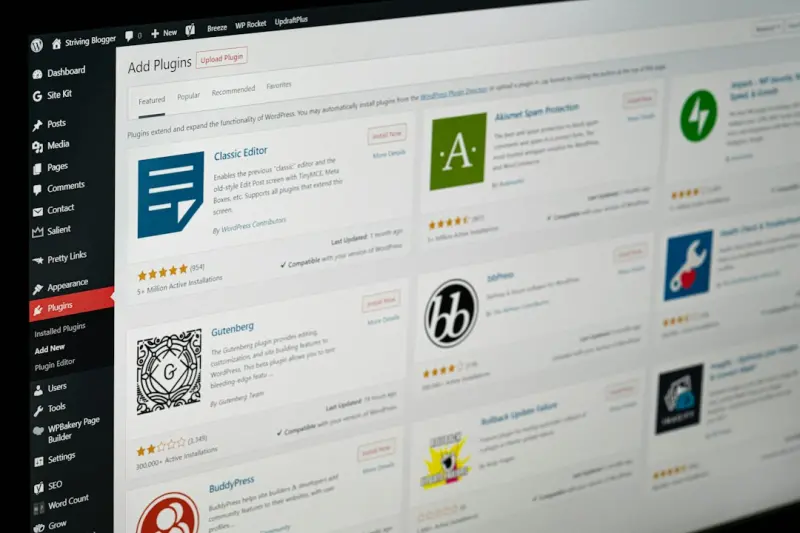
Managed WordPress Hosting: The Unsung Engine Behind B2B SaaS Growth
Managed WordPress Hosting offers enterprise‑grade performance, security, and developer workflows t... Read More

The Sustainable Edge: Eco‑Friendly Managed WordPress Hosting for Modern Enterprises
Managed WordPress hosting is evolving into a strategic asset that blends carbon‑neutral infrastruc... Read More
Top Posts

Content Marketing as a Living System: Nurturing Adaptive Narratives
Learn to treat content marketing like a living organism—using feedback loops, modular storytelling, and ecosystem alignment—to create adaptive narratives th...Read More

The Secret Power of Curated Experience Gifts
Turn ordinary celebrations into unforgettable memories with experience‑focused gifts that speak to personality, purpose, and lasting impact. From cooking clas...Read More

Playful Futures: How Modern Toys Are Shaping Tomorrow's Creators
A deep dive into the latest toy trends—from sustainable materials and DIY kits to coding toys, AR experiences, and inclusive design—showing how modern play ...Read More

ChatGPT as the Quiet Co‑Pilot for B2B SaaS Product Discovery
Laura Wilson shares her hands‑on experience turning ChatGPT into a quiet co‑pilot for product discovery, offering practical prompts, workflow integrations, ...Read More
0 Comments
Post Comment
You will need to Login or Register to comment on this post!