
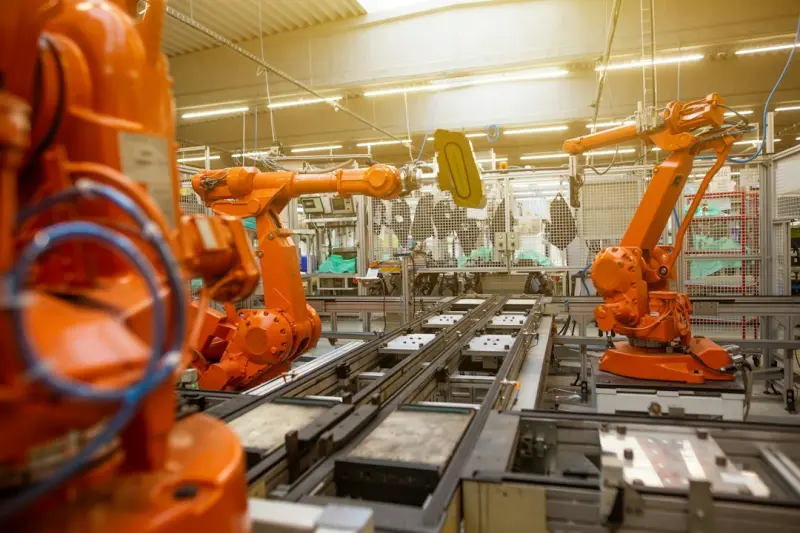
When I first walked the floor of a sprawling factory in the Midwest, I was struck by a paradox: the clatter of massive machines was juxtaposed with a subtle, almost invisible layer of data humming in the background. That whisper, I soon realized, was the heartbeat of a new era—one where physical industrial products and their virtual counterparts dance in perfect sync. This is the story of digital twins, and why they are the catalyst industrial manufacturers have been waiting for.
The Digital Twin Revolution: From Concept to Core
At its core, a digital twin is a high-fidelity, real-time digital replica of a physical asset, system, or process. It isn’t a static 3‑D model; it’s a living, breathing entity that continuously ingests sensor data, operational metrics, and environmental variables. The result? An exact, up‑to‑the‑second reflection of reality that can be interrogated, simulated, and optimized without ever stopping the machinery on the shop floor.
While the term has been floating around tech circles for a while, its adoption in the industrial sector has finally crossed the tipping point. Companies that once hesitated to digitize a single bolt now see the entire product lifecycle—from design and prototyping to field service and end‑of‑life recycling—as a single, interconnected ecosystem.
Building a Digital Twin: The Anatomy of a Virtual Clone
Creating a digital twin isn’t a one‑size‑fits‑all project; it’s an orchestrated blend of hardware, software, and strategy:
- Data Acquisition: Sensors, PLCs, and IoT gateways capture temperature, vibration, pressure, and more.
- Connectivity Layer: Secure, low‑latency networks transmit this data to the cloud or edge nodes.
- Data Fusion & Modeling: Advanced analytics merge raw streams with CAD models, creating a unified digital representation.
- Simulation Engine: Physics‑based models allow engineers to run “what‑if” scenarios without risking downtime.
- Visualization Interface: Interactive dashboards let stakeholders explore the twin in 2‑D or immersive 3‑D.
Each layer must be meticulously engineered to ensure data integrity, security, and scalability. That’s where edge hosting comes into play, delivering the low‑latency processing power needed for real‑time decision‑making right where the data is generated.
Why Industrial Manufacturers Should Care
The benefits of digital twins cascade across every department, delivering tangible ROI while also unlocking strategic advantages:
1. Predictive Maintenance
Traditional maintenance schedules are either reactive (fix it after it breaks) or preventive (replace parts on a fixed calendar). Both approaches are costly and inefficient. A digital twin, however, continuously monitors equipment health, applying machine‑learning algorithms to predict failure weeks—or even months—before it happens. This shift from “break‑fix‑repeat” to “anticipate‑act‑prevent” can slash unplanned downtime by up to 30% and extend asset life by 20%.
2. Accelerated Product Development
Prototyping physical hardware is notoriously time‑consuming and expensive. With a digital twin, engineers can simulate stress tests, fluid dynamics, and thermal performance in a virtual sandbox. Design iterations that once took weeks now happen in hours, allowing manufacturers to bring innovations to market faster and with fewer costly physical prototypes.
3. Optimized Operations
By feeding real‑time operational data into the twin, plant managers can identify bottlenecks, energy waste, and suboptimal workflows. The twin can then recommend adjustments—like recalibrating a conveyor speed or rebalancing load distribution—that improve throughput without a single manual intervention.
4. Sustainable Manufacturing
Environmental regulations are tightening, and customers demand greener products. Digital twins enable precise tracking of material usage, emissions, and energy consumption throughout the product’s lifecycle. This granularity empowers manufacturers to implement circular‑economy principles—reusing components, reducing waste, and designing for disassembly—while proving compliance to regulators.
Overcoming the Challenges: A Pragmatic Roadmap
Adopting digital twins isn’t without hurdles. Below are the most common obstacles and how to navigate them:
- Data Silos: Many factories still store sensor data in isolated systems. Break down these walls with open APIs and standardized data models.
- Legacy Equipment: Older machines may lack native IoT capabilities. Retrofit solutions—like edge adapters—can bridge the gap.
- Cybersecurity Risks: Connecting critical infrastructure to the internet expands the attack surface. Implement zero‑trust architectures and continuous monitoring.
- Skill Gaps: Engineers need fluency in data science and simulation tools. Upskilling programs and cross‑functional teams are essential.
Addressing these issues early not only smooths the implementation but also builds a resilient digital foundation for future innovations.
Integrating AI for Compliance and Governance
Beyond operational efficiency, digital twins can become powerful compliance engines. By embedding regulatory rules into the simulation logic, manufacturers can automatically verify that each design iteration meets safety, emissions, and quality standards. This approach transforms compliance from a post‑hoc audit into a proactive, continuous safeguard.
For a deeper dive on how AI can streamline regulatory adherence, explore AI‑driven compliance automation. The synergy between AI and digital twins ensures that every change—whether a material substitution or a process tweak—remains within the legal and ethical boundaries set by industry bodies.
Real‑World Success Stories
Here are three compelling examples where digital twins have already delivered measurable impact:
- Heavy‑Machinery Manufacturer: By deploying twins for their excavators, the company reduced warranty claims by 15% and cut field service travel costs by 12%.
- Wind‑Turbine Operator: A digital twin of each turbine enabled predictive blade pitch adjustments, boosting annual energy output by 4% without additional hardware.
- Automotive Supplier: Using twins for injection‑molding machines, the supplier achieved a 10% reduction in cycle time and a 7% decrease in material scrap.
These case studies underscore a simple truth: when you can see the invisible, you can control the inevitable.
The Future Outlook: From Twins to a Twin‑Driven Enterprise
Looking ahead, digital twins will evolve from isolated project tools to the nervous system of an entire enterprise. Imagine a scenario where every product, from a single bolt to a complete assembly line, is represented as a twin that communicates with its peers, enabling:
- Dynamic Supply Chains: Real‑time demand forecasts adjust production schedules on the fly.
- Adaptive Manufacturing: Machines reconfigure themselves based on twin insights to handle new product variants without downtime.
- Customer‑Centric Services: End‑users receive performance dashboards for their equipment, turning maintenance contracts into value‑added services.
In this twin‑driven future, the line between the physical and digital blurs, and manufacturers who embrace the shift will find themselves not just surviving but thriving in a hyper‑competitive landscape.
Taking the First Step
If you’re reading this and wondering where to begin, start small but think big. Identify a high‑impact asset—perhaps a critical pump or a high‑value CNC machine—and pilot a digital twin for that equipment. Use the insights you gather to build a compelling business case, then expand the framework across your portfolio.
The journey may feel daunting, but remember: every industrial revolution began with a single, bold experiment. Your digital twin could be that experiment.

Seth Samual is a name that's quickly becoming synonymous with compelling and insightful writing. As a freelance writer, Seth has carved a niche for himself by delivering high-quality content across a diverse range of subjects.
Related Posts

Circular Design: Turning Waste Into Competitive Advantage in Industrial Products
Discover practical strategies for embedding circular design into industrial products—from modular ... Read More

The Future of Industrial Products: How Sustainable Living is Revolutionizing the Industry
The industrial products sector is undergoing a significant transformation as companies prioritize su... Read More

Why Industrial Products Need a Sprint Mindset to Stay Ahead
A sprint mindset is reshaping industrial products, delivering speed, sustainability, and security. L... Read More
Top Posts

The Unseen Hand: Decoding Google's Latest Algorithm Shifts for Sustainable SEO Success
Google's algorithms are always evolving. This post, written by Michelle Fisher, dives into the latest shifts, from E-E-A-T and AI's role to the importance of us...Read More

The Future of Energy: Trends and Insights
The future of energy is rapidly evolving. Learn about the latest trends and insights shaping the energy sector, from renewable energy to energy storage and trad...Read More

Playful Innovation: How Immersive Tech Is Rewriting Childhood
A deep dive into the rise of augmented reality, programmable robotics, and maker kits shows how modern toys blend physical and digital worlds, empowering kids a...Read More

Navigating the Sophisticated Landscape of Modern Virus Programs & Cybersecurity
In the early decades of the personal computing revolution, the concept of a "computer virus" was often viewed with a sense of novelty-a digital prank or a local...Read More
0 Comments
Post Comment
You will need to Login or Register to comment on this post!