

Why Psychological Safety Is the New Competitive Edge
When we talk about safety in the SaaS world, most minds jump straight to data breaches, compliance checklists, or the latest cloud‑security framework. Those concerns are undeniably important, but there’s a quieter, more human‑focused layer of safety that’s rapidly becoming a decisive factor in product success: psychological safety. It’s the invisible shield that lets engineers, product managers, and sales reps speak up, experiment, and admit mistakes without fear of ridicule or retaliation. In high‑velocity SaaS environments, where the cost of a wrong assumption can be a missed market opportunity, psychological safety isn’t a “nice‑to‑have”—it’s a strategic imperative.
What Psychological Safety Actually Means
Coined by Harvard Business School professor Amy Edmondson, psychological safety is the shared belief that a team is safe for interpersonal risk‑taking. In practical terms, it means:
- Team members can voice dissenting opinions without worrying about being shut down.
- Failures are discussed openly, framed as learning moments rather than career‑ending blunders.
- Feedback flows freely in all directions—up, down, and across the org chart.
When these conditions exist, teams are more creative, make better decisions, and—crucially for SaaS—move faster without the hidden cost of “quiet quitting” or hidden bugs that surface months later.
Why SaaS Companies Need Psychological Safety Now More Than Ever
The modern SaaS landscape is a perfect storm of rapid iteration, distributed workforces, and AI‑augmented decision making. Each of these forces introduces new risk vectors that traditional security frameworks don’t catch:
- Speed of delivery. Continuous integration/continuous deployment (CI/CD) pipelines push code to production multiple times a day. If developers are scared to flag a flaky test, that “small” oversight can cascade into a major outage.
- Remote and hybrid teams. Physical proximity used to serve as a natural feedback loop. Now, video calls and Slack messages replace hallway conversations, making it easier for miscommunication to fester.
- AI‑driven features. Machine‑learning models make decisions that are sometimes opaque. Teams need a safe space to question model bias or data drift without being labeled as “blocking progress.”
In each case, the hidden cost of low psychological safety is reduced innovation velocity, higher churn, and a talent drain as top performers seek workplaces where they can be authentic and heard.
Measuring Psychological Safety: From Gut Feelings to Data‑Driven Insights
Just as you wouldn’t launch a new product without A/B testing, you shouldn’t assume psychological safety exists without measurement. Here are three practical methods to turn the abstract into actionable metrics:
- Anonymous pulse surveys. Deploy short, weekly surveys that ask questions like “I feel safe sharing a new idea with my team” or “I can admit a mistake without fear of blame.” Use a Likert scale and track trends over time.
- Sentiment analysis on internal communication channels. By applying natural‑language processing to Slack or Teams messages (while respecting privacy), you can surface patterns of positivity or negativity. A sudden spike in defensive language often signals a safety dip.
- Post‑mortem retrospectives. After each release or incident, conduct a blameless post‑mortem that explicitly asks, “What could we have done to feel safer raising concerns earlier?” Capture the findings in a shared knowledge base.
These data points can be visualized on a dashboard that leadership reviews monthly—making psychological safety a visible KPI alongside ARR and churn.
Embedding Psychological Safety Into Your Product Development Process
Now that you have a way to measure, let’s talk about concrete practices that embed safety into the everyday workflow.
1. Adopt a “No‑Blame” Incident Culture
When an incident occurs, focus the conversation on systemic factors, not individual fault. Use a structured template that asks:
- What went wrong?
- Why did it happen?
- What can we change to prevent recurrence?
This approach mirrors the principles discussed in no‑code enterprise platforms, where rapid iteration is encouraged but safeguards are baked in through automated testing and version control.
2. Create “Safety Sprints” Focused on Learning
Allocate a small portion of each sprint—say 10%—to exploratory work that has no guaranteed outcome. Label these as “Safety Sprints” to signal that the goal is learning, not delivering a polished feature. The explicit timebox reduces pressure to hide uncertainty, allowing teams to surface risky assumptions early.
3. Pair Programming and Cross‑Team Shadowing
When engineers pair across squads or shadow a product manager for a day, they see different perspectives and realize that asking “why” is welcomed, not punished. This practice also diffuses knowledge silos, making it easier to identify safety gaps in code or process.
4. Formalize Psychological Safety Check‑Ins
At the start of each stand‑up, ask a quick question: “Is there anything that’s holding you back from doing your best work today?” Capture answers anonymously if needed. Over time, recurring themes reveal systemic issues that need attention.
5. Leverage “Safe‑by‑Design” Principles in AI Features
When building AI‑driven SaaS products, embed safety checks like model explainability, bias detection, and human‑in‑the‑loop validation. Communicate openly about model limitations to both internal teams and customers. This transparency builds trust and reduces the fear of “black‑box” decision making.
Leadership Behaviors That Foster Psychological Safety
While processes are essential, the tone is set by leaders. Here are four habits every SaaS leader should cultivate:
- Model vulnerability. Share your own mistakes in meetings. When a VP admits a mis‑calculation in a product forecast, it signals that owning errors is acceptable.
- Invite dissent. Explicitly ask “What’s the opposite view?” before finalizing roadmaps. This simple phrase can surface hidden concerns.
- Reward curiosity. Recognize team members who ask “what‑if” questions, even if the idea isn’t pursued. Create a “Curiosity Champion” award that celebrates learning over execution.
- Normalize pauses. In high‑tempo sprint reviews, give space for a “pause” moment where anyone can ask for clarification or express discomfort with a decision.
Case Study: How a Mid‑Size SaaS Firm Turned Safety Into Revenue Growth
Acme Analytics, a B2B SaaS provider for marketing attribution, faced a churn spike after a series of minor bugs made it into production. The engineering team blamed themselves, but fear of speaking up kept the root cause—an under‑tested integration pipeline—from surfacing.
Leadership introduced a quarterly “Safety Day” where all teams reviewed incidents without blame, and they instituted anonymous pulse surveys. Within six months, the safety score rose from 3.2 to 4.6 (out of 5), and the bug rate dropped by 40%. The improved reliability led to a 12% increase in net‑new ARR because customers cited “confidence in platform stability” as a key purchase driver.
This turnaround highlights that psychological safety directly correlates with product quality and market perception—an insight echoed in the broader conversation about sustainable SaaS engineering, where long‑term resilience is prized over short‑term speed.
Integrating Psychological Safety With Existing Safety Frameworks
Many SaaS companies already have robust security and compliance programs. Psychological safety should sit alongside these, not replace them. Here’s a quick integration map:
| Traditional Safety Layer | Psychological Safety Complement |
|---|---|
| Access Controls & IAM | Clear channels for reporting access‑policy concerns without fear |
| Incident Response Plans | Blameless post‑mortems that focus on system improvements |
| Compliance Audits | Anonymous feedback loops on audit fatigue and workload stress |
| Data Encryption | Open discussions about data handling anxieties among engineers |
By pairing each technical safeguard with a human‑centric counterpart, you create a holistic safety net that protects both assets and the people who steward them.
Tools and Platforms to Accelerate Psychological Safety Initiatives
While culture is ultimately a human effort, technology can catalyze the process. Here are three SaaS tools that align well with the safety playbook:
- Pulse Survey Platforms (e.g., CultureAmp, Officevibe). Automated, anonymous surveys with real‑time dashboards.
- Sentiment‑aware Collaboration Suites (e.g., Microsoft Viva Insights). AI‑driven sentiment detection that flags toxic language trends.
- Blameless Incident Management (e.g., Blameless, PagerDuty’s Postmortem feature). Structured, blameless post‑mortems that integrate directly with CI/CD pipelines.
Adopting these tools should be done with transparency—explain why data is collected, how it’s used, and who can access it. This transparency itself reinforces psychological safety.
Future Outlook: Psychological Safety in the Age of Generative AI
Generative AI is poised to become a co‑pilot for product teams, drafting user stories, writing code snippets, and even suggesting pricing models. As AI takes on more decision‑making weight, the safety net must evolve:
- Human‑in‑the‑loop checkpoints. Before an AI‑generated feature flag goes live, require a human sign‑off that includes a safety checklist.
- Explainability dashboards. Show the data sources and confidence scores behind AI suggestions, so teams can question and validate.
- Continuous learning loops. Capture user and internal feedback on AI outputs to retrain models, ensuring the system improves without hidden bias.
These practices echo the principles of safe, sustainable development championed in the sustainable SaaS engineering movement, where long‑term health beats short‑term hype.
Actionable Checklist for Leaders
Wrap up this deep dive with a quick, printable checklist you can roll out this quarter:
- Deploy an anonymous pulse survey and review results weekly.
- Introduce a “Safety Day” or dedicated blameless post‑mortem meeting.
- Allocate 10% of sprint capacity to “Safety Sprints” for exploratory work.
- Train all managers on how to invite dissent and model vulnerability.
- Integrate sentiment analysis tools with your internal chat platforms.
- Update your incident response plan to include a psychological safety component.
- Ensure any AI‑driven feature includes a human‑in‑the‑loop checkpoint.
Implementing these steps won’t happen overnight, but each small win compounds into a culture where safety is not just a compliance checkbox—it’s a competitive advantage.
Conclusion: Safety as the Engine of Sustainable Growth
In the relentless race to ship features, capture market share, and out‑innovate competitors, the most powerful differentiator often lies hidden behind the scenes: the willingness of a team to speak up, learn, and iterate without fear. By treating psychological safety as a core pillar—measured, nurtured, and integrated with existing security frameworks—SaaS companies unlock higher velocity, better products, and stronger customer trust. In short, safety isn’t a cost center; it’s the engine that powers sustainable growth.

Tyler Johnson is a seasoned freelance writer with a keen eye for detail and a passion for crafting compelling narratives. His years of experience have honed his ability to adapt his style to suit diverse client needs and project requirements.
Related Posts

The Slow‑Living Path to Safer Digital Spaces
A deliberate, slow‑living approach to security creates deeper resilience, reduces hidden risks, an... Read More

The Rise of Scams in the Digital Age: A Growing Concern for Safety
The digital age has brought about a surge in scams, posing a significant threat to individuals and b... Read More

Beyond the Firewall: Building a Holistic Safety Net for Hybrid Teams
A three‑layer safety framework—physical ergonomics, digital operations, and psychological loadâ€... Read More
Top Posts

Staying Connected and Confident: A Senior’s Guide to Modern Tech
A senior-friendly roadmap that shows how to adopt new tech safely, learn at your own pace, and create an adaptable home, empowering older adults to stay connect...Read More
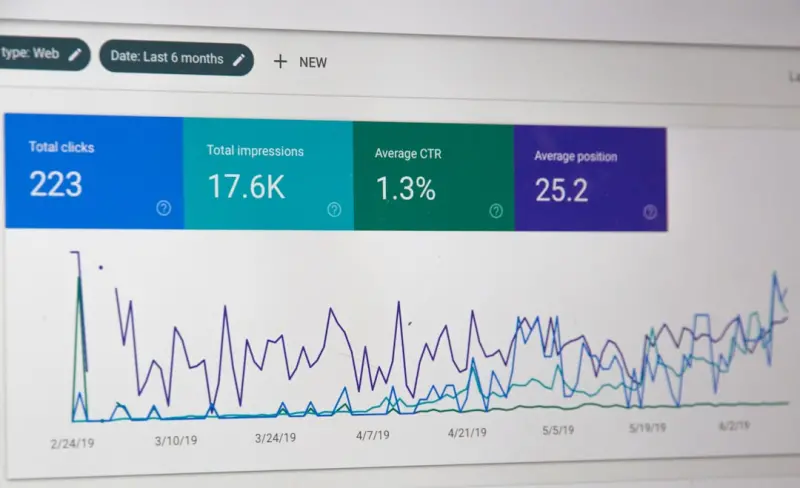
Zero‑Click SERPs: Turning Invisible Rankings into Tangible Opportunities
Zero‑click SERPs are reshaping how B2B SaaS brands get discovered. This post explains how to map intent, craft snippet‑ready content, and use structured dat...Read More
The Future of Productivity: Top Tools to Boost Efficiency
Staying productive is crucial for achieving success in today's fast-paced world. Learn how to maximize efficiency and achieve your goals with the right tools an...Read More
Designing On‑Page SEO for Conversational Search
A deep dive into structuring content, schema, and technical foundations for voice‑first search, showing how conversational SEO can drive higher rankings, rich...Read More
0 Comments
Post Comment
You will need to Login or Register to comment on this post!