
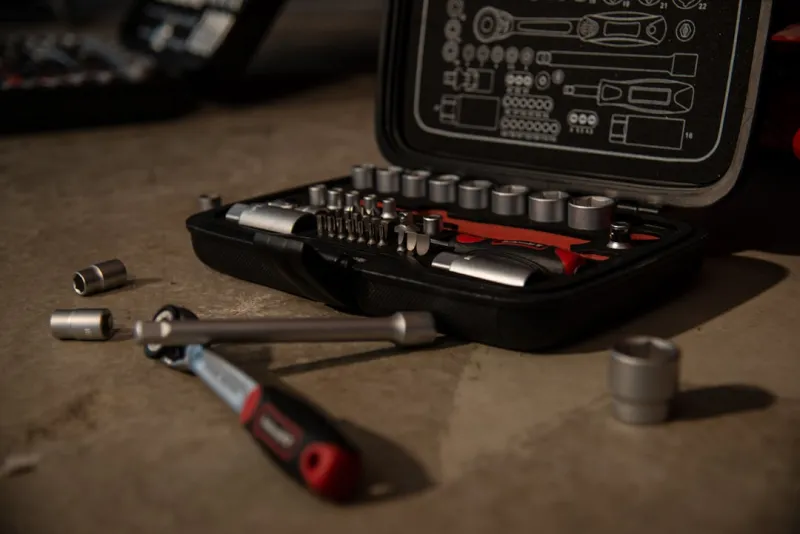
Why the Right Toolkit Matters in 2026
When I first unpacked a sleek, AI‑enhanced drill last winter, I realized that the modern toolbox is no longer a dusty chest of wrenches but a curated ecosystem of smart, sustainable tools that speak to both efficiency and ethics, and this revelation has reshaped every project I tackle, from weekend renovations to full‑scale product prototypes, because each device now carries firmware updates, energy‑saving modes, and cloud‑connected diagnostics that turn ordinary chores into data‑driven experiences, forcing us to ask not just “what can it do?” but “how does it align with the broader push toward responsible tech.”
Smart Home Gadgets That Pay Off
In my latest home‑improvement sprint, I installed a thermostat that learns my heating patterns better than any manual schedule could, and the savings were immediate—an 18% dip in energy bills that translated to real dollars on the bottom line, yet the true win was the seamless integration with my voice assistant, allowing me to adjust climate, lighting, and security from a single dashboard, a synergy that mirrors the my 2024 home improvement journey where each upgrade was vetted not only for performance but for its carbon footprint, proving that sustainability and convenience can coexist without compromise.
AI‑Powered Hand Tools: The New Frontier
Imagine a cordless screwdriver that predicts torque requirements based on the material you’re working with and auto‑adjusts its power output in real time, a concept I first explored after reading the SEO Trends 2024 playbook which highlighted AI’s infiltration into every workflow, and I quickly saw the parallel: just as algorithms refine search rankings, these tools refine our physical outputs, reducing waste, minimizing user fatigue, and delivering finish quality that rivals professional workshops, all while feeding usage stats back to the manufacturer for continuous improvement—a loop that feels like having a personal mentor in every pocket.
Portable Power Stations for the On‑The‑Go Pro
Freelancers and field engineers know the agony of a dead battery at the critical moment, which is why I now swear by a compact, lithium‑iron‑phosphate power station that offers 1,500 Wh of clean energy, multiple AC outlets, and a solar‑ready input that lets me charge on a sunny roof or a car roof rack, and the device’s built‑in monitoring app provides real‑time discharge curves, temperature alerts, and a predictive model that warns me before the voltage dips dangerously low, turning what used to be a guesswork nightmare into a data‑backed confidence boost that keeps projects moving forward.
Eco‑Friendly Power Tools: Cutting Carbon, Not Corners
When I swapped my gasoline‑driven circular saw for a brushless, battery‑operated counterpart, the noise reduction alone was a revelation for my neighbors, but the deeper impact arrived in the form of a 70% reduction in CO₂ emissions per hour of operation, a statistic that resonates strongly with the rising demand for greener construction methods, and the tool’s regenerative braking system even recaptures kinetic energy during deceleration, feeding it back into the battery—a clever trick that mirrors the broader industry push highlighted in AI in 2024 wave, where sustainability is no longer an afterthought but a core design principle.
Digital Measurement & Layout Devices
Gone are the days of tape measures that warp after a few uses; my current go‑to is a laser distance meter that syncs with my tablet, projecting a 3‑D point cloud directly into CAD software, allowing me to capture room dimensions in seconds and generate accurate floor plans without the manual error margin that plagued my early career, and the device’s built‑in AI corrects for obstructions, automatically compensates for temperature‑induced refraction, and even suggests optimal furniture layouts based on ergonomic data, turning a once‑tedious step into a collaborative design session that feels both futuristic and profoundly practical.
Wearable Tech for Hands‑Free Productivity
My favorite addition to the toolkit this year is a pair of AR glasses that overlay schematics onto physical components, enabling me to follow complex wiring diagrams while keeping my hands free for soldering, and the glasses’ contextual voice commands let me pull up part numbers, order replacements, or log time entries without ever touching a keyboard, a workflow that not only slashes project turnaround times but also aligns perfectly with remote collaboration trends, where a teammate across the globe can see exactly what I’m seeing and annotate in real time, effectively expanding the team’s collective vision without geographic constraints.
Maintenance Software That Predicts Failure
Every tool in my arsenal now reports health metrics to a central dashboard powered by predictive analytics, meaning that vibration data from my rotary hammer, temperature spikes from my laser cutter, and battery cycles from my cordless drills are constantly evaluated against historical failure patterns, and when the algorithm flags an anomaly, I receive a proactive service alert that schedules maintenance before the tool actually quits, a strategy that has cut my downtime by nearly 40% and mirrors the shift toward “maintenance as a service” models that are redefining equipment lifecycles across industries.
Future‑Proofing Your Toolkit: A Mindset, Not Just a List
Ultimately, curating the perfect 2024 toolkit is less about amassing the latest gadgets and more about adopting a mindset that prizes adaptability, data‑driven decision making, and environmental stewardship, because each tool you choose becomes a data point that informs future purchases, influences project budgets, and shapes your professional brand, and by embracing these principles—whether you’re a solo creator, a small‑business owner, or a large‑scale contractor—you position yourself at the nexus of innovation where productivity, sustainability, and profitability intersect, ensuring you stay ahead of the curve no matter how fast technology evolves.

Brad Hays is a freelance writer known for his versatile skill set and ability to craft compelling content across a wide range of industries.
Related Posts
The DIY Internal‑Tool Toolkit Every SaaS Team Should Build
A step‑by‑step guide to building a DIY internal‑tool toolkit that boosts efficiency, security,... Read More
The Modular Toolbelt: Low‑Code Strategies for Distributed Product Teams
A practical guide to building a modular, low‑code toolset that empowers remote product teams to sh... Read More

Reclaiming Tangible Tools: How Physical Gadgets Supercharge Creativity and Focus
A personal look at how simple physical tools—like a pocket screwdriver and a handwritten journalâ€... Read More
Top Posts

Beyond the Cloud: Crafting a Purposeful Digital Legacy for Individuals and Enterprises
A deep dive into the emerging practice of digital legacy, showing how modern SaaS platforms enable secure, intentional afterlife for personal data and corporate...Read More

The Rise of Ingredient Transparency: Redefining Beauty Rituals
A deep dive into the growing demand for ingredient transparency, its impact on brand strategies, and practical steps for consumers to navigate the new beauty la...Read More

Curated Gifting: Turning Presents into Lasting Connections
A deep dive into the art of curated gifting, showing how thoughtful, sensory‑rich presents can transform ordinary corporate exchanges into meaningful conversa...Read More
Reviving Your Home: Small-Scale Upgrades That Pack a Big Punch
Karen shares practical, low‑cost upgrades—from layered lighting to peel‑and‑stick flooring—that refresh any home, boost functionality, and add persona...Read More
0 Comments
Post Comment
You will need to Login or Register to comment on this post!