
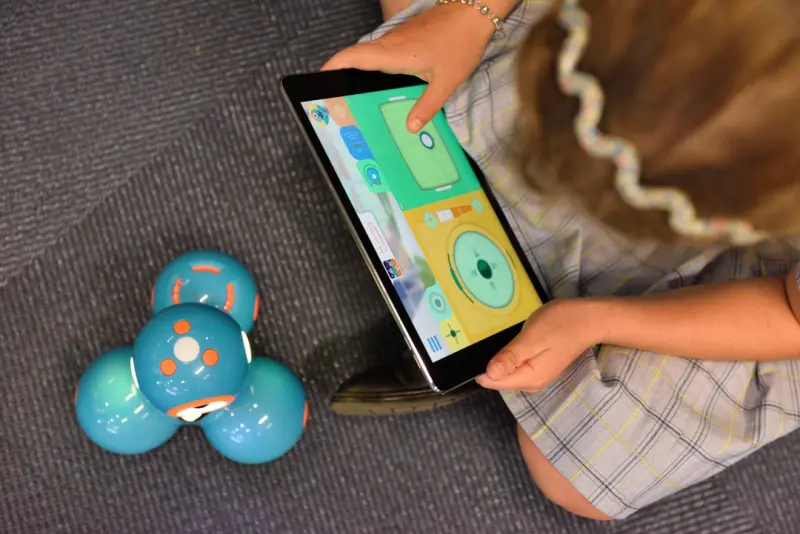
AI Learning Buddies: How Smart Companions Are Redefining Childhood Education
When I was ten, my biggest tech wish was a robot that could answer my endless “why” questions without a sigh. Fast forward a decade, and those wishes have taken shape in the form of AI‑powered learning companions that sit on a tablet, whisper through a smart speaker, or glide across a laptop screen, ready to guide kids and teens through homework, curiosity, and creative projects. This isn’t a futuristic fantasy; it’s happening in classrooms, living rooms, and after‑school clubs right now. The impact is profound, reshaping not only how children absorb information but also how they perceive learning itself.
From Static Textbooks to Conversational Coaches
Traditional textbooks present knowledge as a static block of facts, expecting students to absorb and regurgitate. AI learning buddies flip that script. By leveraging natural language processing, they can engage in back‑and‑forth dialogue, asking probing follow‑up questions that keep kids thinking critically. For instance, a child exploring the water cycle might be prompted, “What would happen if the temperature dropped suddenly?” – a question that encourages deeper analysis rather than rote memorization.
What makes these companions truly powerful is their ability to personalize in real time. They monitor a student’s response speed, confidence level, and even vocal tone to adjust difficulty on the fly. A struggling teen learning algebra might receive a series of visual analogies, while a prodigy tackling the same topic gets a challenge‑based puzzle that pushes the envelope.
Gamified Learning: Turning Tasks into Adventures
One of the biggest hurdles for educators is keeping engagement high, especially when subjects feel abstract. AI companions solve this by wrapping lessons in game‑like mechanics—points, badges, narrative quests, and instant feedback. Imagine a middle‑schooler embarking on a “Space Exploration” quest where each math problem solved fuels a virtual rocket launch. The sense of progress is immediate, and the reward loop reinforces a growth mindset.
These gamified experiences aren’t just about fun; they’re built on solid pedagogical research. By breaking down complex concepts into bite‑size, achievable goals, learners experience a series of “wins” that boost self‑efficacy. Over time, this translates into higher retention rates and a more resilient attitude toward challenges.
Bridging the Gap Between Home and School
Parents often feel sidelined when their children bring home digital assignments that require a level of tech fluency they don’t possess. AI learning buddies serve as a bridge, offering a transparent view into what the child is working on. Dashboards provide parents with summaries of topics covered, skill levels achieved, and areas needing attention, all without demanding that they become subject‑matter experts.
This transparent partnership also alleviates the “digital divide” that can emerge when families have varying access to resources. Since many AI companions run on low‑cost devices and require minimal bandwidth, they democratize access to high‑quality tutoring that previously cost upwards of $100 per hour.
Safeguarding Privacy in an Age of Data‑Hungry Apps
Any discussion about AI for kids must confront privacy concerns head‑on. Children’s data is a goldmine for advertisers, and the line between helpful personalization and invasive tracking can be thin. Reputable AI learning platforms now adopt privacy‑first architectures: data is anonymized, stored locally whenever possible, and never sold to third parties.
For families worried about oversight, many solutions offer a “parent‑controlled mode” that limits data collection and provides clear consent dialogs. It’s a critical step toward building trust, ensuring that the technology remains a tool for empowerment rather than exploitation.
The Role of Augmented Reality: Making the Abstract Tangible
When you combine AI with augmented reality (AR), the possibilities explode. Picture a teen studying human anatomy through an AR overlay that projects a beating heart onto the palm of their hand, while the AI companion narrates each chamber’s function in real time. This multimodal approach taps into visual, auditory, and kinesthetic learning styles simultaneously, leading to richer comprehension.
AR also invites collaboration. Kids can gather in a living room, each viewing the same holographic model on their device, while the AI mediates discussion, prompting each participant to explain a concept they’ve just learned. It transforms solitary study into a shared, interactive experience.
Preparing Kids for an AI‑Integrated Future
Beyond immediate academic gains, exposure to AI companions helps children develop digital fluency essential for tomorrow’s workforce. They learn to ask the right questions, interpret AI‑generated suggestions, and understand the limits of machine reasoning. In essence, they become co‑creators with technology, a skill set that will be invaluable across every industry.
Moreover, as AI tools become ubiquitous, early familiarity reduces the intimidation factor many adults feel. Kids grow up seeing AI as a collaborative partner rather than a mysterious black box, fostering a generation that can harness technology ethically and creatively.
Challenges and Considerations
- Equity of Access: While many platforms aim for low‑cost deployment, schools in underfunded districts may still lack the hardware needed for optimal AR experiences.
- Over‑Reliance on Automation: There’s a risk that learners become dependent on instant answers, stunting independent problem‑solving skills. Balanced curricula should blend AI assistance with traditional critical thinking exercises.
- Content Quality Assurance: Not all AI‑generated explanations are flawless. Ongoing oversight by educators is crucial to catch inaccuracies before they become entrenched misconceptions.
Addressing these challenges requires a collaborative effort among educators, developers, parents, and policymakers. By setting clear standards for curriculum alignment, data protection, and accessibility, the ecosystem can thrive without sacrificing integrity.
Real‑World Success Stories
Several pilot programs have already demonstrated measurable improvements. In a suburban middle school, students using AI companions showed a 15% increase in math test scores compared to peers relying on textbook-only instruction. Meanwhile, a community center’s after‑school program reported higher attendance rates when lessons incorporated AR‑enhanced AI tutors.
These outcomes aren’t isolated; they echo findings from research labs that highlight the synergy between adaptive AI and immersive technologies. As more institutions adopt these tools, the data pool will expand, refining best practices and driving further innovation.
Looking Ahead: The Next Evolution
The future of AI learning companions lies in deeper emotional intelligence. Imagine a system that detects frustration in a teen’s voice and seamlessly shifts to a more encouraging tone, or one that celebrates personal milestones with custom‑crafted animations. Combining sentiment analysis with pedagogical expertise could make these companions not just teachers, but mentors.
Another frontier is AI tutoring tools that integrate with existing classroom management platforms, offering teachers a seamless way to assign AI‑assisted projects and track progress. Such integration ensures that technology enhances—not replaces—the human touch that remains essential in education.
Finally, the rise of digital playdates provides a social dimension, allowing kids to collaborate on problem‑solving missions with peers across the globe, guided by their AI companions. This blend of social learning and personalized instruction could become the gold standard for 21st‑century education.
In sum, AI learning buddies are more than a passing trend; they are reshaping the very foundations of how children and teens acquire knowledge. By marrying conversational AI, gamified pathways, AR immersion, and robust privacy safeguards, these smart companions turn learning into an engaging, personalized adventure—one that prepares the next generation for a world where technology and human curiosity move forward hand in hand.

Seth Samual is a name that's quickly becoming synonymous with compelling and insightful writing. As a freelance writer, Seth has carved a niche for himself by delivering high-quality content across a diverse range of subjects.
Related Posts

The DIY Digital Playground: Empowering Teens to Build Skills While They Play
Learn how to transform everyday play into a powerful digital portfolio for teens, using smartphone s... Read More

Bridging the Digital Divide: How to Engage Teens Beyond Their Mobile Devices
The mobile device has become an indelible extension of the modern teenager. Far from a mere communic... Read More

Navigating the Storm: A Professional Guide to Managing Adolescent Outbursts
The turbulent years of adolescence are characterized by rapid neurological development and intense e... Read More
Top Posts

How To Transform Modern Business Strategy
Embrace a slower pace to boost profitability, employee wellness, and brand loyalty—learn the strategic advantages of slow‑living for modern businesses....Read More

Edge‑First Development: Why the Future of Web Apps Lives at the Edge
Edge‑first development moves compute and logic to the network’s edge, delivering sub‑millisecond responses, greater resilience, and a tighter feedback loo...Read More

Turning Career Paths into Playbooks: A Data‑Driven Narrative for the Modern Professional
A career playbook transforms a static résumé into a dynamic, data‑driven narrative, helping professionals map skills, run experiments, and tell compelling s...Read More

Balancing Speed and Safety: Modern Parenting Strategies for Protecting Kids
Explore how fast‑paced living impacts child safety and get actionable, modern strategies to protect your kids both online and offline....Read More
0 Comments
Post Comment
You will need to Login or Register to comment on this post!