
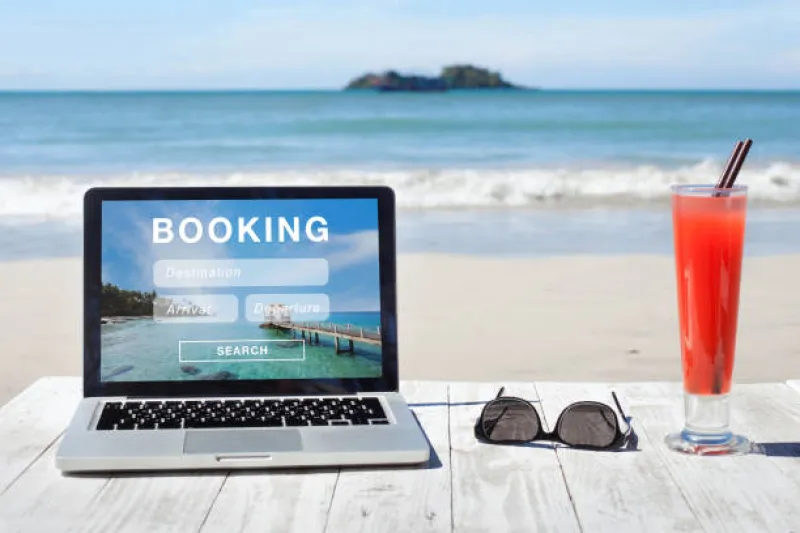
In an industry that once relied almost entirely on third‑party platforms, the balance of power is shifting. Travelers now expect seamless, personalized experiences, and property owners are increasingly aware of the hidden costs that accompany “free” exposure on large marketplaces. A dedicated, direct‑booking website is no longer a nice‑to‑have add‑on; it is a strategic asset that can safeguard profitability, strengthen brand identity, and deepen the relationship with guests. Below, we explore the most compelling reasons why every vacation rental—whether a single‑unit cottage or a portfolio of villas—should have its own online reservation hub.
1. Control Over Pricing and Revenue Management
a) Eliminate Commission Drain
Most major listing sites charge commissions ranging from 10 % to 20 % on each reservation. While they provide traffic, they also eat into the margin on every night booked. A direct‑booking website removes that middleman, allowing owners to retain the full rate they set.
b) Dynamic Pricing Flexibility
When you control the booking channel, you can implement sophisticated pricing rules—seasonal rates, last‑minute discounts, early‑bird incentives, and minimum‑stay requirements—without the constraints imposed by a third‑party’s algorithm. Integration with revenue‑management tools becomes straightforward, enabling real‑time adjustments based on occupancy, local events, or competitor activity.
c) Protect Against Price Undercutting
Some platforms encourage owners to lower rates to improve visibility, which can trigger a race to the bottom. A private website lets you maintain a consistent price strategy aligned with your brand positioning, preserving perceived value and preventing devaluation of the market.
2. Ownership of Guest Data and the Customer Journey
a) Complete Visibility of Guest Profiles
When reservations flow through an external platform, the owner receives only a limited snapshot—name, dates, and payment confirmation. Direct bookings provide full access to contact details, preferences, past stay history, and even feedback. This data is the foundation for targeted marketing, personalized communication, and repeat‑business strategies.
b) Building a Guest Database
A robust guest database enables segmentation: families, couples, corporate travelers, or repeat guests. With this intelligence, you can craft tailored email campaigns—off‑season promotions, loyalty rewards, or upsell offers for additional services such as private chefs or guided tours.
c) Seamless Post‑Stay Engagement
Beyond the checkout, the direct‑booking channel serves as a conduit for post‑stay surveys, thank‑you notes, and invitations to join a loyalty program. Maintaining the relationship after the stay is far easier when you own the contact information and are not limited by a platform’s communication policies.
3. Brand Development and Differentiation
a) A Unique Digital Identity
A custom website reflects the personality of your property—its design, storytelling, and visual aesthetics. While listing sites present your unit within a homogenous grid, a dedicated site allows you to showcase local culture, curated experiences, and the distinctive features that set your rental apart.
b) Enhanced Credibility and Trust
Professional branding—high‑resolution photography, virtual tours, and comprehensive amenity lists—instills confidence in prospective guests. When visitors see a polished, standalone website, they perceive the owner as a serious, trustworthy host rather than an anonymous listing among thousands.
c) SEO Benefits and Long‑Term Visibility
Search engines reward sites that provide valuable, original content. By optimizing your website for keywords such as “beachfront villa in [Destination]” or “pet‑friendly cabin near [Attraction],” you can attract organic traffic that does not depend on the fluctuating algorithms of listing platforms. Over time, this creates a stable, cost‑effective acquisition channel.
4. Cost‑Effective Marketing and Advertising
a) Direct Advertising ROI
Pay‑per‑click campaigns, social media ads, and influencer collaborations can be directed straight to your booking page. Unlike platform listings where you pay for visibility but still give up a commission, advertising to a proprietary site converts clicks into full‑price bookings, maximizing return on ad spend.
b) Email Marketing Autonomy
With a guest database, you can nurture leads via newsletters, seasonal updates, and exclusive offers. Email marketing platforms provide detailed analytics—open rates, click‑throughs, and conversion metrics—allowing you to refine messages without interference from a third‑party’s marketing rules.
c) Partnerships and Referral Programs
A direct‑booking site can host affiliate links or referral codes for local businesses, tour operators, and travel agents. When guests book through these partners, you can track conversions and share revenue, creating a mutually beneficial ecosystem that is impossible to manage from within a generic marketplace.
5. Enhanced Guest Experience and Operational Efficiency
a) Streamlined Reservation Process
A well‑designed booking engine offers instant confirmation, flexible payment options (credit card, PayPal, split payments), and the ability to add extras—airport transfers, cleaning services, or equipment rentals—directly at checkout. Guests appreciate the transparency and speed, which reduces friction and abandonment rates.
b) Automated Communication Workflow
Integrated booking systems trigger automated messages: pre‑arrival instructions, check‑in codes, Wi‑Fi passwords, and local guidebooks. These touchpoints reduce manual workload for the host while delivering a consistent, high‑quality experience that aligns with modern traveler expectations.
c) Real‑Time Calendar Synchronization
Direct‑booking platforms can sync with external channel managers, ensuring that availability updates across all distribution channels instantly. This eliminates the risk of double bookings and the headaches associated with manual calendar management.
6. Risk Mitigation and Legal Safeguards
a) Secure Payment Processing
Owning the checkout process lets you choose PCI‑compliant payment processors that offer fraud detection, chargeback protection, and flexible payout schedules. Relying on a marketplace’s payment system ties you to their terms, which may change without notice.
b) Customizable Terms and Policies
Your direct website can host tailored rental agreements, cancellation policies, and house rules that reflect the unique aspects of your property. This legal clarity protects both the host and the guest, reducing disputes and providing a clear framework for resolution.
c) Data Privacy Compliance
With increasing regulations such as GDPR and CCPA, controlling how guest data is collected, stored, and used becomes critical. A private site allows you to implement privacy policies and consent mechanisms that meet legal standards, whereas a third‑party platform may handle data in ways you cannot control.
7. Scalability for Multi‑Property Portfolios
If you own several vacation rentals, a single direct‑booking website can serve as a central hub that showcases each property, offers cross‑selling opportunities, and consolidates reservations into one management dashboard. This unified approach simplifies operations, improves brand cohesion, and provides guests with the flexibility to book multiple stays in one transaction.
8. Future‑Proofing Your Business
The travel landscape is dynamic—new distribution channels emerge, consumer preferences evolve, and technology reshapes how people discover accommodations. By establishing a direct‑booking website now, you build a foundation that can adapt to these changes. Whether you later integrate AI‑driven chatbots, virtual reality tours, or blockchain‑based payment solutions, you will already have the digital infrastructure in place to experiment and innovate without being constrained by a platform’s roadmap.
Putting It All Together: A Roadmap to Launch
Domain & Branding
Secure a memorable domain that reflects your property’s name or location. Invest in a professional logo and visual identity that will carry across all touchpoints.Booking Engine Selection
Choose a reservation system that offers real‑time calendar sync, automated emails, and secure payment gateways. Many providers also include built‑in SEO tools and analytics dashboards.Content Creation
Commission high‑resolution photography, create virtual tours, and write compelling copy that tells the story of your property and its surroundings. Include practical information—local attractions, transportation options, and seasonal events—to improve search relevance.SEO & Local Listings
Optimize each page for target keywords, add schema markup for vacation rentals, and claim listings on Google Business and local tourism boards. Encourage satisfied guests to leave reviews on Google and TripAdvisor, as these signals boost organic ranking.Marketing Launch
Deploy a multi‑channel campaign: targeted social media ads, email outreach to past guests, and collaborations with local influencers. Direct all traffic to your booking page, tracking performance with UTM parameters and Google Analytics.Continuous Optimization
Monitor conversion rates, bounce rates, and guest feedback. A/B test landing page designs, adjust pricing rules, and refine automated messaging to improve the overall experience and revenue.
Final Thoughts
A direct‑booking website is more than a digital brochure; it is a strategic platform that empowers vacation‑rental owners to reclaim control over pricing, data, branding, and guest relationships. While third‑party marketplaces will continue to play a role in discovery, relying solely on them leaves you vulnerable to high commissions, limited analytics, and a diluted brand identity. By investing in a dedicated site, you create a sustainable, scalable channel that maximizes profitability, nurtures loyalty, and positions your rental to thrive in an ever‑changing travel ecosystem. The effort required to build and maintain such a site is modest compared with the long‑term gains—both financial and experiential—that it delivers. For any serious host, the question is no longer “if” but “when” to make the move toward direct bookings. The answer, undeniably, is now.

Lauren Miller is a true outdoors enthusiast who has found her passion in the trades. When she's not working hard on the job, you can find her writing, camping, fishing, and exploring all that nature has to offer. A dedicated partner to her wife Beth, Lauren loves nothing more than spending quality time together and experiencing the great outdoors side by side.
Related Posts

Wanderlust Unleashed: My 2024 Travel Playbook from Beaches to Backroads
Miranda Murphy shares her 2024 travel playbook, from sustainable journeys and pet-friendly hacks to ... Read More

How a Capsule Wardrobe Transforms Every Adventure
Learn to pack smarter with a capsule wardrobe: fewer items, more freedom, and sustainable travel tip... Read More

Turning Workdays into Wander Days: The Remote‑First Vacation Revolution
A guide to remote‑first vacations that merges productivity with adventure, offering tech tips, iti... Read More
Top Posts

Turning Safety into a Subscription Service: How SaaS Can Monetize Risk Management
Safety is evolving from a static checkbox to a revenue‑generating service. This post shows how SaaS companies can embed continuous risk assessment, modular co...Read More

Sneaker Culture Meets Sustainable Luxury: A Fresh Look at Tomorrow’s Wardrobe
A deep dive into how sneaker culture, sustainable materials, and smart accessories are reshaping fashion, offering practical steps for building a conscious caps...Read More

Beyond Screens: How Real‑World Projects Reignite Curiosity in Remote Learners
Real‑world projects give remote learners purpose and connection, turning screen fatigue into active, collaborative problem‑solving that deepens understandin...Read More

Unlocking the Hidden Potential of Google’s Generative AI for B2B SaaS Growth
Discover how Google’s Gemini and Duet AI can accelerate product design, personalize experiences at scale, and deliver AI‑powered insights, giving B2B SaaS c...Read More
0 Comments
Post Comment
You will need to Login or Register to comment on this post!