
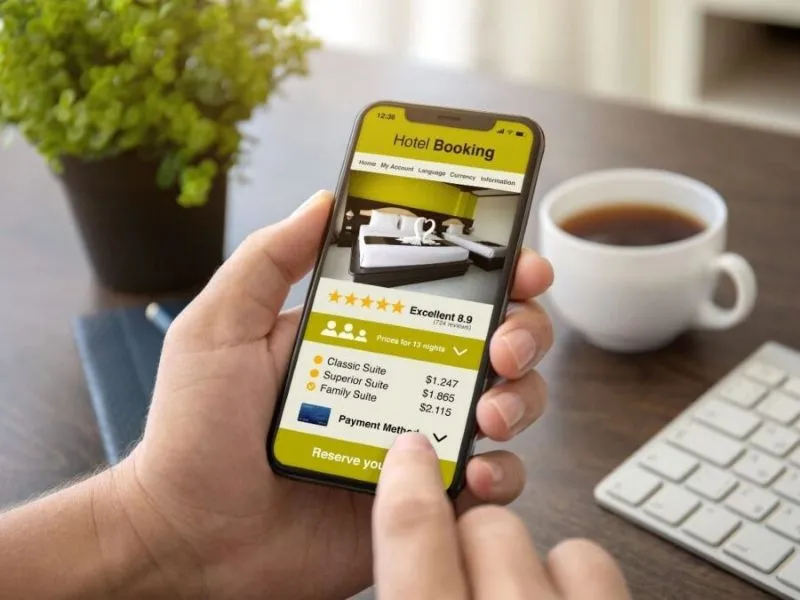
When you pull up a map on your phone and spot that perfect destination, the next step is almost always the same: securing a place to stay. In an age where a single tap can lock in a room for a weekend getaway or a three‑month work‑cation, the market is flooded with hotel‑booking apps promising the best rates, the most flexible policies, or the most “local” experiences. With so many options, how do you separate the genuinely useful tools from the flashy but ultimately mediocre ones?
This guide breaks down the leading hotel‑booking apps—Booking.com, Expedia, Airbnb, HotelTonight, Agoda, Trip.com, Kayak, Priceline, Trivago, and Hotels.com—evaluating them against a set of professional criteria: price transparency, inventory depth, user experience, loyalty rewards, and post‑booking support. By the end, you’ll know which app (or combination of apps) will consistently deliver the best value for your travel budget and preferences.
What Makes a Hotel‑Booking App “Best”?
Before diving into individual platforms, it’s worth outlining the five pillars that define a top‑tier hotel‑booking app.
| Criterion | Why It Matters | What to Look For |
|---|---|---|
| Price Transparency | Hidden fees and ambiguous taxes can turn a “great deal” into a costly surprise. | Clear breakdown of room rate, taxes, and service charges before checkout. |
| Inventory Depth | A broad selection—from boutique B&Bs to multinational chains—ensures you can find a property that truly fits your needs. | Access to global inventory, including local partner hotels that are not listed on other sites. |
| User Experience (UX) | A cluttered interface wastes time and can cause booking errors. | Intuitive navigation, robust filtering, high‑quality photos, and fast loading times. |
| Loyalty & Rewards | Frequent travelers benefit from points, upgrades, or cash‑back that can offset future stays. | Earnable points on every reservation, tiered benefits, and easy redemption. |
| Post‑Booking Support | Unexpected changes happen—cancellations, early check‑ins, or room issues require prompt assistance. | 24/7 customer service, in‑app chat, and a clear cancellation policy. |
Each of the ten apps examined below is judged against these pillars, with a brief “Pros / Cons” snapshot for quick reference.
1. Booking.com – The All‑Rounder
Overview
Founded in 1996, Booking.com has grown into the world’s largest online travel agency (OTA) by inventory, boasting over 28 million listings that span hotels, apartments, hostels, and even unique properties like castles. Its mobile app mirrors the desktop platform’s breadth with a polished, user‑friendly design.
Why It Excels
- Price Transparency: The app shows a “total price” upfront, including taxes and optional fees, and highlights “free cancellation” when available.
- Inventory Depth: No other app rivals its sheer number of properties, especially in emerging markets where local boutique hotels rely on Booking.com for exposure.
- Loyalty: The Genius program automatically upgrades frequent users to a 10‑15 % discount plus perks such as late checkout.
Potential Drawbacks
- Rewards are limited compared with dedicated loyalty programs (e.g., Hotels.com).
- Dynamic pricing can cause nightly rates to fluctuate sharply after you leave the app, though the “price guarantee” policy attempts to mitigate this.
Bottom Line – Ideal for travelers who value a massive selection and transparent pricing, especially when booking at the last minute.
2. Expedia – The Integrated Travel Hub
Overview
Expedia bundles flights, car rentals, and activities with its hotel booking function, making it a one‑stop shop for comprehensive trip planning. The app’s design emphasizes “bundles” that can yield up to 30 % savings.
Why It Excels
- Bundling Power: Combine a flight and hotel for a lower overall cost—a boon for business travelers and vacationers alike.
- Loyalty Program:Expedia Rewards offers points on every booking, redeemable for discounts, upgrades, or even free nights after 10 000 points.
- Support: 24/7 phone and chat support, plus a “Trip Assistant” feature that aggregates all reservations in one timeline.
Potential Drawbacks
- Interface Overload: The emphasis on multi‑service bundles can clutter the hotel‑search experience for users who only want a room.
- Occasional “Best Price” Conflict: Expedia may not always match the lowest price found on a competitor’s site, especially for smaller independent hotels.
Bottom Line – Best for travelers who appreciate an integrated itinerary and want to earn rewards across multiple travel categories.
3. Airbnb – The Experience‑Centric Platform
Overview
While traditionally known for short‑term home rentals, Airbnb has expanded its “Airbnb Hotels” category, offering professional properties that meet the platform’s standards for safety, hospitality, and consistency.
Why It Excels
- Unique Stays: From treehouses in Costa Rica to lofts in Manhattan, Airbnb’s inventory includes experiences that traditional hotels can’t match.
- Community Trust: The review system, host verification, and “Superhost” badge help assure quality.
- Flexibility: Many listings allow free cancellation up to 24 hours before check‑in, and the platform often provides “instant booking” for vetted hosts.
Potential Drawbacks
- Price Transparency: Service fees and cleaning charges are sometimes disclosed only after you’ve entered payment details.
- Limited Loyalty: Airbnb does not have a points‑based rewards program; discounts are typically limited to “Airbnb credit” for future stays.
Bottom Line – Ideal for travelers seeking a more local, experiential stay rather than a conventional hotel room.
4. HotelTonight – The Spontaneous Traveler’s Companion
Overview
HotelTonight carved its niche by focusing on last‑minute bookings, offering discounted rooms for same‑day or next‑day stays. Its sleek, minimalist UI emphasizes speed.
Why It Excels
- Speed: With just a few taps, you can secure a boutique hotel or upscale chain at a reduced rate.
- Curated Selection: The app presents a hand‑picked list of “Top Picks” based on location, price, and user ratings, reducing decision fatigue.
- No Hidden Fees: The displayed price is the final amount you’ll pay.
Potential Drawbacks
- Limited Inventory: Because the platform focuses on surplus rooms, availability can be scarce in low‑season markets or smaller cities.
- Lack of Loyalty Program: Frequent users do not accrue points or receive tiered benefits beyond occasional promotional offers.
Bottom Line – Perfect for impromptu getaways or business trips where a room is needed quickly and at a discount.
5. Agoda – The Asia‑Focused Powerhouse
Overview
Owned by Booking Holdings, Agoda excels in the Asian market, offering a massive selection of hotels, villas, and serviced apartments across the region. The app also supports a robust “secret deals” section.
Why It Excels
- Regional Strength: In markets such as Thailand, Japan, and Indonesia, Agoda lists properties not found on Western OTAs.
- Price Guarantee: If you find a lower price elsewhere within 24 hours of booking, Agoda will match it and give a $5 credit.
- Loyalty: The Agoda Rewards program gives points for each stay, which can be redeemed for discounts up to 30 % on future bookings.
Potential Drawbacks
- Interface Complexity: While powerful, the app’s filter system can be overwhelming for casual users.
- Customer Service: Support is strong in Asia but may be slower for users in Europe or the Americas.
Bottom Line – The go‑to app for Asian destinations, especially for travelers seeking deep local inventory and competitive pricing.
6. Trip.com – The Global, Multi‑Language Solution
Overview
Trip.com, part of the Chinese Ctrip Group, has expanded far beyond its origins in China to become a truly global travel platform. It offers hotels, flights, trains, and even visa services.
Why It Excels
- Multi‑Language Support: The app operates in 20+ languages, making it friendly for non‑English speakers.
- Cross‑Border Deals: Trip.com often negotiates special rates for Chinese tourists traveling abroad, and vice versa.
- Loyalty: The Trip.com Points system offers tiered benefits, including free breakfast, room upgrades, and exclusive offers.
Potential Drawbacks
- Price Transparency: Some users report that taxes and fees appear only at the final checkout stage.
- Regional Bias: While expanding, the best deals still often concentrate on routes and hotels popular with Chinese travelers.
Bottom Line – A solid choice for international itineraries, especially when you need multi‑language assistance or are traveling to/from Asia.
7. Kayak – The Meta‑Search Maestro
Overview
Kayak distinguishes itself by aggregating results from multiple OTAs—including Booking.com, Expedia, and Hotels.com—giving users a comprehensive view of price options across platforms.
Why It Excels
- Comprehensive Comparison: Kayak’s “price graph” shows historical trends, helping you decide the optimal booking window.
- Filters & Alerts: Set price alerts for specific hotels or dates; the app notifies you when rates drop.
- All‑in‑One Dashboard: Manage flights, cars, and hotel reservations from a single interface.
Potential Drawbacks
- No Direct Booking: While you can click through to the partner site, you never actually book inside Kayak, meaning you miss out on any Kayak‑exclusive offers or loyalty points.
- Variable Loyalty Integration: Since bookings happen on external sites, you need separate accounts to earn points on each OTA.
Bottom Line – Best for the data‑driven traveler who wants to verify they’re getting the lowest possible price across the market.
8. Priceline – The Discount‑Focused OTA
Overview
Priceline is famous for its “Express Deals” and “Name Your Own Price” (now discontinued for hotels but still a legacy in the brand’s DNA). The app emphasizes steep discounts on brand‑name hotels.
Why It Excels
- Express Deals: Secure significant savings—often 30‑40 %—by booking a room without seeing the exact hotel name until after purchase. Ideal for flexible travelers.
- Loyalty – Priceline VIP: Earn points on every stay that can be redeemed for instant discounts, plus perks like free Wi‑Fi and late checkout for frequent bookers.
- Transparent Cancellation Policies: Each listing clearly displays the cancellation deadline and fees.
Potential Drawbacks
- Limited “Visible” Options: For travelers who want to see the exact property before booking, the Express Deal model may feel restrictive.
- Interface Overlap: The app blends classic hotel listings with Express Deals, occasionally causing confusion.
Bottom Line – Perfect for price‑sensitive travelers who can be flexible on hotel identity in exchange for deeper discounts.
9. Trivago – The Comparison Engine with a Twist
Overview
Trivago is a hotel‑search engine that aggregates rates from a wide array of OTAs, displaying them in a visually appealing grid format. Its mobile app mirrors the website’s “price‑compare” philosophy.
Why It Excels
- Visual Comparison: Large thumbnail images make it easy to scan offerings at a glance.
- User Reviews Integration: Pulls in ratings from multiple sources—including TripAdvisor and Google—providing a balanced view.
- Deal Alerts: Set up notifications for specific hotels; Trivago will alert you when a lower price appears.
Potential Drawbacks
- No Direct Booking: As with Kayak, you are redirected to the source OTA, meaning no single loyalty program is attached to a Trivago reservation.
- Potential for “Ads” Bias: Some listings are sponsored; while clearly marked, they can give the impression of higher ranking.
Bottom Line – A strong auxiliary tool for travelers who want a quick visual snapshot of price options across many sites.
10. Hotels.com – The Reward‑Centric Classic
Overview
Owned by Expedia Group, Hotels.com focuses exclusively on accommodations. Its standout feature is the Hotels.com Rewards program, which gives a free night after ten bookings.
Why It Excels
- Loyalty Incentive: The “stay 10 nights, get 1 free” model is simple and tangible, appealing to frequent travelers.
- Price Match Guarantee: If you find a lower rate on a competitor’s site, Hotels.com will match it and give a $25 credit.
- User‑Friendly Filters: Robust sorting options (e.g., “Family‑Friendly,” “Pet‑Friendly”) help niche travelers find suitable properties quickly.
Potential Drawbacks
- Limited Global Reach: While extensive, Hotels.com’s inventory can be thinner in certain emerging markets compared with Booking.com or Agoda.
- App Design: The UI feels dated relative to newer competitors, though functionality remains solid.
Bottom Line – Ideal for loyal, repeat hotel guests who value a clear, easy‑to‑understand rewards structure.
Comparative Snapshot
| App | Best For | Key Strength | Loyalty Program | Typical Discount Range |
|---|---|---|---|---|
| Booking.com | Wide inventory, transparent pricing | Massive global catalog | Genius (10‑15 % off) | 5‑20 % |
| Expedia | Bundled travel (flight + hotel) | Integrated itinerary | Expedia Rewards (points) | 10‑30 % on bundles |
| Airbnb | Unique, local experiences | Diverse non‑traditional stays | None (credit only) | Varies; often 5‑15 % |
| HotelTonight | Last‑minute bookings | Fast, curated list | None | 15‑40 % |
| Agoda | Asian destinations | Regional depth, secret deals | Agoda Rewards (points) | 5‑25 % |
| Trip.com | Multi‑language, cross‑border travel | Global coverage, visa help | Trip.com Points | 5‑20 % |
| Kayak | Price comparison, data insights | Meta‑search across OTAs | None (depends on source) | 5‑30 % |
| Priceline | Discount‑focused, flexible stays | Express Deals | Priceline VIP (points) | 30‑40 % |
| Trivago | Visual price comparison | Thumbnail grids, aggregated reviews | None (depends on source) | 5‑25 % |
| Hotels.com | Loyalty‑driven guests | Free night after 10 stays | Hotels.com Rewards | 5‑20 % |
How to Choose the Right App for Your Next Trip
- Define Your Primary Goal – Are you chasing the lowest price, the most unique stay, or a blend of flight and hotel savings?
- Consider Your Travel Frequency – If you book dozens of nights a year, a rewards program (Hotels.com, Expedia, or Agoda) could translate into substantial savings.
- Check Regional Strength – For Southeast Asian itineraries, Agoda or Booking.com may offer the deepest inventory. For European city breaks, Booking.com and Hotels.com dominate.
- Assess Flexibility Needs – Last‑minute planners will benefit from HotelTonight, while those who can plan ahead may extract better deals via Kayak’s price‑trend alerts.
- Mind the Fine Print – Always review cancellation policies, especially on “Express Deal” or “Secret Deal” listings where restrictions can be stricter.
Future Trends to Watch
- AI‑Powered Personalization – Apps like Booking.com and Expedia are integrating AI to suggest hotels based on past preferences, travel purpose, and even local weather.
- Unified Loyalty Platforms – We anticipate a trend toward “meta‑loyalty” where points earned on one OTA can be transferred or redeemed across others, simplifying value accumulation.
- Sustainable Booking Filters – Growing traveler concern for environmental impact is prompting apps (e.g., Airbnb and Agoda) to tag eco‑certified properties, a feature likely to become standard.
- Instant Verification & Check‑In – Mobile keys and digital ID verification are gaining traction, reducing the need for front‑desk interaction—a convenience heavily championed by HotelTonight and Booking.com.
Final Recommendation
No single app can claim absolute supremacy across all travel scenarios. However, a strategic combination of two or three platforms often yields the best results:
- Primary Search & Booking: Use Booking.com for its unrivaled inventory and transparent pricing.
- Price Verification & Alerts: Run parallel searches on Kayak or Trivago to ensure you’re not missing a lower rate.
- Loyalty Accumulation: If you frequently stay in hotels, funnel most bookings through Hotels.com (for the free‑night reward) or Agoda (for points and Asian deals).
- Last‑Minute Flexibility: Keep HotelTonight installed for those spontaneous trips where a room appears just hours before arrival.
By layering the strengths of each app, you capture the best possible price, earn meaningful rewards, and preserve the flexibility needed for modern travel.
Travel is as much about the journey as the destination. With the right digital tools in your pocket, you can spend less time hunting for a room and more time savoring the experiences that truly matter.

In the world of freelance writing, where creativity and adaptability are paramount, Michelle Fisher stands out as a dedicated and versatile professional. With a passion for crafting compelling narratives and a keen eye for detail, Michelle has established herself as a trusted voice.
Related Posts

When the Road Becomes a Lab: Turning Travel Into a Personal Innovation Playground
Discover how treating each journey as a low‑stakes prototype can spark fresh product insights, str... Read More

Turning Workdays into Wander Days: The Remote‑First Vacation Revolution
A guide to remote‑first vacations that merges productivity with adventure, offering tech tips, iti... Read More

How a Capsule Wardrobe Transforms Every Adventure
Learn to pack smarter with a capsule wardrobe: fewer items, more freedom, and sustainable travel tip... Read More
Top Posts

From Playroom to Boardroom: How Modern Toys Are Transforming Business Culture
Modern toys—ranging from smart building blocks to AI‑driven storytelling games—are reshaping corporate culture by enhancing creativity, collaboration, and...Read More

Tips for Renting Your Property When You're Traveling
The allure of travel is undeniable. Exploring new cultures, immersing yourself in breathtaking landscapes, and creating unforgettable memories – it's a siren ...Read More

Crafting Meaningful Digital Play for Kids and Teens
Discover how to transform screen time into purposeful digital play, balancing safety, creativity, and real‑world skill building for kids and teens....Read More

The Future of SEO: Navigating the Evolving Landscape
The world of SEO is constantly evolving. Stay ahead of the curve with the latest trends, best practices, and algorithm updates to improve your search engine ran...Read More
0 Comments
Post Comment
You will need to Login or Register to comment on this post!