
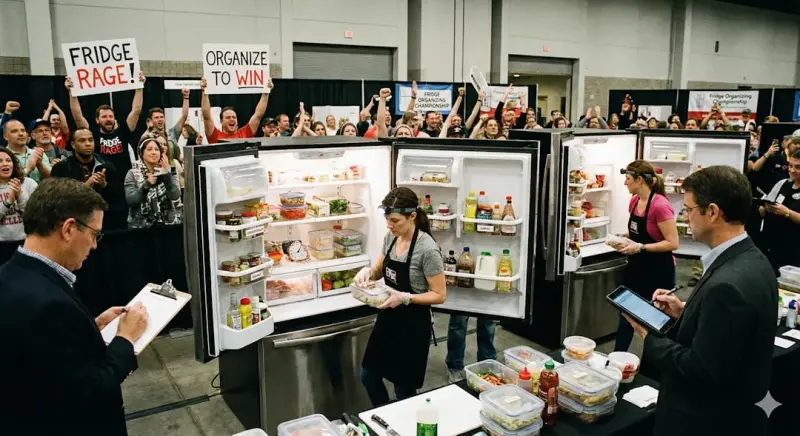
Ever walked into your kitchen at 2 a.m. and heard the fridge politely ask, “Did you remember to sync the inventory with the sales dashboard?” If you haven’t, you’re about to discover why that scenario is less sci‑fi nightmare and more imminent reality for anyone juggling a remote‑first workflow.
The Quiet Revolution Behind Your Countertop
Smart appliances have been humming in the background of our homes for years, but their true potential is only now being unlocked by the same data‑centric mindset that fuels SaaS platforms. No longer are refrigerators just cold storage units; they’re becoming edge devices that collect, process, and act on information the moment it’s generated. This shift mirrors the evolution of cloud services moving from monolithic stacks to distributed micro‑services—a transition that’s taught us how to build resilience into systems that were once considered static.
Why Remote Teams Should Care About Their Toaster
Remote work thrives on frictionless collaboration, and every extra click or manual step is a hidden cost. Imagine a product manager who needs to know the exact number of coffee pods used during a sprint to forecast supply orders. A smart coffee maker can automatically log each brew, push the data to a shared spreadsheet, and trigger a reorder when thresholds are breached. The result? Zero‑click insight into daily consumption patterns, freeing up mental bandwidth for strategic thinking.
Data as a Silent Partner
Every smart appliance is essentially a tiny sensor network, constantly gathering temperature readings, power usage stats, and usage frequency. When this data is funneled into a central hub—think a home‑assistant API or a dedicated SaaS dashboard—it becomes a goldmine for predictive analytics. For instance, a connected oven can learn the typical bake times for a product line and suggest optimal batch schedules, reducing energy waste and aligning production with delivery windows.
Lessons From SaaS: Treat Appliances Like Services
In the SaaS world, we’ve learned that Building Resilience isn’t optional; it’s a design principle. The same approach applies to appliances. By implementing chaos testing on a smart fridge—randomly disconnecting it from Wi‑Fi or simulating power spikes—you can verify that its local cache maintains critical data until connectivity is restored. This ensures that inventory logs never go missing, even during network outages.
Another SaaS‑derived habit is the celebration of small wins. Why Every SaaS Team Needs a Celebration Playbook explains how acknowledging milestones fuels morale. Translate that to appliances: configure your dishwasher to flash a congratulatory LED pattern when it completes a 30‑day streak of optimal energy usage. It’s a tiny nudge that reinforces sustainable behavior without demanding extra effort.
Practical Steps to Turn Your Kitchen Into a Productivity Hub
- Map Your Appliance Ecosystem. List every connected device—fridge, oven, coffee maker, even the smart trash can. Identify which metrics each can provide that align with business KPIs (e.g., supply levels, energy consumption, production throughput).
- Choose a Central Integration Layer. Platforms like Zapier, Integromat, or bespoke home‑automation hubs can act as the glue, translating device data into actionable events for tools like Slack, Asana, or your CRM.
- Implement Automated Alerts. Set thresholds that trigger notifications. If the freezer temperature drifts beyond safe limits, a real‑time alert can prevent spoilage and costly recalls.
- Leverage Predictive Models. Use the historical data to forecast demand. A smart pantry that tracks ingredient depletion can suggest restocking orders weeks before a shortage hits.
- Test for Failure. Conduct regular “chaos drills” where you simulate connectivity loss or power failure to ensure data integrity and fallback mechanisms are robust.
- Celebrate the Data Wins. Celebrate each successful automation—perhaps a weekly “Appliance Insight” bulletin that highlights the most impactful metric of the week.
Beyond the Kitchen: Extending the Model to the Whole Office
While the kitchen is a natural starting point, the same principles apply to any “appliance” in a remote environment—think smart thermostats, lighting systems, or even office‑grade printers. When these devices are woven into the same data fabric, you create a unified “ambient intelligence” layer that subtly nudges teams toward efficiency. The office becomes a living system that anticipates needs before they’re voiced, much like a well‑tuned SaaS product anticipates user actions.
The Human Element: Trust and Transparency
One of the biggest hurdles to adopting smart appliances in a professional context is trust. Employees need to know what data is being collected and how it’s used. Adopt the same transparency policies you’d apply to a SaaS platform: publish a clear data‑usage policy, allow opt‑outs for non‑critical metrics, and provide dashboards where users can see the real‑time impact of their appliance data on business outcomes.
Future‑Proofing: Edge AI and Federated Learning
The next wave of appliance intelligence will move processing further to the edge. Instead of sending raw data to the cloud, devices will run lightweight AI models locally, making decisions in milliseconds and only syncing aggregated insights. This approach reduces latency, protects privacy, and aligns with the growing trend of federated learning, where each device contributes to a global model without exposing raw data.
Closing the Loop: From Data to Action
At the end of the day, the value of smart appliances isn’t in the novelty of a Wi‑Fi‑enabled toaster—it’s in the closed feedback loop they create. Data is captured, analyzed, and fed back as actionable recommendations that improve both personal convenience and organizational performance. By treating appliances as integral components of your tech stack, you unlock a silent productivity engine that works around the clock, whether you’re in a home office or a distributed team across continents.
So next time your fridge pings you with a low‑stock alert or your coffee maker suggests a brewhouse schedule that aligns with a product launch, remember: you’ve just witnessed the convergence of two worlds that were once thought to be separate—home appliances and SaaS‑driven efficiency. Embrace the hum, and let the data do the heavy lifting.

Miranda Murphy: Experienced freelance writer with a decade of storytelling expertise. Let's create something amazing together!
Related Posts
When Your Refrigerator Starts Thinking: The Quiet Revolution of Empathetic Appliances
Modern appliances are evolving from cold, silent tools into empathetic partners that learn, anticipa... Read More

The Predictive Maintenance Wave: Extending the Life of Everyday Appliances
Explore the rise of predictive maintenance for household appliances, how sensors and AI prevent brea... Read More
Air Fryers: Have They Earned Their Place in Our Kitchens?
The modern kitchen, a crucible of culinary innovation and convenience, has witnessed a parade of app... Read More
Top Posts

Crafting Meaningful Gift Experiences in a Digital-First World
Explore a step-by-step framework for creating personalized, eco‑friendly, experience‑driven gifts that strengthen brand loyalty and employee engagement in t...Read More
Modular Smartphones: A Sustainable Leap for Enterprises
Modular smartphones offer businesses a greener, more secure, and customizable alternative to traditional devices, extending lifespans, reducing e‑waste, and a...Read More

From Street Courts to Smart Arenas: How Technology Is Rewriting the Playbook
Technology is transforming sports from grassroots courts to major arenas, bringing data-driven coaching, immersive fan experiences, and new ethical challengesâ€...Read More

Celebrating Love in 2026: Sustainable, Tech‑Savvy Weddings & Anniversaries
From digital invitations to eco‑friendly dresses, I share my insider tips for crafting a modern, sustainable wedding and anniversary celebration that feels pe...Read More
0 Comments
Post Comment
You will need to Login or Register to comment on this post!