
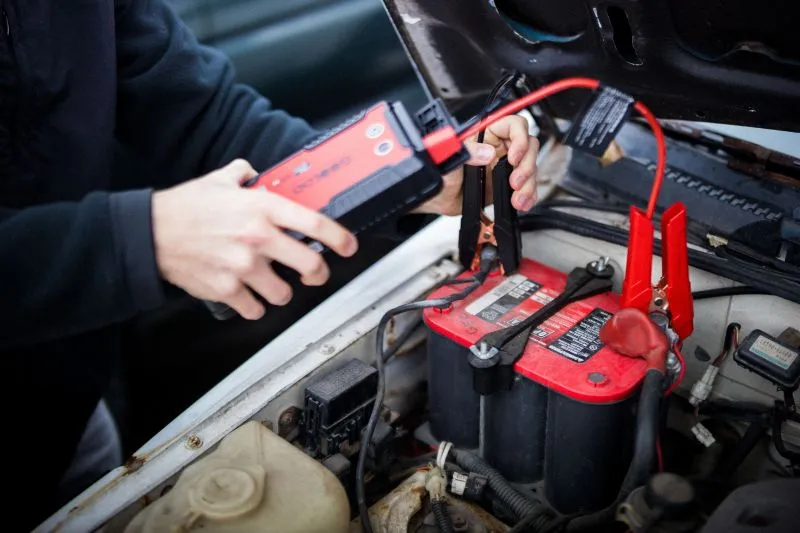
The sudden silence of a failed engine start is a familiar and frustrating experience for many drivers. A dead car battery, often unexpected and inconvenient, can strand you at home, at work, or worse, in a remote location. Traditionally, the solution involved flagging down a kind stranger with jumper cables and a working vehicle – a scenario that's increasingly impractical and sometimes unsafe. Fortunately, the automotive world has evolved, offering a sophisticated array of portable jump starters that empower drivers to resolve a dead battery crisis independently.
But with a market saturated with options, from compact lithium-ion devices to multi-functional power stations, determining "the best" jump starter for your vehicle can be a daunting task. The truth is, the optimal choice isn't a one-size-fits-all solution; it depends heavily on your specific vehicle, usage patterns, and desired features. This comprehensive guide will dissect the various types of jump starters, explore the critical factors to consider, and equip you with the knowledge to make an informed, confident purchase.
The Evolution of Automotive Preparedness: From Cables to Capacitors
For decades, the standard response to a flat battery was the venerable jumper cable. These simple, conductive wires, paired with a donor vehicle, provided the necessary surge to revive a dead battery. While inexpensive and effective when used correctly, jumper cables inherently carry limitations: they require a second vehicle, demand careful adherence to connection order to prevent sparks or damage, and can pose safety risks if mishandled.
The advent of self-contained, portable jump starters revolutionized roadside assistance. Early models typically housed a lead-acid battery within a bulky casing, offering significant power but at the cost of weight and size. The real game-changer arrived with the proliferation of lithium-ion technology. These compact, lightweight units pack immense power into a small form factor, making them incredibly practical for everyday drivers.
Beyond lithium-ion, the market now also features increasingly powerful multi-function power stations that integrate compressors, inverters, and charging ports, transforming them into comprehensive roadside companions. An emerging technology gaining traction is the capacitor-based jump starter, which utilizes supercapacitors to store electrical energy, offering rapid recharging and an impressive lifespan without the degradation issues common to traditional batteries.
Key Factors for Selecting the Best Automotive Jump Starter
Choosing the right jump starter requires a methodical assessment of several crucial specifications and features. Understanding these will ensure your chosen device is not only effective but also user-friendly and safe.
Peak Amperage (Cranking Power): The Heart of the Jump Start This is arguably the most critical specification for any jump starter. Peak amperage, often measured in amps (A), indicates the maximum surge of power the unit can deliver to start an engine.
- Small Sedans (4-cylinder): Typically require 400-600 peak amps.
- Mid-size Sedans/SUVs (6-cylinder): Often need 600-800 peak amps.
- Full-size Trucks/SUVs (V8 gasoline): Demand 800-1200 peak amps or more.
- Diesel Engines: These engines, due to their higher compression ratios and glow plugs, require significantly more power, often 1500-2500 peak amps or higher, especially in colder climates. It's always advisable to choose a jump starter with a peak amperage rating slightly above your vehicle's minimum requirement. This provides a buffer, especially in cold weather when batteries are less efficient, and ensures a more reliable start. Some manufacturers also specify "Starting Amps" or "Cracking Amps," which is a more realistic continuous current, though Peak Amps is the commonly advertised figure.
Battery Capacity (for Lithium-Ion Units): More Jumps, More Power For lithium-ion jump starters, capacity is typically measured in milliamp-hours (mAh) or Watt-hours (Wh). A higher capacity generally means the unit can perform more jump starts on a single charge or provide power to accessories for longer periods. If you anticipate needing multiple jumps without immediate recharging capabilities, or if you plan to use it as a robust power bank for phones, tablets, or laptops, a higher capacity unit is preferable. Capacitor-based jump starters don't have a conventional battery capacity; instead, they boast rapid self-charging capabilities from a residual battery voltage or external source.
Safety Features: Non-Negotiable for Peace of Mind Modern portable jump starters come equipped with an array of safety features that significantly reduce the risk of damage to the vehicle or injury to the user. Prioritize units that include:
- Reverse Polarity Protection: Prevents injury or damage if the clamps are connected to the wrong battery terminals.
- Spark-Proof Technology: Eliminates the risk of sparks during connection, crucial in the presence of flammable battery gases.
- Short-Circuit Protection: Shuts off power if a short circuit is detected.
- Over-Current Protection: Prevents the unit from delivering too much current.
- Over-Charge/Over-Discharge Protection: Safeguards the internal battery from damage due to improper charging or draining. These features not only protect your investment but, more importantly, ensure a safe and stress-free user experience, especially for those less familiar with automotive work.
Portability and Build Quality: Durability Meets Convenience Consider the size and weight of the unit. A truly portable jump starter should be easy to store in your glove compartment, trunk, or even backpack. Look for robust construction, durable plastics, and high-quality, insulated cables and clamps. The clamps themselves should be sturdy, make good contact with battery terminals, and feature strong springs. A dedicated carrying case is a bonus, protecting the unit and keeping all accessories organized.
Additional Functionality: Beyond the Jump Start Many jump starters offer extra features that enhance their utility:
- USB Charging Ports: Convert the jump starter into a powerful portable charger for phones, tablets, and other USB-powered devices.
- LED Flashlight: Essential for nighttime or low-light situations, often with SOS strobe functions.
- Air Compressor: Integrated compressors can be invaluable for topping off tires, inflating sports equipment, or managing minor tire punctures. Check the PSI rating and inflation speed.
- AC Inverter: Some larger units include a standard household AC outlet, allowing you to power small appliances or tools.
- 12V DC Outlet: For powering other 12V accessories. Evaluate which of these additional features are genuinely useful for your needs. While multi-functional devices offer convenience, they can also increase the unit's size, weight, and cost.
Brand Reputation and Warranty: Trust and Support Invest in a reputable brand known for quality and customer service. Reading reviews from other users can provide valuable insights into a product's real-world performance and reliability. A solid warranty demonstrates the manufacturer's confidence in their product and provides peace of mind should any issues arise.
Proper Usage and Maintenance for Longevity
Even the best jump starter is useless if it's not ready when you need it.
- Keep it Charged: For lithium-ion units, regular recharging (typically every 3-6 months, even if unused) is crucial to maintain battery health and ensure it's fully charged when an emergency strikes. Capacitor models are more forgiving but still benefit from occasional top-ups.
- Follow Instructions: Always read and adhere to the manufacturer's specific instructions for your device and vehicle.
- Safe Storage: Store your jump starter in a cool, dry place, away from extreme temperatures.
Conclusion: Finding Your Best Jump Starter
The "best" automotive jump starter isn't a single product, but rather the device that most effectively meets your specific requirements. For the average driver of a gasoline-powered sedan or SUV, a modern lithium-ion jump starter with 600-1000 peak amps, robust safety features, and perhaps a USB charging port offers an excellent balance of power, portability, and value. If you drive a large truck, an older vehicle, or a diesel, you'll need to prioritize higher peak amperage – 1500A or more – and might benefit from a multi-function unit with an air compressor. For those seeking the ultimate in reliability and longevity without battery degradation concerns, a capacitor-based jump starter presents a compelling, albeit often pricier, option.
Ultimately, investing in a high-quality jump starter is an investment in self-reliance and peace of mind. By carefully considering your vehicle's needs, prioritizing safety and power, and choosing a reputable brand, you can confidently select the perfect automotive jump starter to ensure you're never left powerless on the road again.

Tyler Johnson is a seasoned freelance writer with a keen eye for detail and a passion for crafting compelling narratives. His years of experience have honed his ability to adapt his style to suit diverse client needs and project requirements.
Related Posts

How to Improve Your Car's Mileage
In a world where fuel prices fluctuate like the stock market, maximizing your car's mileage isn't ju... Read More

Why a Driving Business Could Be Right for You
In an increasingly dynamic economy, the allure of entrepreneurship beckons many, promising autonomy,... Read More

Why the Car of Tomorrow Is Already Driving Your Data
The modern car is no longer just metal and engine—it’s a data hub that predicts maintenance, lea... Read More
Top Posts

Future‑Proofing SEO for an AI‑First Search World
SEO has shifted from keyword stuffing to an AI‑first, semantic approach. This guide shows how to build topic clusters, optimize for passage indexing, boost Co...Read More

Curated Gifting: Turning Presents into Lasting Connections
A deep dive into the art of curated gifting, showing how thoughtful, sensory‑rich presents can transform ordinary corporate exchanges into meaningful conversa...Read More

Edge Computing: The Unsung Hero Transforming SaaS Performance
Edge computing brings compute closer to users, slashing latency, enhancing security, and cutting costs. This article explains why SaaS platforms should adopt ed...Read More

The Art of Gift‑Giving in 2024: Trends, Tech, and Thoughtful Choices
Paul Flynn uncovers 2024’s hottest gift ideas, blending sustainability, tech, and personal touches to help you give with intention and style....Read More
0 Comments
Post Comment
You will need to Login or Register to comment on this post!