
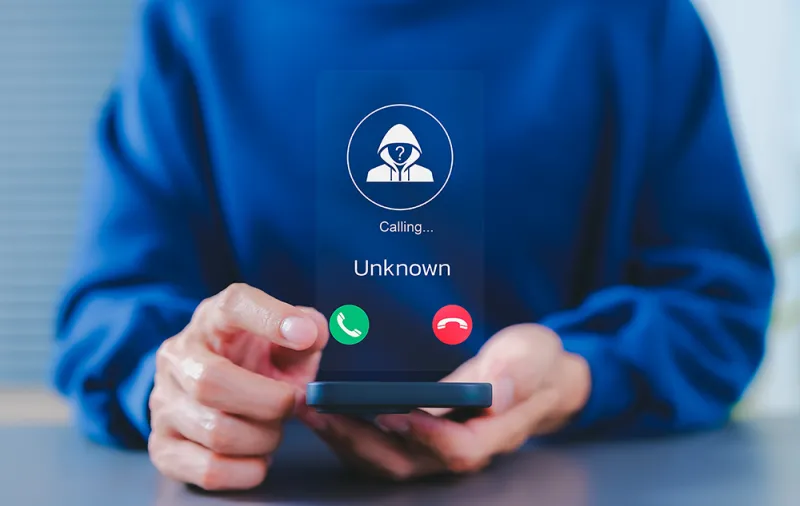
The modern smartphone, once a marvel of connectivity, has increasingly become a conduit for agitation. For many professionals, the chime of an incoming call no longer sparks anticipation of a productive conversation or a connection with a loved one. Instead, it triggers a reflex of suspicion. Is it a client? A colleague? Or is it yet another spoofed number from a distant jurisdiction, masquerading as a local entity to peddle fraudulent warranty extensions, fabricated tax audits, or sophisticated phishing scams?
The data is grim. Billions of robocalls flood global telecommunications networks every month. Despite the implementation of legislative frameworks like the STIR/SHAKEN protocol in the United States and similar initiatives abroad, the scourge of unwanted automated calls has reached a state of near-permanent crisis. The industry has become a cat-and-mouse game where scammers leverage artificial intelligence, voice cloning, and high-volume VoIP (Voice over Internet Protocol) technology to bypass the very filters designed to stop them.
The Anatomy of the Scourge
To understand why these calls remain "out of control," one must recognize the evolution of the scammer’s toolkit. In the early days, robocalls were primitive, easily identifiable by their robotic cadence and awkward pauses. Today, they are indistinguishable from legitimate human interaction.
Scammers now employ "neighbor spoofing," a technique where the incoming call appears to originate from an area code—or even an exchange—identical to the recipient’s own. This exploits a fundamental behavioral bias: we are naturally more inclined to answer a call that seems "local." Once the phone is answered, the game has shifted from mindless automation to psychological manipulation. Using AI-driven scripts and even deep-fake audio of known associates or authority figures, scammers aim to bypass our logic and trigger an immediate emotional response—fear, urgency, or greed.
The scale is equally daunting. Because VoIP technology makes it incredibly inexpensive to place millions of calls simultaneously, scammers do not need a high success rate to be profitable. They operate on the law of large numbers; even if only 0.1 percent of recipients fall for the ruse, the financial return is vast. As long as the cost of launching an attack remains near zero, the structural incentives for these malicious actors will remain intact.
The Failure of Traditional Defenses
For years, the burden of defense has been placed on the consumer and, to a lesser extent, the carrier. We were told to register our numbers on "Do Not Call" lists, yet these databases have become little more than harvesting grounds for bad actors. We were told to simply ignore unknown numbers, a strategy that is increasingly untenable for professionals who rely on outreach from prospective clients or unfamiliar vendors.
Carriers have introduced "Spam Likely" labeling, but these systems are inherently reactive. A scammer can burn through thousands of numbers in a single day, rotating through new caller IDs as quickly as the carriers can flag the old ones. It is a game of Whac-A-Mole where the scammers possess a near-infinite supply of hammers.
The Silencing Strategy: The "Zero-Trust" Protocol
If the industry’s reactive defenses are insufficient, what is the alternative? The most effective strategy to regain control over your digital personal space is the adoption of a "Zero-Trust" communications protocol. This is not merely a setting on your phone; it is a fundamental shift in how you manage your accessibility.
The Zero-Trust approach operates on a simple premise: No call from an unregistered or unknown entity is entitled to your immediate attention.
To implement this, one must move beyond the basic "Silence Unknown Callers" feature—which, while helpful, often filters legitimate calls from delivery drivers or urgent, non-saved contacts—and embrace a proactive identity management system. Here is how to construct a robust defense:
1. The Gatekeeper Strategy: Utilize advanced call-screening services that act as a buffer. Specifically, look for apps that utilize "Challenge-Response" technology. When an unknown number calls, the system automatically answers first, asking the caller to state their name or press a specific key. Automated bots are incapable of navigating this step, and they are dropped immediately. Legitimate callers, meanwhile, are prompted to identify themselves, allowing the recipient to see the intent of the call before deciding whether to engage.
2. The Digital Firewall (The "Burner" Method): For professionals, the primary phone number should be treated with the same security classification as a social security number or a private email address. It should never be entered into public web forms, social media profiles, or loyalty programs. Instead, utilize "burner" or secondary VoIP numbers for these interactions. If a secondary number begins receiving spam, it is easily discarded without the need to change your primary identity.
3. Contextual Vetting: Transition to an asynchronous communication model wherever possible. If an unknown number calls, do not pick up. If the caller is legitimate and has a genuine reason to speak with you, they will leave a voicemail. In an era of rampant spam, the voicemail has become the modern "pre-screening" tool. If a caller cannot spare the thirty seconds to state their business via voicemail, their "urgency" is almost certainly manufactured.
Reclaiming the Professional Horizon
The psychological impact of constant, intrusive spam calls is not trivial. It contributes to "digital fatigue"—the state of constant, low-level vigilance that degrades our ability to focus and increases our stress levels. By implementing a Zero-Trust protocol, you are doing more than just blocking numbers; you are reclaiming your time and your cognitive bandwidth.
This strategy requires a period of adjustment. You may initially feel a compulsion to answer every ring, driven by the fear of missing an important opportunity. However, you will quickly find that the world does not collapse because you stopped answering calls from strangers. On the contrary, the quality of your interactions improves. When you choose only to engage with callers who have been verified, or who have demonstrated a clear, legitimate purpose, you reclaim the dignity of your own schedule.
The era of the "always-available" professional, reachable by any entity with a dialer and a VoIP account, is over. The technology that brought us increased connectivity has also brought us increased vulnerability. By treating our phone numbers with the same caution we apply to our digital passwords and private credentials, we can silence the noise.
In a world where attention is the most valuable currency, the ability to selectively deny access to yourself is not an act of rudeness—it is an act of self-preservation. Scammers rely on your availability; by making yourself unavailable to the unverified, you neutralize the very mechanism that makes their trade possible. The silence that follows is not just an absence of sound; it is the freedom to work, live, and communicate on your own terms.

Amanda is a passionate writer exploring a kaleidoscope of topics from lifestyle to travel and everything in between.
Related Posts

Protecting Your Plans: Don't Let Scammers Wreck Your Summer or Big Night Out
The sun is shining, the days are getting longer, and thoughts naturally turn to eagerly anticipated ... Read More

When Fraudsters Dress Up as SaaS Heroes: Spotting the New Wave of Scams
Scammers now mimic legitimate SaaS vendors with hyper‑personalized demos and credential traps. Dis... Read More

When SaaS Turns Into a Scam: Spotting Dark Patterns and Hidden Fees
A deep dive into the tactics scammers use in SaaS—dark UI tricks, subscription fatigue, and dataâ€... Read More
Top Posts

Keeping Kids Safe in a Digital World: A Parent's Guide
As a parent, keeping your kids safe in a digital world can be overwhelming. Learn how to protect them from online harassment, cyberbullying, and digital addicti...Read More
Unlocking WordPress for Enterprise‑Grade, Headless Experiences
WordPress has evolved from a simple blogging tool into a robust, headless platform for enterprise needs, offering multi‑tenant architecture, edge performance,...Read More

Edge‑First Web Development: Rethink Your Architecture
Edge‑first architecture moves compute to the network’s edge, offering lower latency, built‑in security, and compliance benefits. This article explains the...Read More

What's the Best Automotive Jump Starter for Your Vehicle?
The sudden silence of a failed engine start is a familiar and frustrating experience for many drivers. A dead car battery, often unexpected and inconvenient, ca...Read More
0 Comments
Post Comment
You will need to Login or Register to comment on this post!