
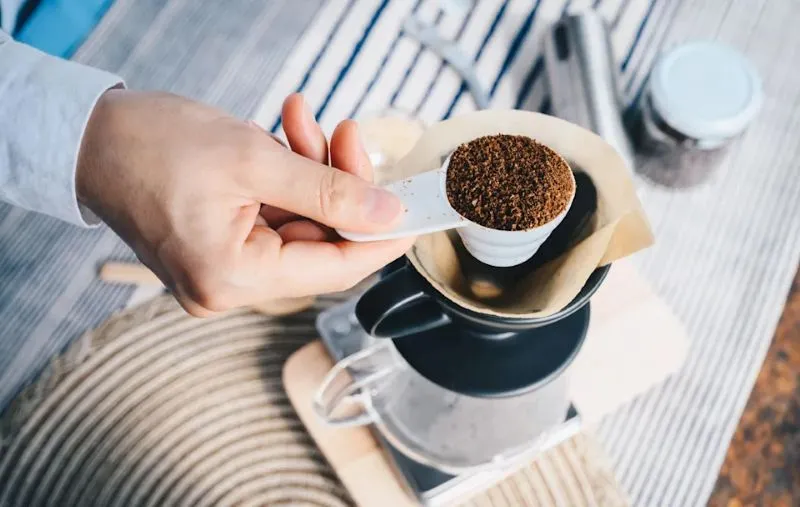
For many, the morning ritual of coffee preparation is a blur of half-awake movements: a scoop of grounds, a splash of water, and the hopeful anticipation of a caffeinated awakening. Yet, despite the consistency of our equipment and the perceived quality of our beans, the result often fluctuates. One day, the brew is a sublime nectar of chocolate and jasmine; the next, it is a thin, biting disappointment or a muddy, swampy concoction. If you have ever wondered why your home-brewed cup lacks the consistency of your favorite artisanal café, the answer rarely lies in the brand of your machine or the aesthetic of your grinder. It lies in the mathematics of extraction.
The secret to perfect coffee every time is not a hidden ingredient or a complex ritual; it is a fundamental scientific principle known as the "Golden Ratio."
Defining the Golden Ratio
In the world of specialty coffee, the Golden Ratio refers to the equilibrium between dry coffee grounds and water. While personal preference plays a role in the nuances of flavor, professional baristas and sensory scientists have arrived at a consensus that provides a baseline for excellence. The most widely accepted Golden Ratio is 1:16 to 1:18.
In practical terms, this means for every one gram of coffee, you utilize 16 to 18 grams of water. This range is not arbitrary; it is the sweet spot where the chemical compounds of the coffee bean—its sugars, acids, and bitter oils—are dissolved in precise harmony. When you stay within this ratio, you ensure that the water has enough "solvent power" to extract the best flavors without leaching out the harsh, astringent tannins that occur during over-extraction, or leaving behind the sour, underdeveloped notes caused by under-extraction.
The Science of Solvent Power
To understand why the ratio is paramount, one must view coffee brewing as a chemistry experiment. Coffee beans are composed of complex organic compounds. When hot water hits ground coffee, it acts as a solvent, pulling those compounds out of the cellular structure of the bean.
If your ratio is too low—for instance, 1:10—you are using too much coffee for the amount of water. The water becomes "saturated" with solutes, reaching a point of diminishing returns where it can no longer extract flavor effectively. The result is a cup that is syrupy, heavy, and often aggressively acidic or sour.
Conversely, if your ratio is too high—1:25, for example—you have flooded the grounds with a surplus of water. The water continues to extract compounds long after the delicious sugars and acids have been washed away, eventually pulling out the woody, bitter alkaloids that constitute the structure of the plant fiber. This leads to a thin, watery, and bitter brew that lacks the "body" or "mouthfeel" that distinguishes premium coffee.
By maintaining a 1:16 to 1:18 ratio, you provide the water with the perfect workload to reach an "extraction yield" of approximately 18% to 22%. This is the target window where coffee experts agree the flavor profile is most balanced and expressive.
The Precision Toolkit
Adopting the Golden Ratio requires moving away from the "heaping scoop" method of measurement. Volume-based measuring—scoops and tablespoons—is the enemy of consistency. A scoop of light-roast beans will weigh significantly differently than a scoop of dark-roast beans due to density variations.
To achieve the Golden Ratio, you must transition to mass-based measurement. A digital kitchen scale is the single most effective tool for improving your coffee game. By weighing both your beans and your water in grams, you eliminate the guesswork.
The process is simple:
- Choose your ratio: Start with 1:16 for a stronger, more intense cup, or 1:18 for a lighter, more tea-like extraction.
- Weigh your beans: If you are brewing 500ml of water (which weighs 500 grams), and you choose a 1:17 ratio, divide 500 by 17. You will need approximately 29.4 grams of coffee.
- Tare your scale: Place your brewing device on the scale, add the grounds, and zero the scale.
- Pour with precision: As you pour the water, watch the readout. When you hit 500 grams, you are finished.
Beyond the Ratio: The Interconnected Variables
While the Golden Ratio is the foundation of consistency, it exists within an ecosystem of brewing variables. Even with the perfect ratio, other factors can influence the final taste:
- Grind Size: If your ratio is correct but your coffee tastes bitter, your grind may be too fine, causing the water to pull out too much flavor too quickly. If it tastes sour, your grind may be too coarse, preventing the water from penetrating the center of the grounds.
- Water Temperature: Coffee is best extracted between 195°F and 205°F (90°C–96°C). If your water is boiling, you risk scalding the grounds; if it is below 190°F, you will fail to extract the delicate aromatic oils.
- Water Quality: Coffee is 98%–99% water. If your tap water is heavily chlorinated or rich in minerals, it will interfere with the extraction process. Filtered water is a non-negotiable component of a truly professional cup.
The Path to Mastery
The beauty of mastering the Golden Ratio is that it transforms coffee from a chore into a craft. Once you have stabilized your ratio, you gain the ability to "dial in" your coffee. If you find a particular bean profile is too bright for your palate, you can nudge your ratio toward 1:16 to increase the body and roundness. If you want to highlight the floral notes of an Ethiopian Yirgacheffe, a 1:18 ratio will provide the clarity required to let those subtle flavors shine.
This process moves the brewer from a passive consumer to an active participant. It encourages a deeper appreciation for the provenance of the coffee, the roast profile, and the nuances of the extraction.
Final Thoughts
Consistency is the hallmark of professionalism. In the world of gastronomy, whether it is a pastry chef weighing flour or a barista measuring grounds, the most refined results come from those who respect the math behind the art.
The Golden Ratio is not merely a rule; it is a liberating framework. By removing the variables that lead to failure, it allows you to focus on the sensory experience of the cup. It promises that tomorrow morning, your coffee will not be a gamble, but a guaranteed reward. Grab your scale, choose your ratio, and embark on the journey toward a perfect, repeatable, and deeply satisfying brew. Even the most complex flavor profiles are subject to the laws of chemistry—and once you learn to speak that language, you will never have to drink a mediocre cup of coffee again.

Freelance writer with a flare for everything. I am passionate about topics I write crafting stories and compelling content that connect with audiences. Journeying through the realms of creativity as a freelance creator. #WriterLife #ContentCreator
Related Posts

The Strategic Approach To Getting Your Children to Eat their Vegetables
The challenge of encouraging children to eat their vegetables is a near-universal parenting struggle... Read More
Beyond the Grain: Unpacking the Nutritional Benefits of "Nuts" and Their Health Benefits
The term "nut" often conjures images of familiar favorites like almonds, walnuts, and peanuts. These... Read More

Fermenting Futures: Microbial Magic in Modern Cuisine
David Moore dives into the resurgence of fermentation, revealing its impact on taste, nutrition, and... Read More
Top Posts

The Digital Companion: How Seniors Can Thrive with Modern SaaS Tools
A senior-friendly guide shows how cloud‑based software can simplify health monitoring, financial management, social interaction, and continuous learning, empo...Read More

Can A Healthy Lifestyle Help Your Back?
Back pain is an unwelcome companion for millions worldwide. From a dull, persistent ache to sudden, debilitating spasms, it accounts for a significant portion o...Read More

Micro‑Influencer Coalitions: How Small Creators Can Outperform Big Budgets
Learn how coordinated micro‑influencer networks can surpass big‑budget campaigns, driving genuine engagement, measurable ROI, and lasting brand loyalty....Read More
The Sprint Culture Revolution: How Speed Shapes Modern Society
A deep dive into sprint culture’s impact on work, social interaction, and digital habits, offering insights on balancing speed with sustainable living....Read More
0 Comments
Post Comment
You will need to Login or Register to comment on this post!