
Why Same-Day Delivery Feels Like Magic (and What’s Really Behind It)
Every time I click “Buy Now” and watch the clock tick down from “Estimated delivery: 2‑4 days” to “Same‑day delivery available,” I get a brief rush of disbelief. It’s as if the ecommerce universe has bent the laws of physics just for me. Yet the reality is far less mystical and far more engineered. The secret isn’t a sorcerer’s wand; it’s a network of hyper‑optimized logistics, data‑driven forecasting, and a cultural shift that treats the consumer as an instant‑service stakeholder.
The Rise of Hyper‑Localized Fulfillment Hubs
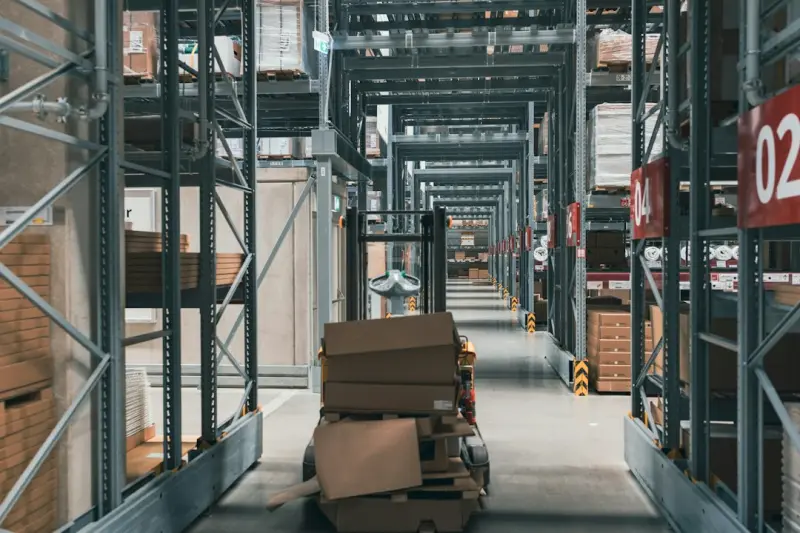
Traditional retail relied on massive regional warehouses that fed a handful of stores. Today, the “last mile” has become the battlefield where brands win or lose loyalty. To shrink that mile, retailers are planting micro‑fulfillment centers (MFCs) in urban lofts, vacant storefronts, and even inside grocery stores. These 1,000‑square‑foot spaces are equipped with robotic pickers, AI‑guided inventory, and climate‑controlled bays that keep perishable goods fresh.
Key benefits of MFCs include:
- Proximity to the consumer: By situating inventory within a 10‑mile radius of dense neighborhoods, carriers can complete routes in under an hour.
- Reduced transportation costs: Shorter trips mean lower fuel consumption and a smaller carbon footprint.
- Scalable elasticity: When demand spikes—think a sudden surge in home‑office gear—MFCs can be rapidly re‑stocked or re‑purposed without disrupting the broader supply chain.
Predictive Stocking: The Brain Behind the Brawn
Having a warehouse close by is only half the equation. The other half is knowing exactly what to stock, and when. Retailers now employ machine‑learning models that ingest weather forecasts, local events, social media chatter, and historical sales patterns to predict demand at the zip‑code level.
Imagine a sudden heatwave hitting a city. The algorithm instantly flags an upcoming spike in air‑conditioners, iced beverages, and summer apparel. The MFCs nearest to the affected neighborhoods automatically adjust their pick lists, pulling these items from central depots ahead of the surge. The result? A shopper orders a portable fan at 9 AM, and a delivery driver appears at the door by 2 PM, all without a single human manually intervening.
Dynamic Routing Powered by Real‑Time Data
Once an order is ready for dispatch, the next challenge is getting it to the customer quickly and efficiently. Traditional routing software would generate a static path at the start of the day and stick to it, regardless of traffic snarls or sudden order cancellations. Modern routing platforms, however, behave more like a live GPS navigator for fleets.
These platforms constantly ingest traffic APIs, road‑work alerts, and even real‑time weather data. If a major artery is blocked, the system instantly recalibrates, sending the driver down a side street that saves minutes. Some solutions even integrate with driver wearables, using acceleration and braking data to gauge driver fatigue and automatically adjust routes for safety.
The Human Element: Empowered Couriers and Micro‑Entrepreneurs
Technology alone can’t close the loop; the people who physically deliver the parcels are the final piece of the puzzle. Companies are shifting from traditional courier contracts to gig‑based models that treat drivers as micro‑entrepreneurs. This model offers flexibility, allowing drivers to choose shifts that align with their personal schedules, which in turn fuels higher satisfaction and lower turnover.
But flexibility brings responsibility. Platforms now provide drivers with in‑app tools that show optimal drop‑off sequences, estimated earnings per route, and even real‑time customer notes (e.g., “Leave package at back door”). By giving couriers a clear, data‑driven view of their tasks, the entire delivery process becomes a collaborative choreography.
Seamless Returns: Turning a Pain Point into a Loyalty Lever
While the excitement of same‑day delivery captures headlines, the often‑overlooked aspect is the return experience. A smooth, painless return can convert a one‑time buyer into a lifelong advocate. Retailers are now integrating reverse logistics into their MFC ecosystems.
When a consumer initiates a return, the system automatically schedules a pickup at a nearby MFC, where the item is inspected, restocked, or repurposed for resale. Some brands even offer “instant refunds” the moment a driver scans the barcode, eliminating the waiting period entirely. This rapid turnaround not only improves cash flow but also reinforces the brand’s commitment to customer convenience.
Technology Cross‑Pollination: Lessons from Other Industries
It’s fascinating how innovations in seemingly unrelated fields seep into shopping logistics. For instance, the principles behind Design Systems That Breathe—creating adaptive, responsive interfaces—are now applied to fulfillment dashboards. These dashboards dynamically adjust their UI components based on the volume of orders, highlighting bottlenecks and surfacing actionable insights without overwhelming the operator.
Similarly, the concept of Composable Software has inspired modular warehouse management systems. Instead of monolithic platforms, retailers stack interchangeable API modules—inventory, order routing, driver coordination—allowing rapid feature deployment and easier integration with third‑party services.
Even Link Building as Relationship Engineering finds a parallel in logistics partnerships. Brands now treat carrier relationships as strategic alliances, co‑creating data standards, shared forecasting models, and joint sustainability goals, rather than merely contracting for transport.
Environmental Impact: The Green Side of Speed
Critics often argue that the push for ultra‑fast delivery inflates carbon emissions. However, the shift to micro‑fulfillment, predictive stocking, and dynamic routing actually offers environmental upside when executed responsibly. Shorter routes mean fewer miles driven, and AI‑optimized loads reduce empty‑truck trips. Moreover, many MFCs operate on renewable energy, and some retailers offset delivery emissions through reforestation projects.
Consumers increasingly demand transparency. Retailers are now embedding carbon‑impact scores into checkout pages, allowing shoppers to see the estimated emissions of their chosen delivery window. This data empowers buyers to make greener choices—perhaps opting for a two‑day window over same‑day if the environmental cost is higher.
Future Glimpses: Autonomous Vehicles and Drone Drops
Looking ahead, the next frontier is autonomous delivery. Companies are piloting electric vans that can navigate city streets without a driver, guided by high‑definition maps and real‑time sensor data. Drones are already delivering medical supplies in remote areas; the same technology will soon land on suburban rooftops, bringing lightweight parcels straight to customers’ doorsteps.
These advancements will further compress delivery times while reshaping labor dynamics. The role of human couriers will evolve from drivers to overseers—monitoring fleets, handling exceptions, and maintaining the human touch that keeps the experience personable.
Takeaways for Retailers Ready to Level Up
- Invest in micro‑fulfillment hubs: Proximity is the most powerful lever for reducing delivery times.
- Leverage predictive analytics: Anticipate demand at the neighborhood level to keep shelves stocked.
- Adopt dynamic routing: Real‑time data ensures drivers avoid delays and stay efficient.
- Empower couriers with technology: In‑app tools improve performance and satisfaction.
- Integrate returns into the fulfillment loop: Fast, hassle‑free returns boost loyalty.
- Embrace modular, composable systems: Flexibility in software mirrors flexibility in operations.
- Communicate environmental impact: Transparency builds trust with eco‑conscious shoppers.
When all these pieces click together, same‑day delivery stops feeling like wizardry and becomes a predictable, repeatable service—one that delights customers, safeguards the planet, and drives sustainable growth.

Robert Mathews is a professional content marketer and freelancer for many SEO agencies. In his spare time he likes to play video games, get outdoors and enjoy time with his family and friends . Read more about Robert Mathews here:
Related Posts

Choosing the Best Cordless Vacuums to Master Your Time and Money
n an era defined by efficiency and convenience, the traditional corded vacuum cleaner, with its teth... Read More
QR Codes Becoming Popular for In-Store Payments
The retail industry has always been at the forefront of innovation, constantly evolving to meet the ... Read More

AI‑Powered Personal Shopping Assistants: The Next Evolution in Retail
AI‑driven personal shopping assistants are reshaping e‑commerce by delivering hyper‑personaliz... Read More
Top Posts

10 Things That Clog Your Drain and What to Do About It?
The gurgle that won't go away, the slow-draining sink, the shower stall that turns into a mini-lake – few household annoyances are as universally frustrating ...Read More

Design Systems That Breathe: Turning Static UI Into Adaptive Experiences
A living design system transforms static web design into an adaptive, data‑driven experience. Learn how modular architecture, variable fonts, and governance c...Read More

Impact of Chemical Pesticides
With modern agriculture, few innovations have been as transformative, yet as contentious, as chemical pesticides. Heralded as a cornerstone of the Green Revolut...Read More

Trailblazing the Outdoors: David Moore’s Playbook for Adventurous Living
David Moore reveals how to turn every hike into a growth opportunity, blending gear hacks, tech, and mindfulness for a bold, balanced outdoor lifestyle....Read More
0 Comments
Post Comment
You will need to Login or Register to comment on this post!