
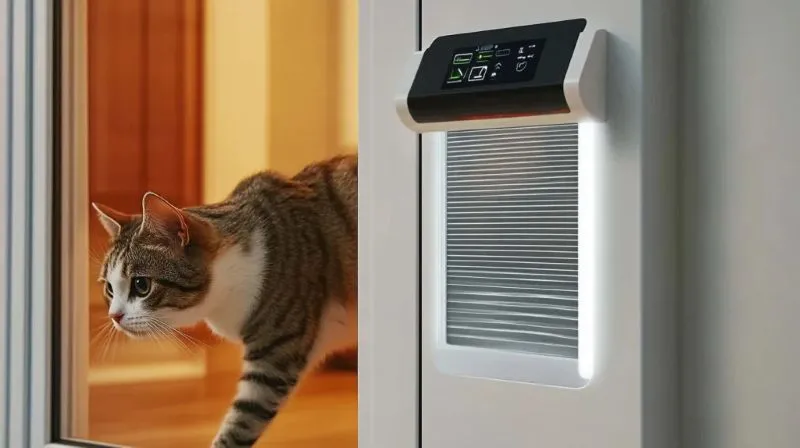
For pet owners, the "door dilemma" is a universal experience. It is the perpetual oscillation between the desire to grant one’s companion freedom and the necessity of keeping the home secure, climate-controlled, and pest-free. For decades, the solution was the passive "flap"-a simple piece of plastic or rubber that swung open at the slightest nudge. While functional, the traditional flap was a flawed security measure, effectively acting as an open invitation not just to the family pet, but to neighborhood strays, raccoons, possums, and even the occasional adventurous squirrel.
Today, however, the landscape of pet care is undergoing a technological transformation. The emergence of the automatic smart pet door—a sophisticated piece of hardware that utilizes biometric or RFID identification-has effectively closed the metaphorical and literal gap. By merging home automation with animal welfare, these devices are not merely convenience tools; they are essential components of modern household management.
The Mechanics of Intelligence: How Smart Doors Work
The fundamental innovation of the smart pet door lies in its ability to distinguish between "authorized" and "unauthorized" users. Traditional doors rely on mechanical force, shifting only because an animal pushed against them. Smart doors, conversely, act as a digital gatekeeper, remaining locked until they verify the identity of the animal attempting ingress.
Most premier models achieve this through RFID (Radio-Frequency Identification) technology. An authorized pet wears a lightweight, unobtrusive collar tag that emits a unique, encrypted signal. As the pet approaches the door, a low-frequency sensor detects the tag. If the signal matches the unique code programmed into the door’s microprocessor, the mechanism unlocks-often utilizing a motorized latch or a magnetic release—and the door slides or swings open.
Beyond RFID, some higher-end models integrate microchip sensing. Rather than requiring a proprietary tag, these doors can be programmed to recognize the pet’s already-implanted ISO-standard microchip. This eliminates the need for collars entirely, ensuring that the pet’s access is tied to their permanent biological identity. When the pet approaches, the door reads the chip, verifies the ID, and grants access within milliseconds.
The Security Imperative: Beyond Locking the Door
The primary value proposition of the smart pet door is, without question, security. While pet owners often prioritize convenience, the implications for home safety are profound.
A standard flap is a point of vulnerability. It is a portal that a determined intruder or an aggressive stray can exploit. In suburban or rural settings, a traditional flap is an open door for wildlife. Stories of homeowners waking up to find a raccoon rummaging through their kitchen pantry or a stray tomcat marking territory on their living room carpet are common. These intrusions are not just inconvenient; they carry the risk of disease, property damage, and significant stress for the household pets already residing in the home.
Smart pet doors resolve this by operating in a default "locked" state. Because the locking mechanisms are often reinforced with heavy-duty materials—such as polycarbonate or reinforced aluminum-they provide a physical barrier that is significantly harder to bypass than a flexible plastic flap. By ensuring that the doorway is only opened by the specific pet, the owner effectively seals the house against any external entities that do not possess the digital "key."
Climate Control and Energy Efficiency
In addition to security, the smart pet door is a cornerstone of modern energy efficiency. Any opening in a home’s exterior is a thermal leak. Traditional flaps, even those with magnetic wind-seal strips, are notoriously inefficient. They are susceptible to drafts, they lack insulation, and over time, the brushes and seals degrade, allowing expensive conditioned air-whether heated in winter or cooled in summer-to escape.
Smart doors are designed with rigorous sealing in mind. Because they do not need to swing freely for every breeze or animal movement, they can be engineered with tighter tolerances and better insulation. The motorized or electromagnetically locked doors stay firmly seated in their frames, which acts as a thermal break. For homeowners committed to reducing their carbon footprint and lowering utility bills, upgrading to a smart door is a logical, albeit often overlooked, step in home weatherization.
Promoting Autonomy and Reducing Pet Stress
From the perspective of the animal, the benefits are equally significant. Pet psychology suggests that animals thrive when they have a degree of agency over their environment. A dog or cat that can exit the home to relieve itself or retreat to a safe outdoor space when feeling overwhelmed experiences lower levels of cortisol-the stress hormone.
However, the "smart" nature of these doors provides a layer of protection that allows the owner to foster this autonomy without anxiety. Owners can set custom access schedules, restricting outdoor access to daylight hours or keeping a pet indoors during severe weather events. Some systems even offer smartphone app integration, allowing the owner to monitor when their pet uses the door, receive push notifications, and remotely lock or unlock the door from anywhere in the world. This level of oversight provides peace of mind that a standard flap could never offer.
Considerations for the Modern Consumer
As with any sophisticated piece of technology, there are considerations to keep in mind before installation. The primary investment is, of course, the initial cost. Smart doors are significantly more expensive than their passive counterparts, requiring an infusion of capital for the hardware and, in some cases, professional installation to ensure the door is properly integrated into the home's structure.
Furthermore, there is a minor "learning curve" for the pet. While most dogs and cats are remarkably adept at learning to use these doors, some timid pets may initially be wary of the sound of the motorized latch or the slight delay in the door opening. Positive reinforcement training-encouraging the pet to approach the door with high-value treats-usually settles the animal within a few days.
Finally, owners must consider the power source. Most smart doors are battery-operated, while others require hardwiring into the home’s electrical system. Battery-operated models offer flexibility in placement, but they require periodic maintenance and battery replacement. Hardwired models offer set-it-and-forget-it convenience but necessitate a more permanent installation process.
Conclusion: The Evolution of Coexistence
The automatic smart pet door is a compelling intersection of pet welfare and residential technology. It marks the shift from treating pet access as a simple hole-in-the-wall to treating it as a managed secure entry point. By leveraging RFID and biometric technology, pet owners can provide their companions with the freedom they crave while maintaining an impenetrable barrier against the outside world.
As home automation continues to advance, we can expect these doors to become even more integrated into the broader smart home ecosystem. Imagine a system that automatically triggers an internal camera to record when the pet enters, or one that adjusts the indoor lighting when the pet moves from the backyard to the living room.
For the modern pet owner, the smart door represents a refinement of the relationship between human and animal. It is a commitment to the animal’s well-being, tempered by the necessity of a secure, efficient, and well-managed home. In the final analysis, it is more than just a door; it is an intelligent gateway designed to protect the most important members of the household.

Freelance writer with a flare for everything. I am passionate about topics I write crafting stories and compelling content that connect with audiences. Journeying through the realms of creativity as a freelance creator. #WriterLife #ContentCreator
Related Posts
The Smart Pet Revolution: How Tech Is Redefining Care for Our Furry Friends
A deep dive into the emerging world of pet technology, highlighting wearables, smart feeders, eco‑... Read More

The Paws-itive Impact of Sustainable Living on Pet Care
Sustainable living has a profound impact on pet care, from reducing waste and promoting animal welfa... Read More

Designing a Pet‑Friendly Remote Workspace That Boosts Your Bottom Line
Learn how to create a pet‑friendly home office that reduces stress, improves focus, and even enhan... Read More
Top Posts

Micro-Adventure: Redefining Outdoor Recreation One Tiny Trip at a Time
Micro‑adventure offers a fresh, low‑commitment way to experience nature daily. Learn how smart minimal gear, sensory‑rich trails, and community micro‑hi...Read More

10 Things That Clog Your Drain and What to Do About It?
The gurgle that won't go away, the slow-draining sink, the shower stall that turns into a mini-lake – few household annoyances are as universally frustrating ...Read More

The Intersection of Web Development and Sustainable Living
The intersection of web development and sustainable living is critical to creating a better future. Learn how to reduce environmental impact and promote eco-fri...Read More

How to Build a Sensory‑Friendly Play Space That Grows With Your Baby
Learn how to design a flexible, sensory‑friendly play space that nurtures curiosity, supports milestones, and adapts as your little one grows....Read More
0 Comments
Post Comment
You will need to Login or Register to comment on this post!