
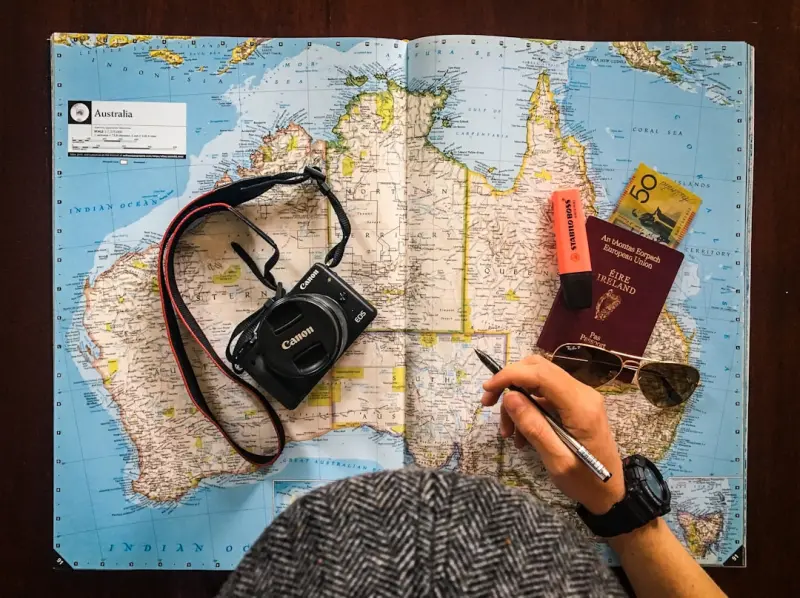
When the inbox never sleeps and the calendar is a relentless drum, the idea of a week‑long vacation feels like a luxury reserved for the ultra‑rich or the chronically idle. Yet the truth is that the modern professional can harvest the same cognitive and emotional benefits of a grand escape without swapping out a month of work. The secret isn’t a longer leave‑policy—it’s a shift in mindset toward “micro‑adventures,” those intentional, bite‑sized forays that turn a weekend, a long lunch, or even a commute into a catalyst for renewal.
Redefining “Travel” in the Age of Hyper‑Productivity
Travel has historically been framed as a grand pilgrimage: cross‑country road trips, exotic overseas tours, or multi‑day hikes. Those experiences undoubtedly deliver deep transformation, but they also require a level of logistical planning and time commitment that most professionals can’t spare. Micro‑adventures flip the script. Instead of asking, “Where can I go for ten days?” you ask, “What can I experience in the next two hours that will shake my routine?” The answer could be a sunrise paddle‑board session on a nearby lake, a three‑hour culinary walk through a hidden neighborhood, or a spontaneous train ride to a town you’ve never visited.
The Science Behind Short‑Burst Exploration
Neuroscience tells us that novelty triggers dopamine release, which sharpens focus and fuels creativity. When you step out of your familiar environment—no matter how brief—the brain registers a “prediction error” that forces it to recalibrate. This recalibration is a mental reset button, clearing mental clutter and making space for new ideas. A study from the University of Chicago showed that participants who took a 30‑minute walk in an unfamiliar park solved problem‑solving tasks 20% faster than those who stayed in the office. The takeaway? You don’t need a week in Bali to reboot your brain; a well‑chosen micro‑adventure does the trick.
Designing Your Micro‑Adventure Toolkit
Think of micro‑adventures as a modular system—each component can be mixed, matched, and scaled based on your schedule and resources. Below is a quick checklist you can keep on your phone:
- Time Block: Identify a slot (e.g., 2‑hour window, half‑day, or a full weekend).
- Distance Limit: Set a radius (10‑15 miles is a comfortable range for most urban dwellers).
- Theme: Choose a focus—food, nature, culture, or movement.
- Gear Pack: Keep a lightweight bag stocked with essentials (water, notebook, phone charger, a reusable tote).
- Goal: Define a micro‑objective (e.g., “Try three dishes I’ve never heard of,” or “Capture five photos of sunrise reflections”).
When you have a ready‑made framework, the mental friction of planning evaporates. The next time you glance at your calendar, you’ll see an opening, not a void.
Micro‑Adventure Case Study: The “Urban Safari”
Last month, I set a personal challenge: spend a Saturday exploring the “wild” side of my city’s industrial district. I mapped out three stops—a repurposed warehouse turned art gallery, a rooftop farm, and a historic train depot turned market. The day unfolded like a mini‑expedition, complete with a sketchbook for spontaneous doodles and a portable espresso maker for caffeine‑fuelled brainstorming. By the time I returned home, I had three fresh content ideas for an upcoming product launch, a new connection with a local artist, and a palpable lift in mood that carried through the workweek.
Leveraging Social Media Without Losing Authenticity
In a world where every moment can be broadcast, micro‑adventures become a powerful storytelling engine. But beware the trap of turning every outing into a staged photo shoot. Authenticity resonates more than polished perfection. One strategy is to treat your social feed as a “live lab” where you test hypotheses about audience engagement. For instance, you might post a quick video of a street‑food vendor and track the comment sentiment. This approach mirrors the insights shared in When Social Media Becomes Your Product Lab, where the emphasis is on using real‑time feedback loops to iterate on your brand narrative.
Travel Security: Beyond the Checklist
Micro‑adventures, by nature, often involve unfamiliar locales and spontaneous decisions. Traditional travel security advice—passports, travel insurance, emergency contacts—still applies, but it needs a modern twist. Rather than a static checklist, think of security as an ongoing conversation with yourself and your environment. Ask yourself: “What data am I exposing with my phone’s location services?” “Do I have a quick‑exit plan if a situation feels unsafe?” The mindset shift advocated in Rethinking Security: From Checklist to Conversation is especially relevant for the micro‑adventurer who thrives on agility.
Integrating Micro‑Adventures into Corporate Culture
Many companies tout “flexible work” but rarely translate that flexibility into tangible experiences for their teams. Imagine a quarterly “Adventure Day” where employees are encouraged to step out of the office for a few hours, document their experience, and share learnings at a company-wide debrief. This not only boosts morale but also cultivates a culture of curiosity and cross‑functional insight. The result is a workforce that feels refreshed, more creative, and better equipped to tackle complex problems.
The Economic Upside: ROI of Mini‑Escapes
Beyond personal well‑being, micro‑adventures can impact the bottom line. A Deloitte survey found that employees who regularly engage in short, restorative breaks are 12% more productive and 8% less likely to burn out. Moreover, micro‑adventures often involve local businesses—cafés, boutique shops, tour guides—stimulating the regional economy. By spending a modest amount locally, you contribute to a virtuous cycle of community enrichment and personal enrichment.
Tools and Apps to Supercharge Your Mini‑Journeys
Technology can be your co‑pilot, not your cage. Here are a few tools that align with the micro‑adventure philosophy:
- MapMyRun/Strava: Use these to discover nearby trails or scenic routes.
- Eventbrite: Find pop‑up events, workshops, or local performances happening this weekend.
- Local Foodie Guides: Apps like “TasteAtlas” highlight hidden culinary gems within a short radius.
- Travel Safety Apps: “Sitata” offers real‑time alerts for safety concerns, aligning with a conversation‑first security approach.
Crafting the Narrative: From Experience to Insight
Every micro‑adventure yields data—sensory, emotional, and observational. The key is to capture and synthesize this data into actionable insights. Keep a small notebook or a digital note app handy. Jot down what caught your eye, how you felt, and any ideas that sparked. Over time, you’ll notice patterns: perhaps waterfront walks stimulate strategic thinking, while bustling markets ignite creative brainstorming. These patterns become personal heuristics you can apply to work challenges, product ideation, or even leadership decisions.
Scaling Up: From Micro to Macro
Micro‑adventures are not an endpoint; they are a gateway. Once you’ve built the habit of regular short escapes, scaling to longer trips feels less daunting. The confidence you gain from navigating unfamiliar neighborhoods in a few hours translates to comfort in planning multi‑day journeys. Think of micro‑adventures as the training wheels that prepare you for the big rides ahead.
Conclusion: The Power of the Small
In an era where time feels perpetually scarce, the most potent form of travel may be the one you can fit into a coffee break. By embracing micro‑adventures, you unlock a reservoir of creativity, health, and connection without sacrificing professional momentum. The next time you stare at an empty slot in your calendar, ask yourself not “What can I not do?” but “What small adventure can I create right now?” The world is full of untapped experiences waiting just beyond your doorstep—ready to boost your brain, your brand, and your bottom line.

Seth Samual is a name that's quickly becoming synonymous with compelling and insightful writing. As a freelance writer, Seth has carved a niche for himself by delivering high-quality content across a diverse range of subjects.
Related Posts

The Art of Unscripted Exploration: Why Randomness Beats Itineraries
Explore how shedding detailed travel plans in favor of spontaneous, theme‑driven journeys can boos... Read More

The Evolution of Eco-Tourism: How Travelers Can Make a Positive Impact
Eco-tourism is changing the way we travel. Learn how travelers can make a positive impact on the env... Read More

When the Road Becomes a Lab: Turning Travel Into a Personal Innovation Playground
Discover how treating each journey as a low‑stakes prototype can spark fresh product insights, str... Read More
Top Posts

Layered Textiles: A Playful Blueprint for Turning Tiny Rooms Into Cozy Havens
A guide to using textures, patterns, and personal story pieces to turn small living spaces into inviting, stylish sanctuaries through layered textiles....Read More

Why Your Users Should Come Before Your SEO
In the ever-evolving digital landscape, where visibility is king and competition is fierce, the acronym "SEO" (Search Engine Optimization) often dominates marke...Read More

Revving the Subscription Engine: How SaaS Principles Are Transforming Car Ownership
The automotive sector is shifting from static ownership to flexible subscriptions, leveraging SaaS metrics, AI co‑pilots, modular plugins, and data-driven ins...Read More

Link Building in the Age of Conversational AI: Turning Dialogue into Authority
Learn how conversational AI can transform your link‑building tactics by turning real user questions into high‑value content, semantic clusters, and personal...Read More
0 Comments
Post Comment
You will need to Login or Register to comment on this post!