
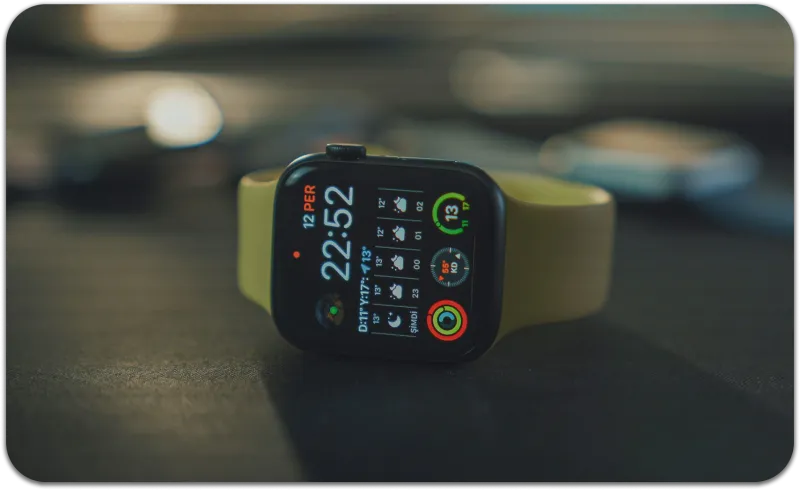
It sits on your wrist, a sleek, humming sentinel of your biological data. It counts your steps, tracks your REM cycles, monitors your blood oxygen levels, and keeps a vigilant eye on your resting heart rate. For many, the modern smartwatch is a triumph of preventative medicine-a way to take control of one’s longevity. But for a growing segment of the population, these devices have become something else entirely: a source of chronic, low-grade, wearable anxiety that doctors have coined "cyberchondria" or, more specifically, "orthosomnia" and "wearable-induced health anxiety."
If you find yourself frantically checking your pulse because your watch alerted you to a "high resting heart rate variability," or if you lose sleep worrying about a minor deviation in your deep sleep stats, take a breath. You are not alone, and more importantly, you are almost certainly not dying.
The Data Paradox: More Information, Less Clarity
The fundamental problem with the modern health wearable is the assumption that more data equals a better understanding of health. In reality, biological data is remarkably messy. The human body is a dynamic, chaotic system. It reacts to stress, hydration, temperature, caffeine, the meal you ate three hours ago, and even the emotional tone of a conversation you just had.
When you wear a device 24/7, you catch the body in all its natural fluctuations. That "abnormal" heart rate spike you noticed at 3:00 PM? It was likely your body processing a second cup of coffee. The "low" blood oxygen reading at night? It was almost certainly a case of your arm being tucked under your pillow, slightly compressing the sensor.
The issue is not that the sensors are broken; the issue is that they lack context. They provide the what without the why. For a physician, a heart rate reading is just one data point in a broader clinical picture that includes your symptoms, your history, and an in-person physical exam. For you, staring at a screen in bed at midnight, that same data point becomes an isolated, terrifying monolith.
The Feedback Loop of Fear
Health anxiety thrives on patterns. When you feel a slight flutter in your chest and immediately check your watch, you enter a psychological feedback loop. If the watch shows a normal rhythm, you might feel momentary relief, but that relief is short-lived. By checking the watch, you have reinforced the belief that your body is a system that needs constant monitoring.
This behavior creates a state of hypervigilance. You become attuned to sensations-a skipped beat, a slight shortness of breath, a phantom ache-that you would have otherwise ignored. Because you are hyper-focused, you notice these sensations more often. You check the watch again. The stress of checking the watch raises your heart rate. The watch shows a higher heart rate. You conclude that something is wrong.
You have essentially become an amateur medical investigator, building a case against your own health using evidence that is, at best, circumstantial.
Recalibrating Your Relationship with the Wrist
If you suspect that your wearable is fueling your anxiety rather than curbing it, it is time for a professional intervention-not with a doctor, but with your device. You do not necessarily need to throw your watch in the trash, but you do need to redefine the boundaries of its role in your life.
1. The "Need-to-Know" Filter Most health apps are designed to be "sticky"-they send notifications to keep you engaged. If you are experiencing health anxiety, treat these notifications as potential triggers. Turn off all non-essential alerts. Remove the "Heart Rate" or "Sleep Score" widget from your home screen. Make the data something you have to actively seek out, rather than something that is pushed to your face during a stressful workday.
2. Stop Looking at Raw Data Raw data points are dangerous for the non-expert. A resting heart rate of 72 one day and 78 the next is not a sign of impending cardiac failure; it is the natural variance of a living organism. If you must look at your health data, look only at long-term trends (weekly or monthly averages). By zooming out, you see the stability of your health rather than the noise of your daily fluctuations.
3. Resist the Reflex The next time you feel a surge of panic about your physical sensations, set a firm rule: No checking the watch for 60 minutes. If, after an hour, you are still experiencing symptoms that genuinely concern you, then you can consider a non-digital form of assessment-like checking your pulse manually or, if the symptoms are severe, contacting a healthcare professional. Often, the urge to check the device passes once the physiological arousal of the anxiety subsides.
4. Reconnect with "Interoception" Interoception is your body’s ability to perceive its own internal state. Wearables have caused many of us to outsource this function to the device. We look at the watch to tell us if we are tired, rather than listening to our heavy eyelids or our mental clarity. Practice "checking in" with yourself before you check the watch. Ask yourself: How do I actually feel right now? If you feel well, trust your body. Your body has been successfully managing your heart rate, digestion, and oxygenation for your entire life without the help of a lithium-ion battery.
When to Consult a Professional
There is a distinction between being health-conscious and being health-anxious. If your wearable data is causing you to avoid social situations, to lose sleep, or to experience persistent, intrusive, or distressing thoughts about your health, it is time to speak with a therapist who specializes in anxiety or Health Anxiety Disorder (formerly known as hypochondriasis).
Cognitive Behavioral Therapy (CBT) is exceptionally effective for this type of condition. It can help you identify the "catastrophizing" thought patterns that lead you to jump from a simple data point to a worst-case scenario.
The Takeaway: You Are More Than Your Metrics
Your smartwatch is a tool, not a medical authority. It is designed to track trends over time for the average user, not to act as a diagnostic lab for the individual. While these devices can be powerful motivators for fitness, they are poor companions for those prone to anxiety.
In our pursuit of health, we often forget that mental peace is a vital component of wellness. If a device designed to improve your health is actively eroding your peace of mind, it is failing in its primary purpose.
So, go ahead and track your steps. Keep an eye on your progress if it truly motivates you. But please, disconnect from the real-time, minute-by-minute monitoring of your vitals. Your heart does not need you to watch it to beat properly. Trust your body, ignore the minor fluctuations, and remember: if you are breathing, moving, and functioning, you are almost certainly doing just fine. Turn the watch around, take it off for the night, and listen to what your body-not the algorithm-is telling you.

Miranda Murphy: Experienced freelance writer with a decade of storytelling expertise. Let's create something amazing together!
Related Posts

Carpal Tunnel Syndrome and Treatment
In an increasingly digital world, where our hands are constantly engaged in repetitive tasks—from ... Read More

Navigating the Digital Maze: How Modern Life Affects Our Mental Wellbeing
Explore the complex relationships between modern life, technology, and mental wellbeing, and discove... Read More
Wearable Tech & Digital Therapeutics: The New Health Frontier
From continuous monitoring to AI‑driven personalized care, wearables are becoming the frontline of... Read More
Top Posts

SEM as a Product Lab: Turning Paid Search Into Real‑World Innovation
Discover a fresh SEM strategy that treats paid search as a product laboratory—using semantic clusters, hypothesis‑driven ad copy, and mini‑MVP landing pag...Read More

Sustainable Search Engine Marketing: Cutting Costs While Reducing Carbon
Learn practical, sustainable SEM tactics that lower your CPA, align with eco‑conscious consumers, and reduce the carbon impact of every click....Read More

Eco-Cleaning: A Sustainable Approach to a Healthier Home
Eco-cleaning is a movement that's all about making conscious choices to create a healthier home and a more sustainable future. Learn how to make simple swaps an...Read More

Why Do New York Businesses Drop in Search Engine Results Rankings?
New York City – a relentless, vibrant, and fiercely competitive urban jungle. For businesses, from the corner deli in Brooklyn to the high-rise financial cons...Read More
0 Comments
Post Comment
You will need to Login or Register to comment on this post!